
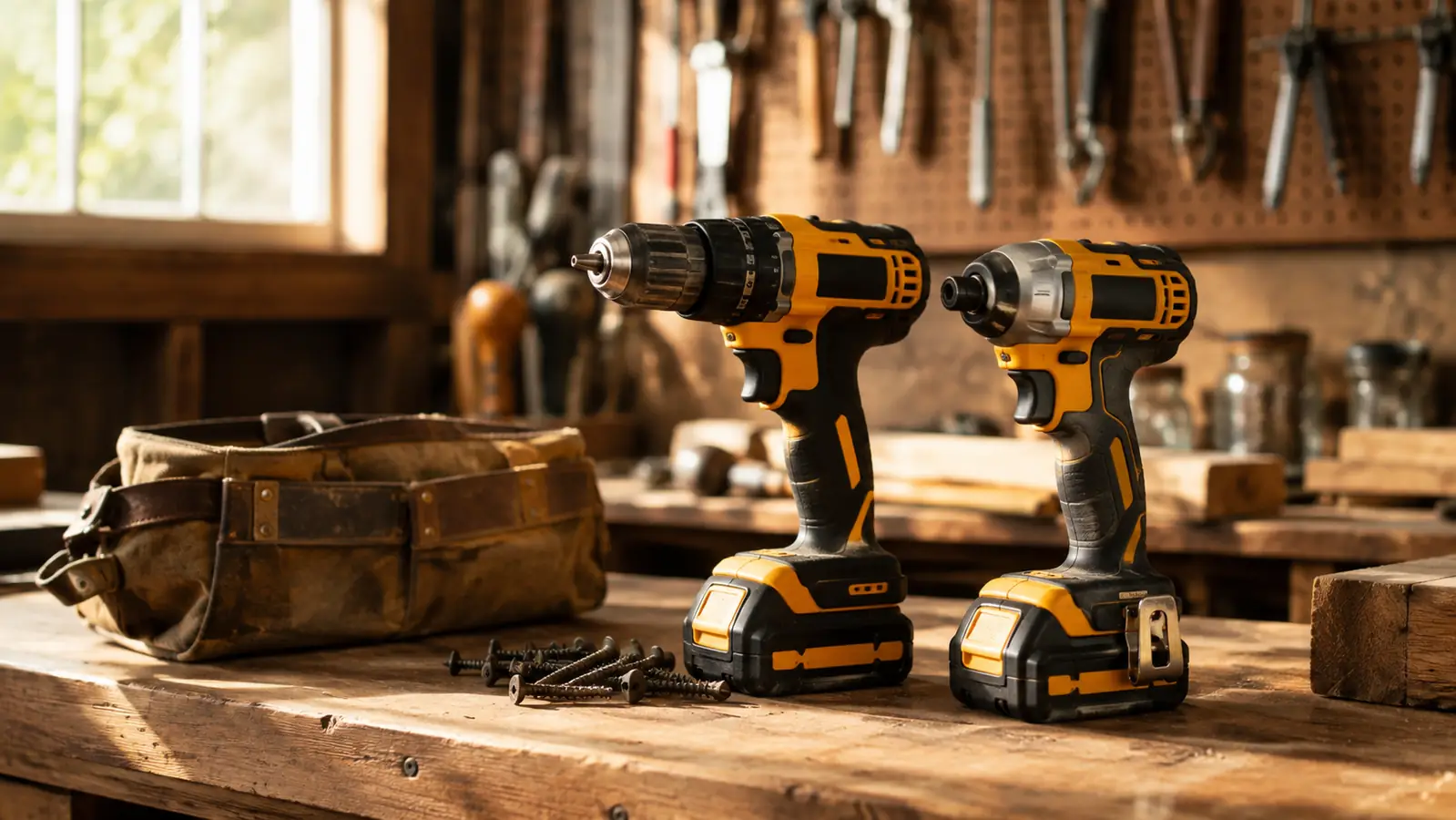
I bought my first cordless drill in 1992, a 9.6-volt unit with a battery the size of a brick that ran out of steam halfway through a box of deck screws. Three decades of cordless tools have taught me the same lesson over and over: the advertising always runs ahead of the batteries. So I do not upgrade a tool that still works, and I would never write a review three weeks into a purchase. When the DEWALT 20V MAX drill and impact driver combo kit, model DCK277D2, landed on my bench in June of last year, it had a real bar to clear. Fourteen months later, with forty-some projects logged against it across my own place and a rental property in Maine, here is exactly what it earned and where it fell short.
To be clear about the bias I brought in, I did not want to like it. I have been sold to a lot over the years, and a two-tool kit with two batteries and a fabric bag looks like the kind of box that sells on name recognition and nothing else. The only way I could justify a purchase like this was to keep a running ledger, the same way I keep one on a rental property. Every project gets a line: what I used, how long it took, whether the tool did its share. That ledger is the whole basis of what follows.
The Quick Verdict
The most balanced cordless drill and driver combo I have tested in thirty years of buying power tools: genuine brushless power, a battery platform that covers a leaf blower up to a circular saw, and honest limits you need to plan around. It earned its place.
Amazon Check Today's Price →The Combo Kit That Earned Its Space on the Bench
I would not call a two-tool kit worth the money until a full year of property projects said it was. This one passed. Today's price on a brushless drill and impact driver with two batteries and a charger is the cheapest way I know to get onto the DEWALT 20V MAX platform.
Amazon Check Today's Price on Amazon →How I Used It: The 14-Month Project Log
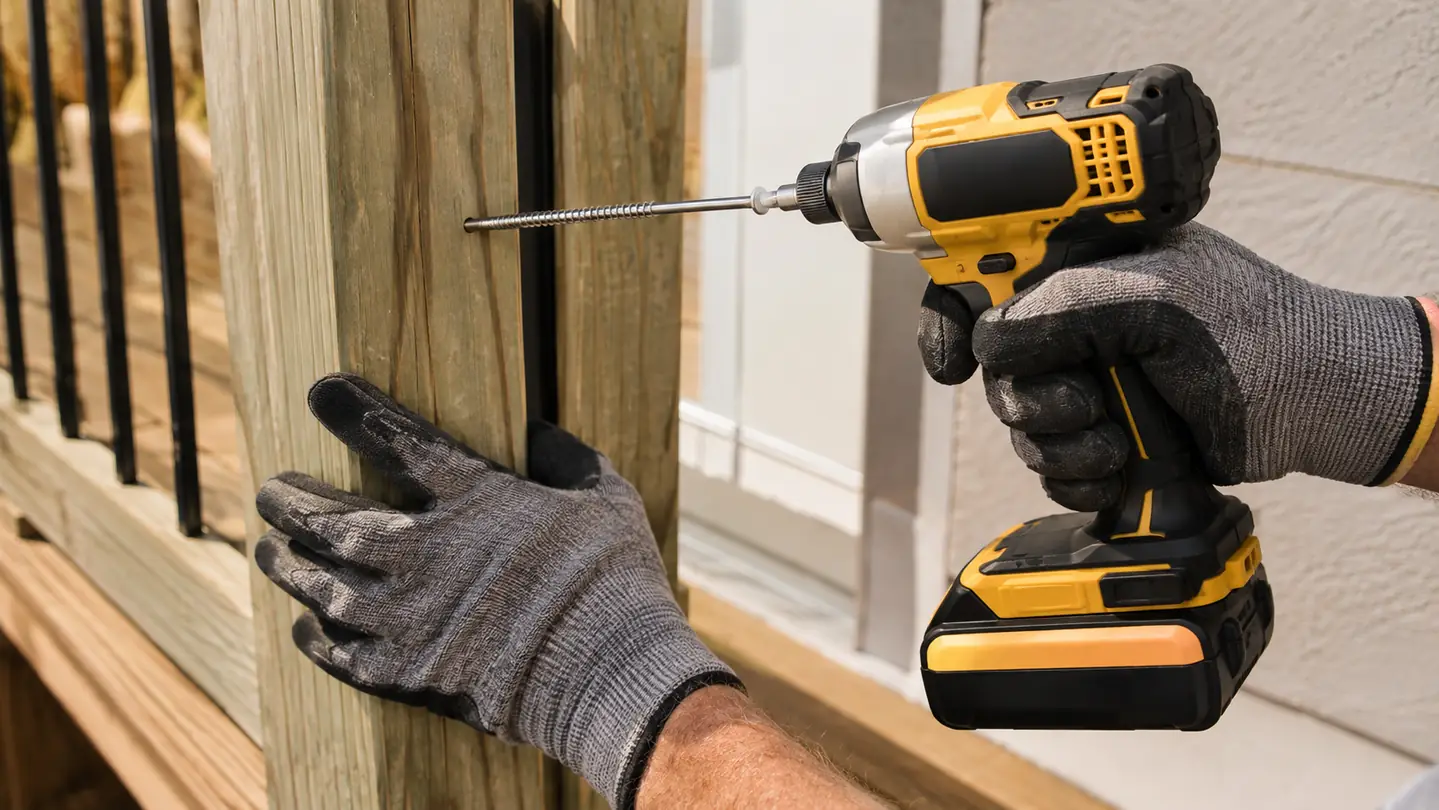
The test period opened with the deck railings on the Maine rental, the same deck I had vowed never to redo by hand again. Eighty-two balusters, each needing two 3-inch stainless screws driven through pressure-treated pine. My old drill demanded a pilot hole for every one, or it would walk the bit and strip the head. This kit did not care. The impact driver sank all 164 screws with no pilot holes, and the battery that finished the last forty showed no slowdown and no slip. That is the test that separates a real impact driver from a toy.
From there the ledger fills out. A full fence section at my own place in September, the workshop shelving torn down and rebuilt in October, a month of furniture assembly in November that I would rather not relive, a water-heater platform rebuild in December, and through the spring roughly one project a week. The drill handled inch-and-a-quarter spade bits into studs, a two-inch hole saw through plywood, and a half-inch auger through a floor joist for a new electric line. The batteries have lived through a New England winter in an unheated shop.
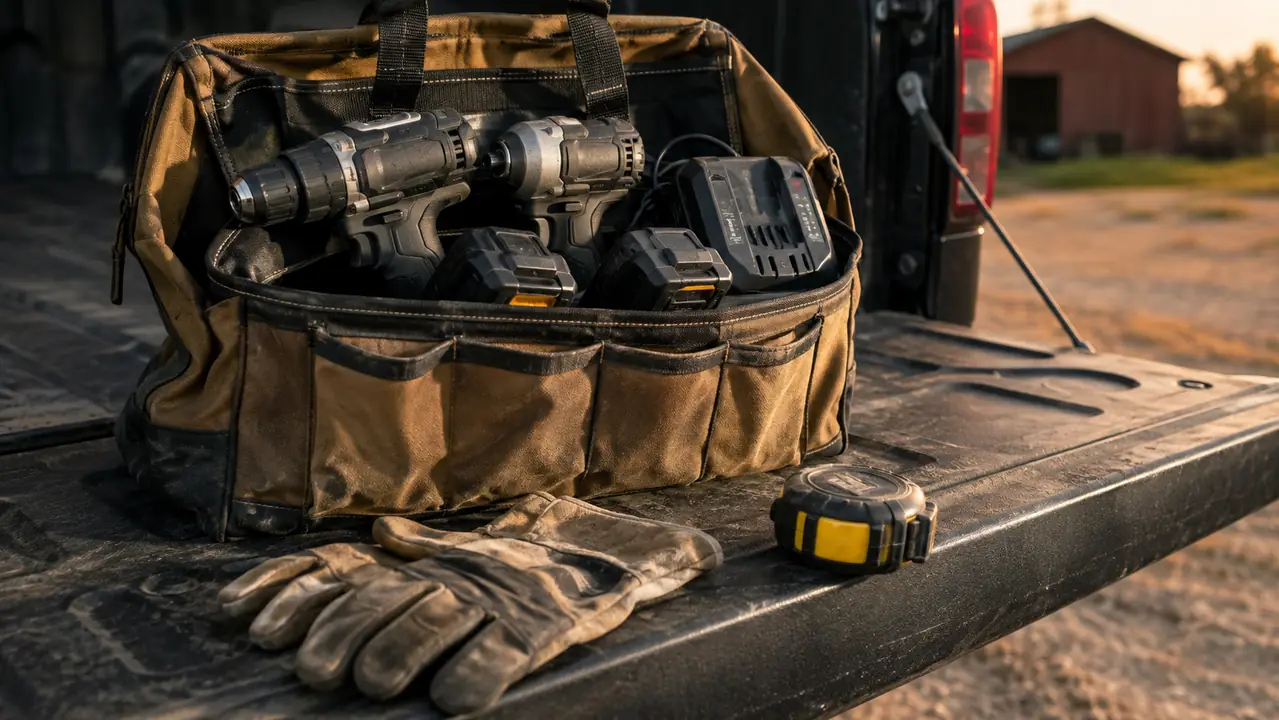
One more entry that matters because it is how I actually live: the kit travels. It has made three trips in the back of my truck, gone along for Saturday jobs at a friend's place in Vermont, and it rides to the rental in a canvas bag next to a level and a hammer. Tools that have to be unpacked from a rolling chest do not get used. This kit lives in one bag, ready to grab, and in my accounting that is worth more than any spec sheet.
Why the Brushless Motor Is Where the Money Goes
Pull the trigger and you feel the difference before you measure it. A brushed motor slows when you lean on it and fights to recover as the commutator works against the load. The brushless motors in this kit hold their speed under load, which is exactly what matters when you are driving a long screw or a spade bit that wants to grab.
The practical numbers, straight from the ledger: on a fully charged battery, the drill sinks roughly ninety to a hundred deck screws before the clutch starts telling you to slow down. The impact driver is even hungrier, and on tap it has driven a 6-inch lag screw into a post in about four seconds flat without bogging. That is work the 18-volt tools of ten years ago could only manage with a cord.
The other advantage is duty cycle, which is the long-term part a homeowner actually cares about. Brushless motors make less heat, and heat is what kills cordless tools sitting in a drawer. Fourteen months in, both tools spin true, no odor, no bearing noise, no wobble. I cannot promise a decade, nobody can, but I can tell you the motor is the least likely thing on this kit to fail.
What Wore Down and What Didn't
I keep a separate list each quarter: what is showing wear and what still looks new. The honorable mention for holding up has to go to the chuck. It has gripped bits, augers, hole saws, and a bent 1/8-inch bit that should have gone in the trash, and it still closes square and releases clean. The clutch ring clicks between twelve positions and holds its setting, which matters when you set one depth and then drive eighty screws at that same depth.
The honest wear list is shorter but real. The two 2.0 Ah batteries are the weak point of the kit, not a failure, just a limit. A full afternoon of mixed drilling and driving drains both, and the included charger is the standard unit, roughly an hour and a half to top up the pair. For continuous all-weekend work I would want a 5.0 Ah battery and the fast charger, both sold separately.
The bag is also what it is: soft canvas, not a hard case. It holds both tools, the charger, and two batteries with room for a bit case, and it is fine for the truck. It is not fine for stacking in a shop cabinet or guarding against a damp basement floor. A hard case on the same platform costs very little, and I notice most people who buy this kit end up adding one.
The Real Cost of This Kit Is the Platform
Here is the investor math that convinced me, because nobody puts it this plainly. The kit is not really a drill and a driver, though that is what you hand over money for. It is a down payment on a battery platform. The DEWALT 20V MAX system covers a leaf blower, a string trimmer, a circular saw, an angle grinder, a shop vac, a work light, a reciprocating saw. Every spare battery you own becomes a shared asset that works across all of them.
Why does that matter to a man my age? Because the greatest cost in a cordless tool is not the tool, it is the batteries, and batteries become the throwaway part every three to five years. A platform you stay on long enough to amortize the charger and the first two batteries saves you money on every tool after it. The cut-rate kit that saves you today hands that forty back, plus interest, the first time you replace a battery that only fits one tool.
The two-battery start is the one genuine compromise, and I want it on the record. I would gladly have paid more for a kit with a 2.0 and a 4.0 Ah battery instead of two 2.0s. For weekend work the two 2.0s are almost always enough because you can plan around a charge. For a full day of demo or deck work, budget for a bigger battery in the first month.
Two Alternatives I Considered, and Why the DEWALT Won
The ledger means I priced the alternatives before buying. The Milwaukee M18 kit is the one everybody brings up, and it deserves the respect. It is stronger at the top end, its batteries last a bit longer per charge, and the platform is excellent. It also costs more today, and with the newer battery formats it costs more to grow later. I weighed that against the work I actually do: deck screws and furniture assembly, not framing houses. Paying a premium for top-end muscle I would use once a season is exactly the purchase I have trained myself to skip.
The other honest alternative is the budget tier: the budget-tier two-tool kits with brushed motors and a single battery. I own one of those in the shed as a spare, and I am not knocking it for its price. But it cannot keep up. It slows under load, the battery dies at the worst moment, and I have stripped more screw heads with it than with any tool I own, because a weak drill, not a loud one, is what rounds a head.
I have been told I should name a third option, and in the interest of a full ledger I will: the tool-only route, where you already own a compatible drill and simply add this driver. For someone who already has a DEWALT 20V MAX drill, that is genuinely the cheaper play, and it is the one case where I would tell you to walk past this kit entirely. The kit makes sense when you are starting fresh or coming off a dead platform.
The day it sank 164 stainless deck screws without a single pilot hole is the day I stopped arguing with the price.
What I Liked
- Brushless motors that hold speed under load; the impact driver handles 3-inch deck screws with no pilot holes
- One bag, two tools, two batteries, and a charger, all of it grab-and-go for the truck
- The 20V MAX battery platform covers blowers, saws, and trimmers, so spare batteries are never stranded
- Chuck still closes square after fourteen months, and the clutch ring holds its setting
- Backed by strong word of mouth, 4.8 stars across more than 4,600 Amazon ratings
Where It Falls Short
- Two modest 2.0 Ah batteries and the slower standard charger included
- No bits, driver tips, or hardware in the box, the bag starts empty
- Soft canvas bag rather than a hard case, and the tools rattle in transit unless packed
- Tool-only upgrades cost real money, which nudges you toward buying more kits
Who This Is For
The reader for this kit is me, twelve months before I bought it. Someone starting fresh on cordless, or coming off an old platform whose batteries are dead and discontinued, who will use a drill and driver for weekend projects and property maintenance rather than full-time construction. The homeowner, the rental owner, the traveler who wants one kit that rides in the truck and handles furniture assembly one week and a fence the next. If you already know you will add a blower or a circular saw within a couple of years, this is the right starting kit, because those batteries come with you. That is the honest answer, and it is also the one that saves you the most money over five years.
Who Should Skip It
Three kinds of people should not buy this kit, and honesty requires the list. First, if you already own a DEWALT 20V MAX drill in good shape, skip the two-tool kit and buy the impact driver alone. Second, if your work is continuous, all-day, high-load work, skip it and budget for the bigger batteries and the fast charger, because the two 2.0s will have you waiting on a charge. Third, if your entire power-tool life is a shelf that needs hanging twice a year, a brushed single-tool kit at half the price will treat you fine, and you should not let me spend your money.
Still the Kit I Reach For, Fourteen Months In
I keep a living log, and this kit has not had a single month where it failed to earn its keep. If the math I walked through matches your situation, check today's price before you decide. If it does not, the list above told you exactly what to buy instead, and that is worth more than any sale.
Amazon Check Today's Price on Amazon →If you are still on the fence, consider what the kit replaces. Every job I have put it on since that first summer, the ceiling fans, the fencing, the shelving, the furniture that goes together in an afternoon, has been a job I did myself instead of hiring out. The batteries charge fast, the tools stay in the bag in the van, and after fourteen months neither one has let me down in a way that mattered. It is not the flashiest drill and driver combo on the market, and the marketing photographs are flattering in the same way every marketing photograph is. But judged the only way I judge a tool, by whether it earned its keep over a year of real work, this one did. If you buy one kit and live with it the way I have, I am confident you will reach the same verdict.