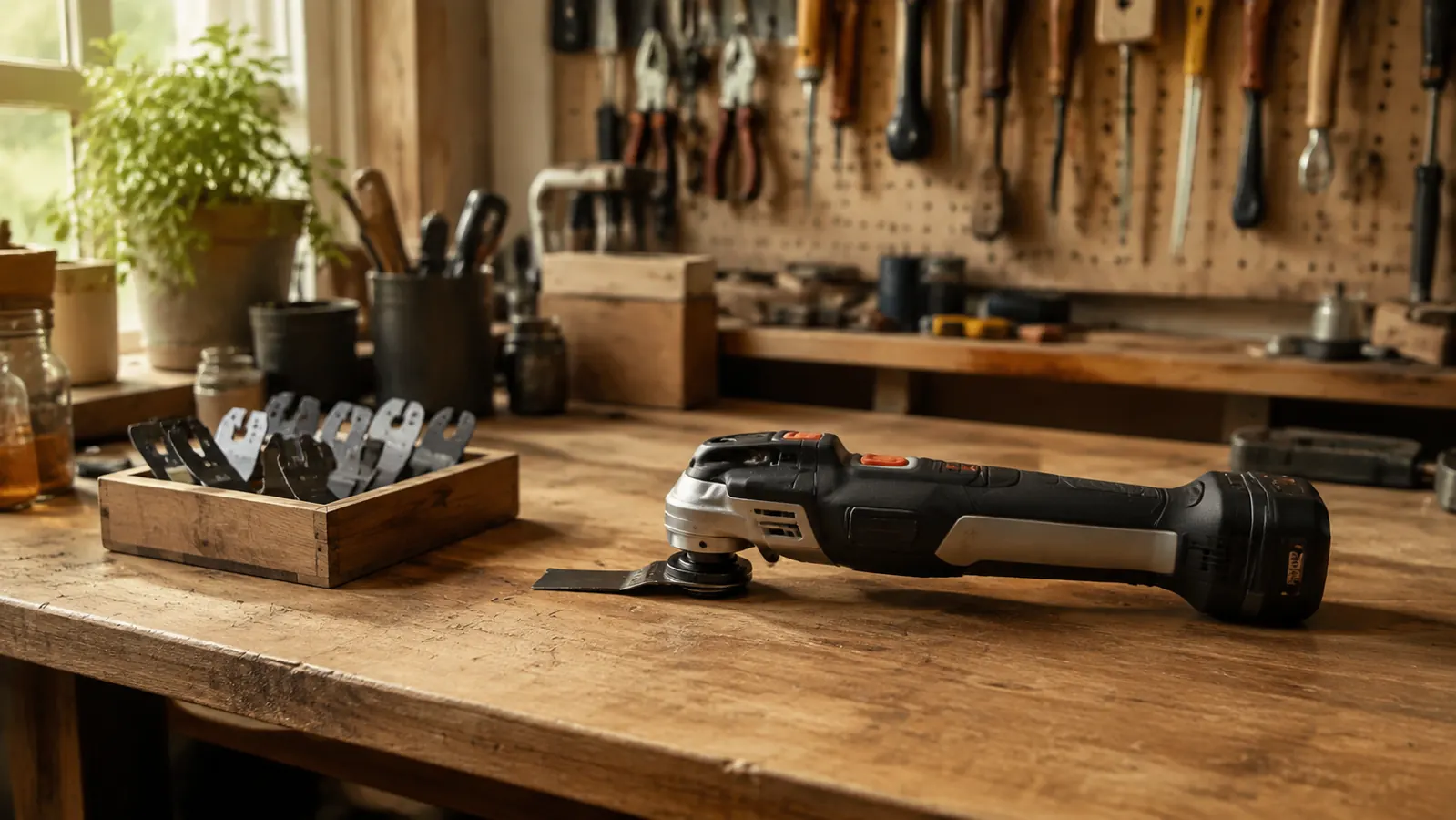
Every tool in my shop earned its spot the hard way, usually by doing one job that nothing else could. The oscillating multi-tool was the exception. For years it was the tool I borrowed instead of owned, because it looked like a plastic toy and I could not have named two real uses for it. Then, in the fall of 2024, I had to cut a swollen door casing flush against a jamb without scratching the paint, and a neighbor handed me his oscillating tool. Twenty minutes later I owned the DEWALT 20V MAX XR, model DCS356C1. Two years on, with the project ledger to prove it, this is the only tool in my bag I can say that about.
I keep a ledger on every tool the way I keep one on a rental property: what it was meant to do, how often I actually reach for it, and whether it paid for itself in saved labor. That is exactly what this review is, two years of flush cuts, door jambs, quarter-round, PVC, drywall patches, and grout lines. I do not write a review three weeks into a purchase, and I carried no brand loyalty into this one. I brought a stopwatch, a notebook, and the general distrust of anything that promises to do the work of three tools.
The Quick Verdict
The most versatile tool in my shop and the hardest one to buy on faith. It pays for itself on the first trim job you finish without damaging a jamb. The weaknesses are real but predictable: blade cost, vibration on long cuts, and a small battery in the kit.
Amazon Check Today's Price →The Tool I Borrowed Once and Then Bought
I did not want to need it. It is a tool that answers questions you have not been asked yet, so it is easy to walk past in the store. If your house is older than you are, or you own a rental, the questions are coming. The DEWALT 20V MAX XR kit includes a battery and charger, and it shares the platform with the drill in your drawer. Check today's price and decide on your own ledger.
Amazon Check Today's Price on Amazon →How I've Used It: Two Years in the Ledger
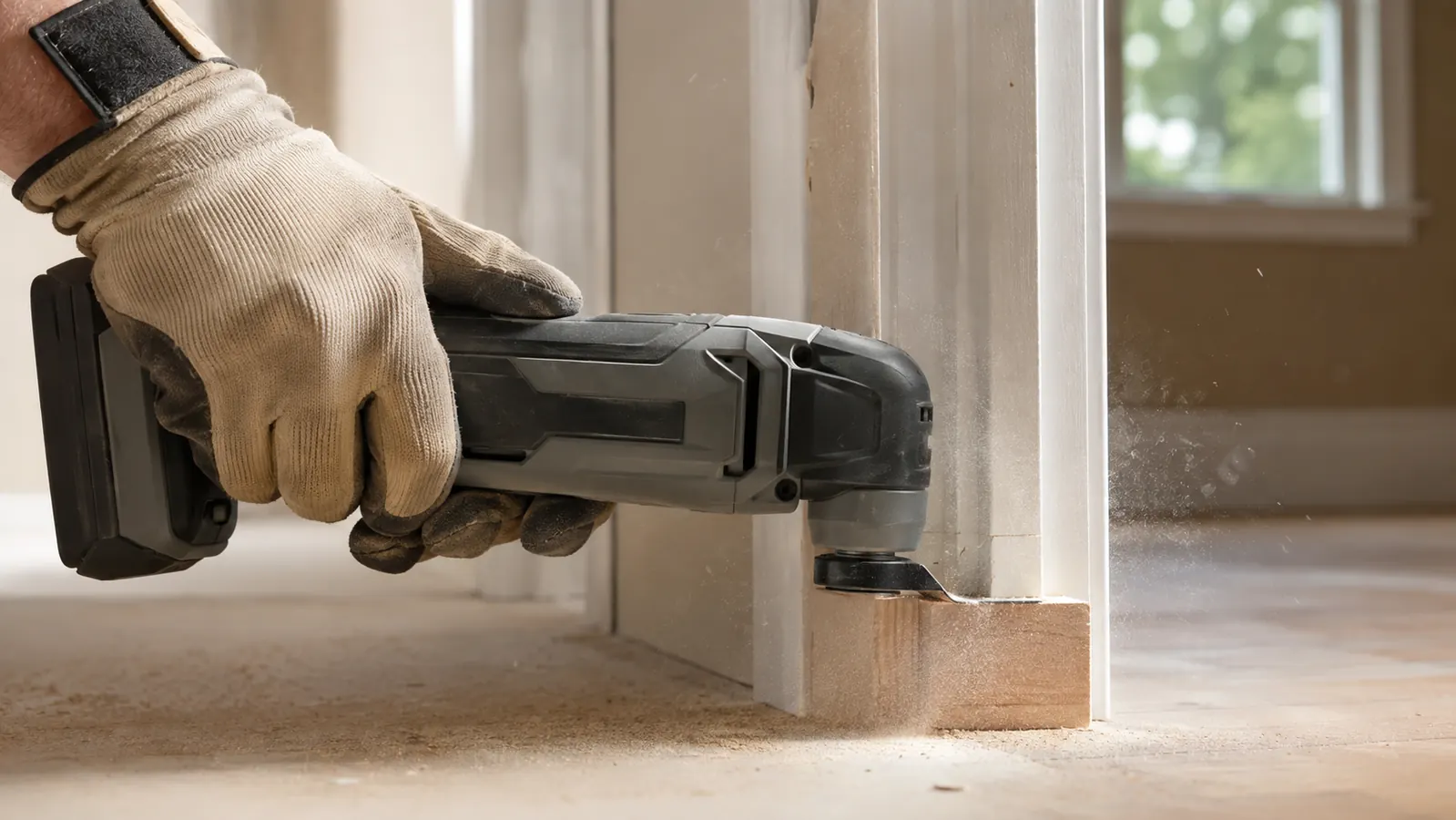
The job that started it was a water-damaged casing on the Maine rental. The wood had swelled against the frame, a reciprocating saw wanted to walk, a handsaw could not get a start in the gap, and a router would have chewed the jamb. The oscillating tool sank a fine-tooth blade into the swollen wood, cut the casing flush, and left the paint on the jamb untouched. That one job paid for the tool by itself, since the alternative was replacing a whole door frame or paying someone who could.
From there the ledger fills out year-round. I cut every baseboard we pulled on the rental instead of prying it off the lath. I cut quarter-round to length in place against door casings. I took a seized gate bolt off flush with the nut. I opened drywall for three new electrical boxes and never overshot the line. I cut grout along a tub surround before it could hold another winter of damp. The ledger has fifty entries, and not one of them names a tool that would have done the job faster.
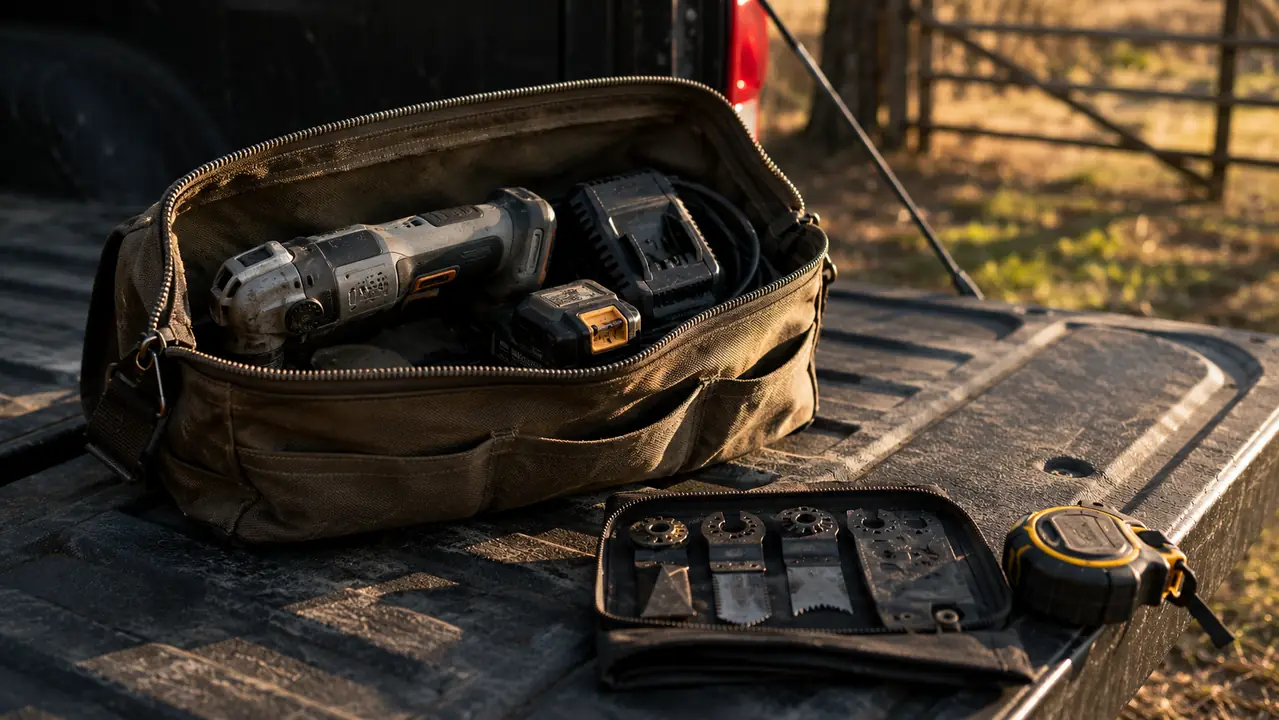
The tool travels, which matters to a man who keeps two properties. It rides in a canvas bag next to a level and a hammer, and it shares the 20V MAX XR batteries with my drill and driver, so I am never waiting on a charge. That is the quiet argument for buying into a battery platform in the first place: the multi-tool costs less than it looks like it should, because the batteries are already in my drawer.
The sanding attachments earn more use than I expected from a cutting tool. A triangular sanding pad into a corner of a door or a window sash is a job a quarter-sheet sander cannot touch, because the sheet hangs over the edge and rounds the wood. The multi-tool vibrates in place and squares the corner without going anywhere near the casing. Same story with scraping: a flat scraper blade took the glue and paint residue off a pine threshold I repainted last spring, work that used to mean a razor blade in one hand and a bandage budget in the other.
What the Three Speeds Actually Buy You
The DCS356 has three speed settings behind the trigger, and the trigger itself is variable, so you get far more than a single speed. Low makes the tool manageable in plastic and soft material, the exact setting where most damage happens when you leave it roaring in high. Mid is the everyday wood setting. High is where you cut metal and bury into hard material. Twenty thousand OPM sounds like a marketing number until you are cutting a nail in place; at high speed a carbide blade goes through a finish nail like it is not there. The control lives in the trigger, not the top number, and that is what the brushless motor protects.
Brushless is the reason the tool holds speed when you lean on a flush cut. A brushed motor bogs down, and a bogging oscillating tool is how you get a wandering line instead of a clean one. This motor keeps the oscillation constant, and a constant oscillation is what lets you follow a pencil line through a full cut. Two years in there is no bearing noise, no wobble in the shaft, nothing that smells hot after an afternoon of work.
The LED ring around the blade is the detail that earns its keep far more than the advertising suggests. Most multi-tool work happens up against a jamb or under a cabinet where your shoulder blocks the light. The lamp puts light on the blade line itself, and it is the difference between cutting to a pencil line and cutting on faith. I did not buy the tool for the LED. I would replace the tool for it now.
Flush Cuts, Plunge Cuts, and the Jobs It Unlocks
Flush cuts are the signature move, the reason the tool exists. No other saw starts a cut in the middle of a surface or works flat against a finished edge. With the right blade the tool sits against the jamb and oscillates through the trim. It does not load up, it does not tear the face of the wood, it just moves sideways through the grain. The universal blade clamp is the honest money-saver here: most blade brands, not just DEWALT's own, fit the quick-release lever. Blades are the one thing you will buy again for this tool, and the universal system means you buy the best blade for the job, not the one the box wanted to sell you.
Plunge cuts are almost as useful. You drop the blade straight down into drywall or plywood with no pilot hole, cut a window for an outlet box, and pull it out. On the rental I cut a clean round hole for a vent fan in a ceiling, standing on a ladder with one hand on the tool, and it was done before my knees objected. That is the whole case for the tool in one sentence: it does the jobs that used to mean a wrecked jamb, a wall of spackle, or a call to a tradesman.
On the porch repair it was PVC, and I want the record to show the tool handles it without cracking. I cut four pieces of PVC trim to length in place against the house, and on the low speed setting the blade eased through without melting the plastic or splitting the edge. That is a job where a miter saw wants to chip the face and a handsaw tears the corner. The oscillating tool, on the right speed, leaves a square end you can caulk and paint over.
The Real Cost of Ownership Is Blades and Batteries
Blades dull, especially on metal, and they are the consumable the way drill bits are. I budget a three-pack of blades in the spring the same way I budget fence staples, and the universal clamp lets me put the money where the job is. A grout blade earns its share faster than almost any tool in the shop, because paying a tile guy to cut one grout line costs more than the whole blade.
Dust is the circumstance nobody mentions, and it is worth a line. An oscillating tool throws fine dust in a tight pocket of air, right where you are working. I run it with a shop vac nozzle an inch away for anything that is not a ten-second snip, especially drywall and grout. The dust mask is not optional on grout. None of this is a mark against the tool, it is just the reality of the job, and planning for it makes the tool feel like a better buy than it is, because the cleanup is already handled.
The included battery is a 2.0 Ah unit, and it is honest about its limits. For twice-a-month work it is plenty, and since the kit includes the charger you never feel short. A full paid day of cutting and sanding will drain it, but that is a use case that belongs to the bigger batteries on the same platform, which you buy when the weekend projects turn into week-long ones.
Vibration is the honest trade the marketing never shows. Hold the tool on a long cut for ten minutes and your hand knows it. The XR motor runs smoother than the budget units I have tried, but an oscillating tool by its nature shakes the blade side to side thousands of times a minute, and your arm is on the receiving end. It is light, around nineteen ounces before the battery, so short bursts in awkward spots are fine one-handed. Long, sustained cuts are where you set up and let the tool work instead of muscling it.
Two Alternatives I Considered, and What They Cost
I priced the alternatives before I bought, because that is how I buy. The Milwaukee M18 Fuel is the tool the pros carry, and it earns that: better dampening of vibration, a little more headroom in hard material, and a longer standard blade. It also costs more and sits on a different battery platform than the 20V MAX tools already in my drawer. For weekend work and rental maintenance, the premium buys a difference I notice once a quarter, not once a week. You can read the full head-to-head in my Milwaukee comparison.
The budget tier deserves a fair word, because some weeks the honest answer is tool. A brushed oscillating tool will cut the same quarter-round and grout line, and if you use it twice a year, it may genuinely be the right purchase. The differences show under load: the budget unit slows in hard material, the blade clamp stiffens up, and the vibration is worse. The rule I settled on is the same one I use for every tool: if the question is between tool and no tool, buy the tool. If you want one you will still reach for in five years, the brushless XR motor and the shared battery platform are what that money is buying.
It cut a swollen door casing flush in twenty minutes and paid for itself before lunch, and it has not had a bad day since.
What I Liked
- Flush cuts without touching the jamb or casing, which is the one job no other tool does cleanly
- Three speeds plus a variable trigger give real control from soft plastic to metal
- Universal quick-release clamp fits most blade brands, so you are never locked into house blades
- Shares the 20V MAX battery platform and charger with the rest of my cordless kit
- LED that lights the blade line directly, genuinely useful in tight spots
- Holds up to 20,000 OPM and holds speed under load with the brushless motor
Where It Falls Short
- Vibration in the hand on long cuts; the design limits it but never removes it
- Blades are a recurring cost with real spread in price, budget a pack like fence staples
- The included 2.0 Ah battery is fine for bursts, thin for a full paid day
- Starting in high speed on plastic is how parts crack, so low speed takes discipline
Who This Is For
The reader for this tool is anyone with baseboards, door frames, or a rental property, which is most people over forty. If you have ever stood in front of a swollen door casing holding a reciprocating saw and hoping, this is the tool that ends that argument. It also earns its place if you hang your own drywall, do your own grout, or cut your own trim, because it is the cleanest way I know to do all three. The traveler who keeps tools in a canvas bag and a second place to maintain gets more out of it than the guy with a full stationary shop, because this tool packs flat and does not need a bench. And if you already own a 20V MAX drill, the practical cost slides way down, since you are really buying the tool head, not the power.
Who Should Skip It
Three kinds of people should leave it on the shelf. First, if you honestly use a power tool twice a year, hang a shelf, tighten a handle, then the brushed unit is the financially responsible answer and nobody should talk you out of it. Second, if your work is all-day, paid, high-volume cutting, you are a pro's pro and should be looking at the Milwaukee line that my comparison covers. Third, if you already own a multi-tool that does not do any of the jobs in this review well, replacing it with a new platform will not fix a technique problem. The vibration and the blade discipline are the same on any brand. Name the job first, then buy the tool. That order saves more money than any coupon.
Two Years In, Still the First Tool I Reach For
My ledger says this tool has paid for itself several times over, and the bills are all paid in saved labor and un-damaged door frames. If the jobs in this review match your house, check today's price. If they do not, I told you exactly what to buy instead, and knowing when to walk away is worth more than any sale.
Amazon Check Today's Price on Amazon →