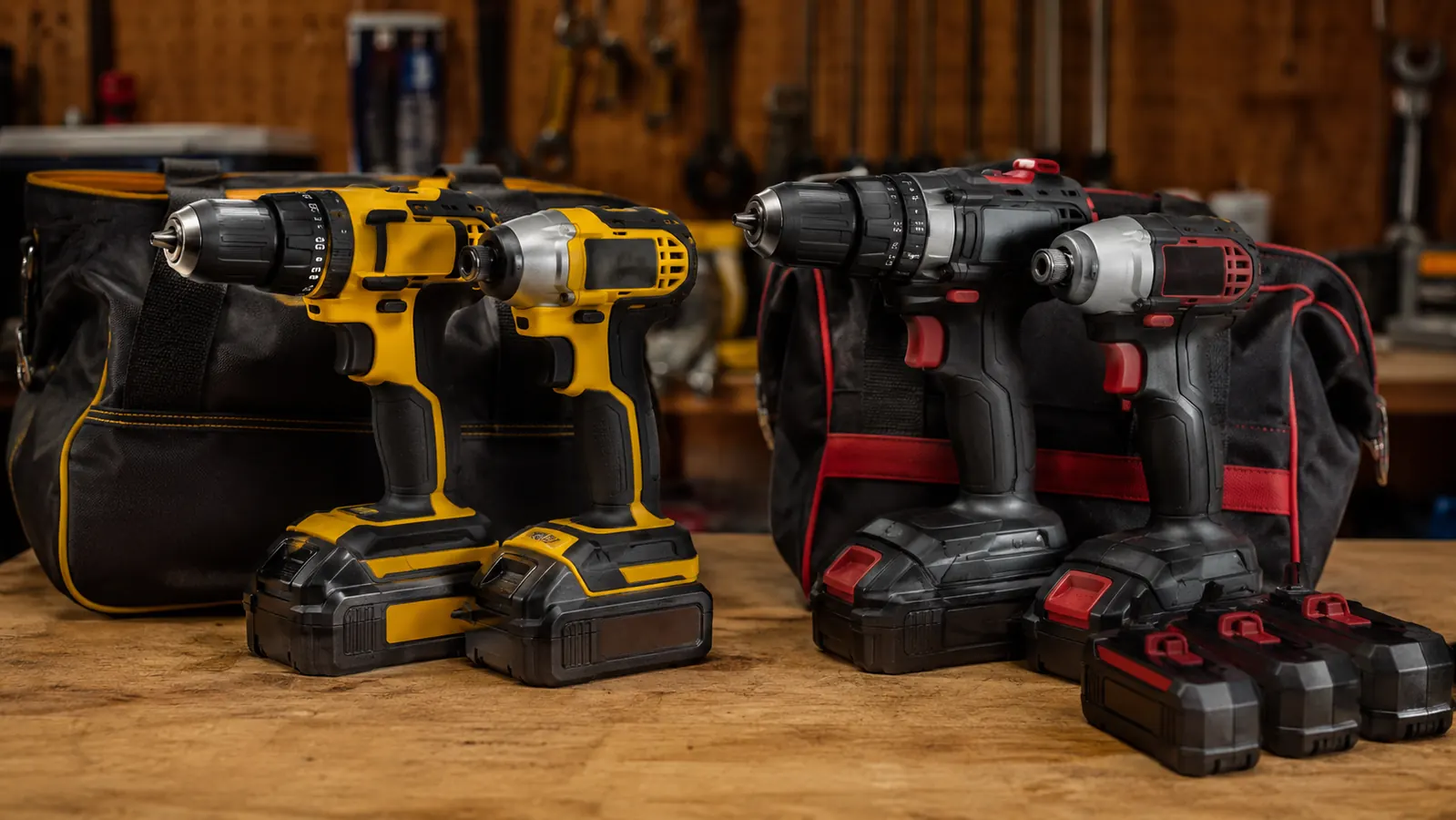
Every so often a neighbor or a guy at the hardware store corners me with the same question, usually after standing in front of the cordless tools for five minutes trying to decide. DEWALT or Milwaukee? Which drill and driver combo should I buy? They want me to just pick a side, and I can see they expect me to have a favorite the way other people have a favorite football team.
Here is the honest short answer. For me, the working homeowner who owns a house and a couple of rental properties and does his own repairs, DEWALT is the better buy. But the longer answer is more interesting, because a lot of what people believe about the Milwaukee premium is actually true. It is a better tool, in the ways that matter to the pro who carries it eight hours a day. The real question is whether those ways matter to you, and whether the extra money buys anything you will actually feel. So let me walk you through where the money goes on both platforms, because I have run both long enough that the answer is not what the marketing photos claim.
| DEWALT 20V MAX | Milwaukee M18 | |
|---|---|---|
| Price out the door | Complete 2-tool kit with two batteries, charger and bag at a working homeowner's price | Comparable 2-tool Fuel kit runs meaningfully higher for the same contents |
| Raw torque on big bits | Plenty of power for deck screws and lag bolts, dead reliable | Fuel motors pull noticeably harder when you are hogging big holes in hard oak |
| Kit contents for the money | Two tools, two batteries, charger and a bag included, no surprises | Entry kits sometimes skimp on battery capacity to hit a price |
| Battery platform reach | Homeowner line plus a huge hand-tool family on the same 20V cells | The deepest pro-grade ecosystem in cordless, nearly every tool you could name |
| Feel for light work | Slightly lighter in the hand, easier over a long afternoon of driving fasteners | Slightly heavier feel, more planted but more tiring overhead |
| Best for | The property owner who wants one honest kit that earns its keep for a decade | The tradesman who burns through tools daily and lives in the ecosystem |
One honest kit that earns its keep, at a price that makes sense
If you are buying for a house, a shop and a couple of rental units rather than a breadwinner truck, this is the kit I reach for. DEWALT DCK277D2 drill and impact driver, two batteries, a charger and a bag, all on an ecosystem that will still have parts in five years.
Amazon Check Today's Price on Amazon →How I Tested These Two Kits
I don't do bench tests with dynamometers, and I don't pretend to. What I do is use tools until they either prove themselves or annoy me. Over the last couple of years I have run a DEWALT 20V drill and impact driver on my own house and on two rentals, and I have borrowed and worked with the comparable Milwaukee M18 Fuel set on friends' job sites and on bigger projects where I needed the extra help. Same sorts of work on both: deck screws, cabinet hinges, lag bolts into framing, the occasional hole saw, and plenty of tearing apart old fixtures.
That is the right way to compare these two for the person I write for. Nobody here is deciding a tool rental or a ten-thousand-hour contractor career. You are deciding which platform to spend the next decade with, so what matters is how the tool feels in the hand on a Saturday, whether the battery lasts through a weekend of work, and whether the thing is still going to be supported when you need to add the next tool down the line. I kept a running mental ledger of which one did the job better and, just as important, which one I reached for without thinking.
Where DEWALT Wins
Let me start with the thing that decides it for most of us, which is the number at the register. This DEWALT kit gives you the drill, the impact driver, two batteries, the charger and a carry bag for a price that Milwaukee cannot touch for the same contents. When I weigh a tool as a purchase that either pays for itself or does not, that gap does a lot of the math for me. The difference between the two kits on a normal sale day is real money, and I would rather put that money into a second set of batteries than into a badge on the side of the tool.
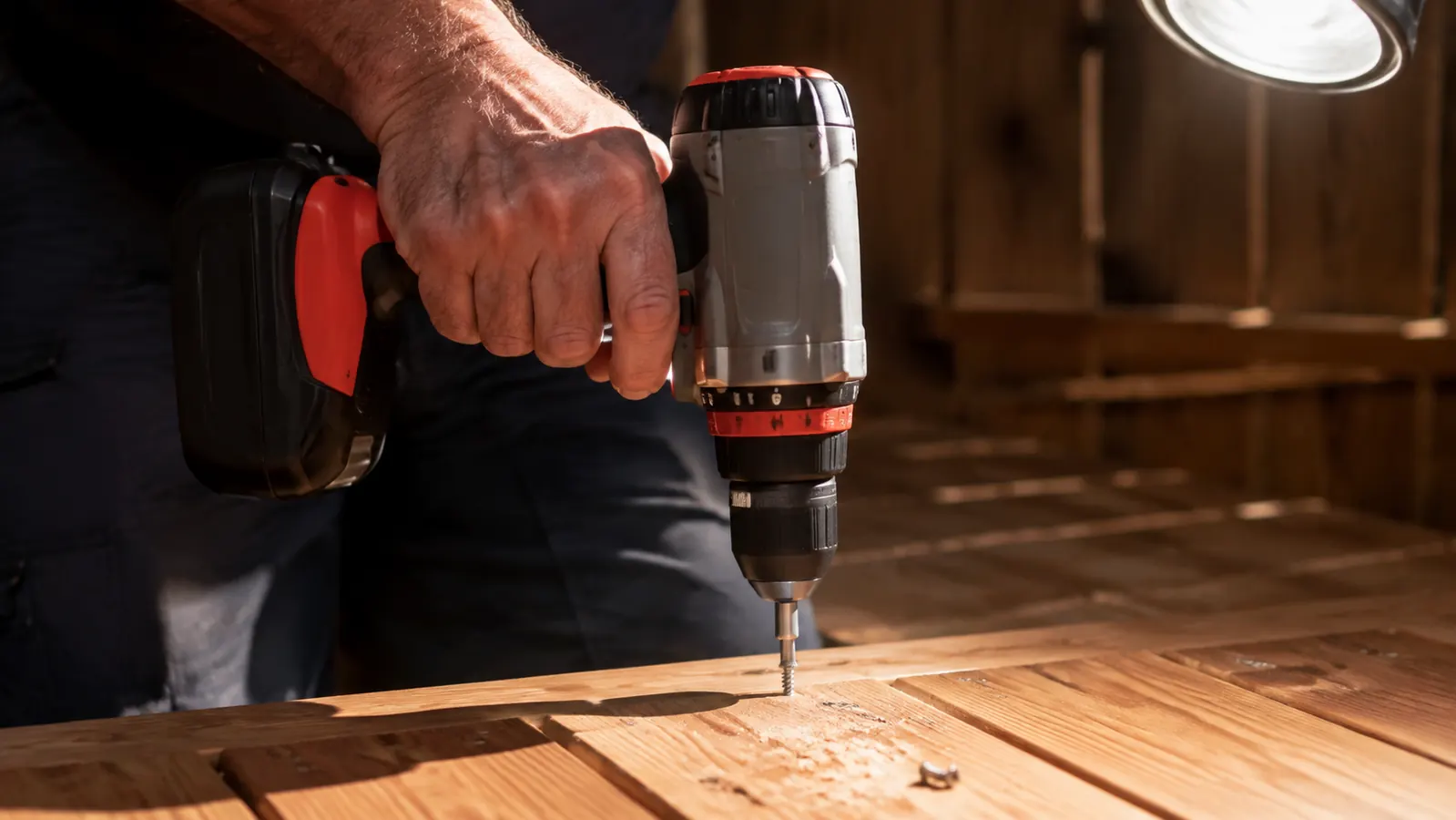
The other place DEWALT earns its keep is the plain feel of the work. The drill and the driver are a little lighter in the hand, and when you are on a ladder driving screws overhead or you have spent a whole weekend building a deck, that lightness adds up by midafternoon. I ran eight long deck screws into freshly treated cedar with the impact driver in one pass and never once felt it stall. For the jobs I actually do, and I suspect the jobs you do too, fasteners into framing, cabinet screws, the odd lag bolt, the power has simply never been the limiting factor.
There is also something to be said for how unbothered the whole system is. The charger is quick, the batteries balance the tools well, and nothing about the kit pins you into proprietary extras you did not ask for. It is a boring, reliable, well-sorted set of tools, and for a guy who has been sold to a lot over the years, boring and reliable is worth a fair amount of money. I know what I am getting, and it has never left me standing on a ladder with a dead tool and a stalled job.
Where Milwaukee Wins
I will give Milwaukee what it is owed, because the honest version of this comparison is not a one-sided argument. The M18 Fuel motors pull harder, and that is not marketing. When a friend's crew was hanging a heavy gate and I handed over my drill for a big auger bit in hardwood, I could hear the difference it made turning that bit. If you are drilling dozens of two-inch holes in oak every day, that extra torque is real time saved on the job, and no honest comparison should pretend otherwise.
The M18 platform is also the deepest, most complete cordless line there is. A working electrician or carpenter can run nearly every tool in their truck off the same two batteries, from the driver to the oscillating saw to the angle grinder. That is a genuine advantage, not a slogan. It just happens to be an advantage aimed squarely at someone who works for a living, day in and day out, and needs every tool in the van to share one set of cells. For that buyer, Milwaukee's breadth is exactly why they own it, and I would not talk them out of it.
The Milwaukee premium is real. It's just aimed at the guy who carries a tool belt for a living, not at the guy fixing a rental's dishwasher on a Saturday.
The Battery Question You Have to Answer First
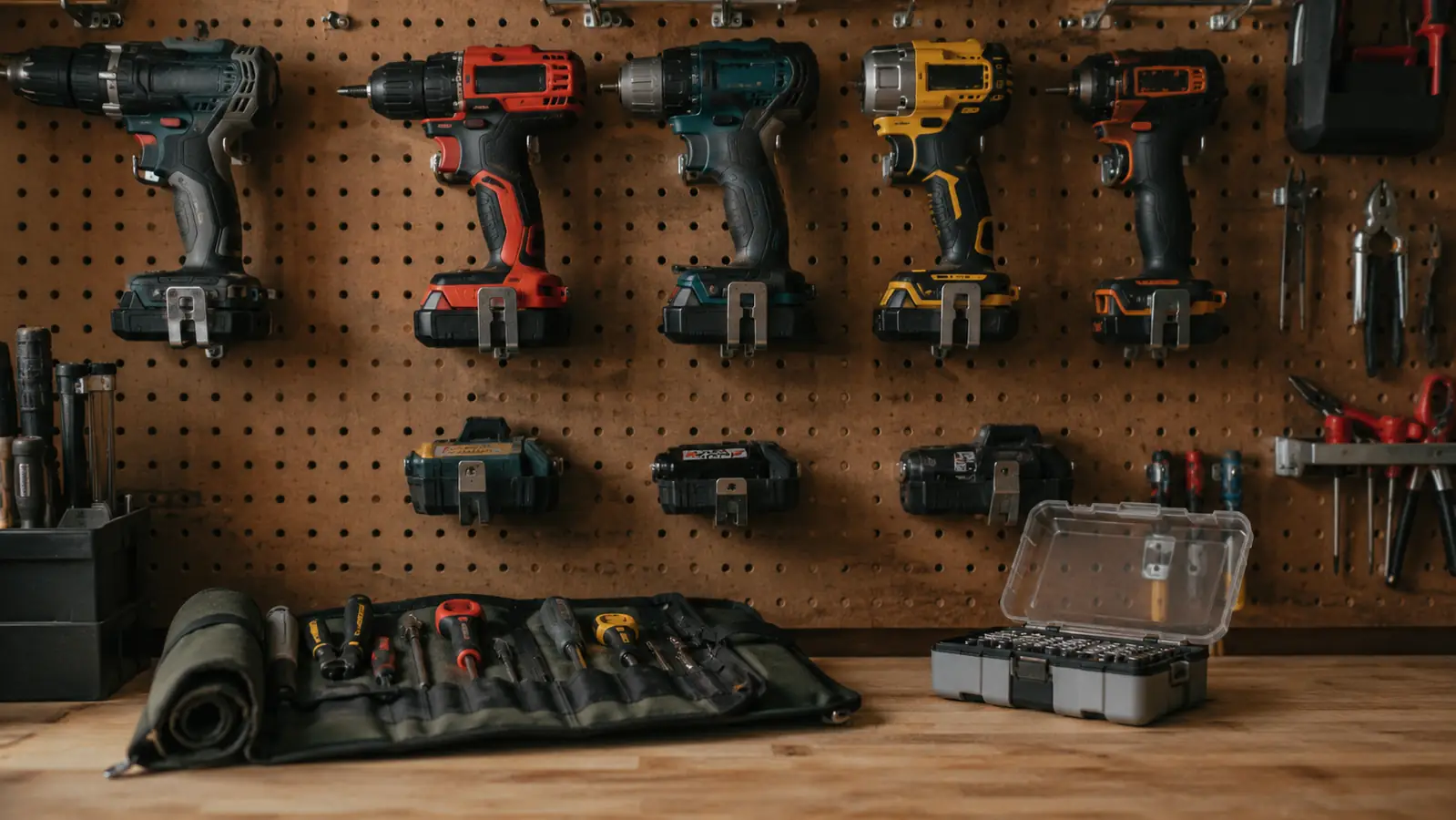
Before any of the drill comparisons matter, you have to settle the real decision, which is that you are not buying a drill. You are buying a battery platform. Whatever brand you start with, you are telling yourself which family of cordless tools you will reach for over the next ten years. That is where both brands shine, because both have enormous, well-supported ecosystems. DEWALT runs the same 20V battery across a huge line of homeowner and light-commercial tools, and Milwaukee backs its M18 with the biggest pro-grade catalog in the business. You are not going to run out of tool options with either one.
Here is the thing that settled it for me. I travel, I own property, and I need one kit I can throw in a bag and trust will still be supported when I go to add the next tool. DEWALT has been on its 20V platform for a long time, and I can see the parts, batteries and accessories staying available for years. That durability of the ecosystem, not the torque spec on a spec sheet, is why I would still pick it as a property owner. The day I need a fresh circular saw or reciprocating saw, I know my existing batteries and charger will run it, and a brand that keeps that promise for a decade is worth putting your money behind.
What Both Kits Get Right (and Where They're the Same)
For all the arguing the two camps do online, these kits have more in common than their fans admit. Both drills are more than capable of anything a house will throw at you. Both impact drivers will bury a deck screw without stripping the head if you have half an eye on it. Both chargers are fast enough that you rarely wait on a battery in the middle of a project. And both are robustly built, the kind of tools that shrug off a drop off a step or a knockdown in the back of a truck without complaint. If you are choosing between the two of them for general house work, you are choosing between two good outcomes, not between good and bad.
The honest truth is that most homeowners could pick either one and be perfectly happy for a decade. The difference matters most at the edges, in the raw power under a heavy load and in the price you pay for it, and both of those edges are ones I described above. So the decision really comes down to a two-word framing: are you a pro who lives in the ecosystem, or a property owner who wants one honest kit? Your honest answer to that question tells you which column to buy from.
The Real Cost Over Ten Years
Because I think like an investor, I do not just look at what the tool costs on the day I buy it. I look at what it costs over its working life. The DEWALT kit's lower price is the obvious part, but the real money is in the batteries and the ecosystem. Batteries wear out, and you will buy more. Every extra battery you buy for either platform costs real money, and the ones built for the heavier Milwaukee line tend to cost more. When you multiply that over a decade of tool buying on the same platform, the DEWALT path tends to leave more money in your pocket for the same real-world work.
Add in the fact that the tools themselves hold up, and the math gets even friendlier. Neither of these is a disposable tool that you will be replacing in eighteen months. Both should still be going strong five and even ten years down the road. The difference is that you reach that same endpoint having paid less to get there with the DEWALT, and with a platform that has historically been generous with what comes in the box. For a buyer who hates paying for a badge, that is the ledger that counts.
Who Should Buy Which
If you are the tradesman who makes a living with a cordless drill strapped to your side eight hours a day, buy the Milwaukee, and do not let a homeowner talk you out of it. The extra power and the deeper pro ecosystem genuinely pay you back on a jobsite, and nobody should pretend your drill is a hobby purchase. Spend the premium, because it earns its keep for you in a way it never could for me.
But if you are the guy I write for, the self-reliant homeowner who runs a house and a couple of rentals and wants one honest kit that earns its keep for a decade, the DEWALT is the better buy. You get ninety percent of the real-world capability for a good deal less, and the savings buy you the second set of batteries you will actually want. That is where the money goes. Spend it on the tool, not on the logo.
Start your battery platform with the kit that makes the math work
One drill, one impact driver, two batteries, a charger and a bag, all on the DEWALT 20V platform that will still be alive when you add the next tool. This is the honest place to start if you are buying once.
Amazon Check Today's Price on Amazon →