
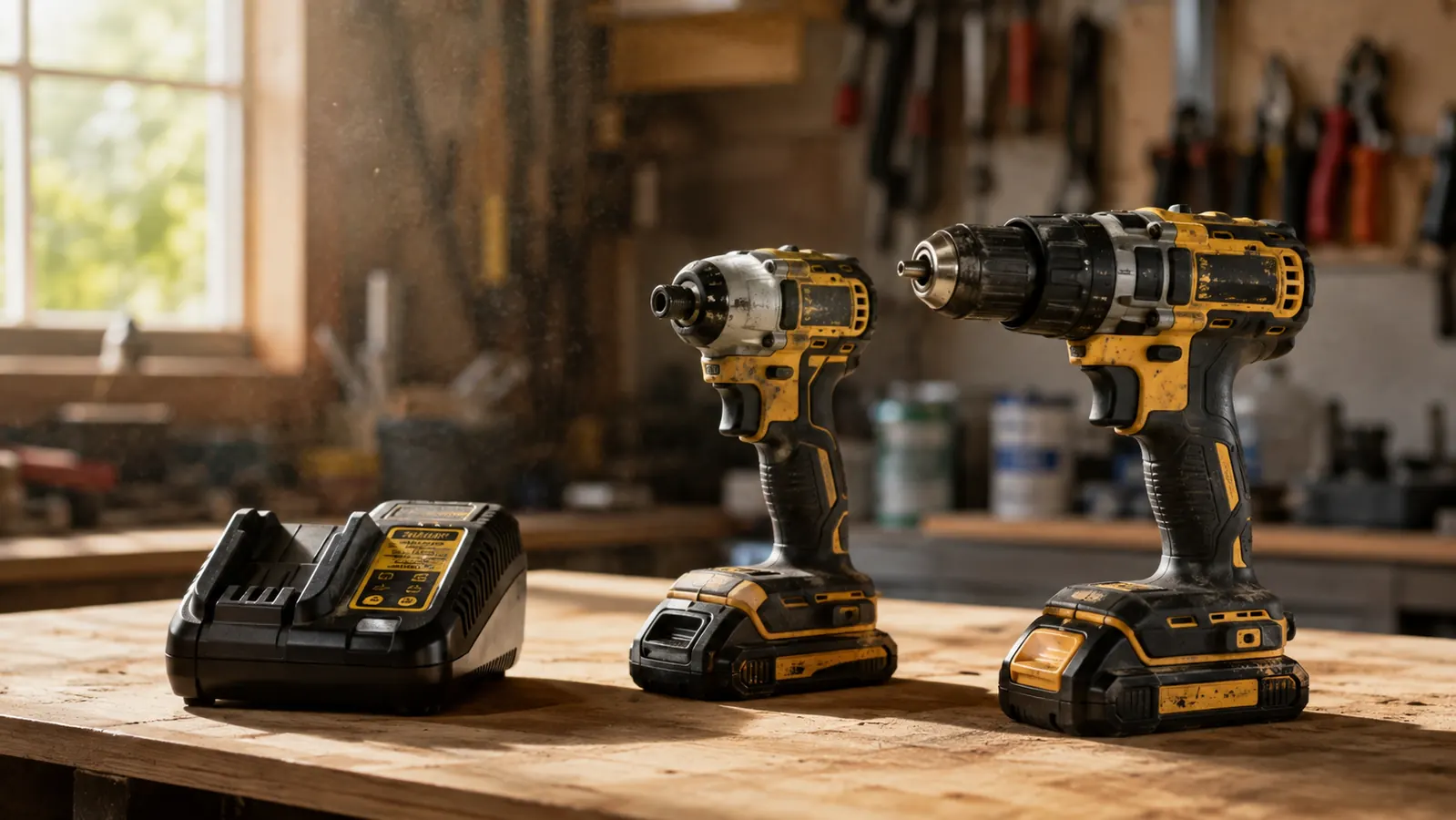
By the time you reach the reviews on this kit, you have either been burned by cheap cordless tools before, or you are a few bad experiences from being burned. The pattern in the five-star reviews on this page is consistent: great power, great price, buy it. What nobody writes about is the third hour of a Saturday, the December garage, or the second year. I have owned the DEWALT 20V MAX two-tool combo kit, model DCK277D2, for fourteen months now, on a house and a rental property that both eat weekends. This is the review I wish someone had walked me through before I clicked. It is shorter than it should be, and it is honest about where the value ends.
The 4.8 average from more than four thousand buyers is earned, and I am not going to argue with the crowd. What I want to do is split this purchase into its two halves, because the marketing treats them as one thing and they are really two different products. The tools themselves, the drill and the impact driver, have been nearly flawless in my hands, and I will say that plainly up front. The kit around them, two compact batteries, a basic charger, a soft bag, is where the honest conversation starts. My short version, the one I would give a neighbor over the fence: buy it, but plan for the kit before you buy it.
The Quick Verdict
Buy the kit for the two tools and the 20V MAX platform, which is where the real value lives. Budget one extra battery into the same order, understand the bag is packaging rather than protection, and this becomes a genuinely fair deal.
Amazon Check Today's Price →Fourteen months in, I would buy it again. I would just put an extra battery in the cart first.
That is the whole honest review in one sentence. The tools have never let me down; the two-battery layout has pinched me at exactly the wrong moments. Read the section below on battery math, then check today's price while the kit and an extra compact cell are both on the page.
Amazon Check Today's Price on Amazon →How I've Used It
I am not a contractor, and this is not a jobsite review. I am a homeowner in his sixties who does his own work, owns a small rental property that absorbs weekends, and keeps a two-car garage with workbenches I built myself. Since last spring, this kit has rehung a storm door, driven roughly four thousand deck screws between a privacy fence and a pergola, replaced the drain assembly under a bathroom vanity, and built a workbench that has now survived two winters. In other words, it has done ordinary, repetitive, real work, the kind that separates a good tool from a decent one.
The drill has handled every bit I have fed it: 3/4-inch spade bits through pressure-treated 4x4s, a diamond bit through a porcelain backsplash, pilot holes of every size, and a self-feed bit through a pantry shelf. The impact driver has done the driving, including two dozen self-tapping screws through steel framing for a shed shelf, seated without a single blush, which is more than I can say for the two cheaper drivers I burned through before this kit. The pair has never once refused a job on a battery that was honestly charged.
One habit first, because it is doing more of the work than the tools are: I keep the batteries inside the house all winter. The kit lives in the garage; the cells live in a kitchen drawer. That single habit, more than any feature printed on the box, is why this kit still meets expectations going into its second year, and it will show up again later in this review.
The Two Batteries Are the Real Story
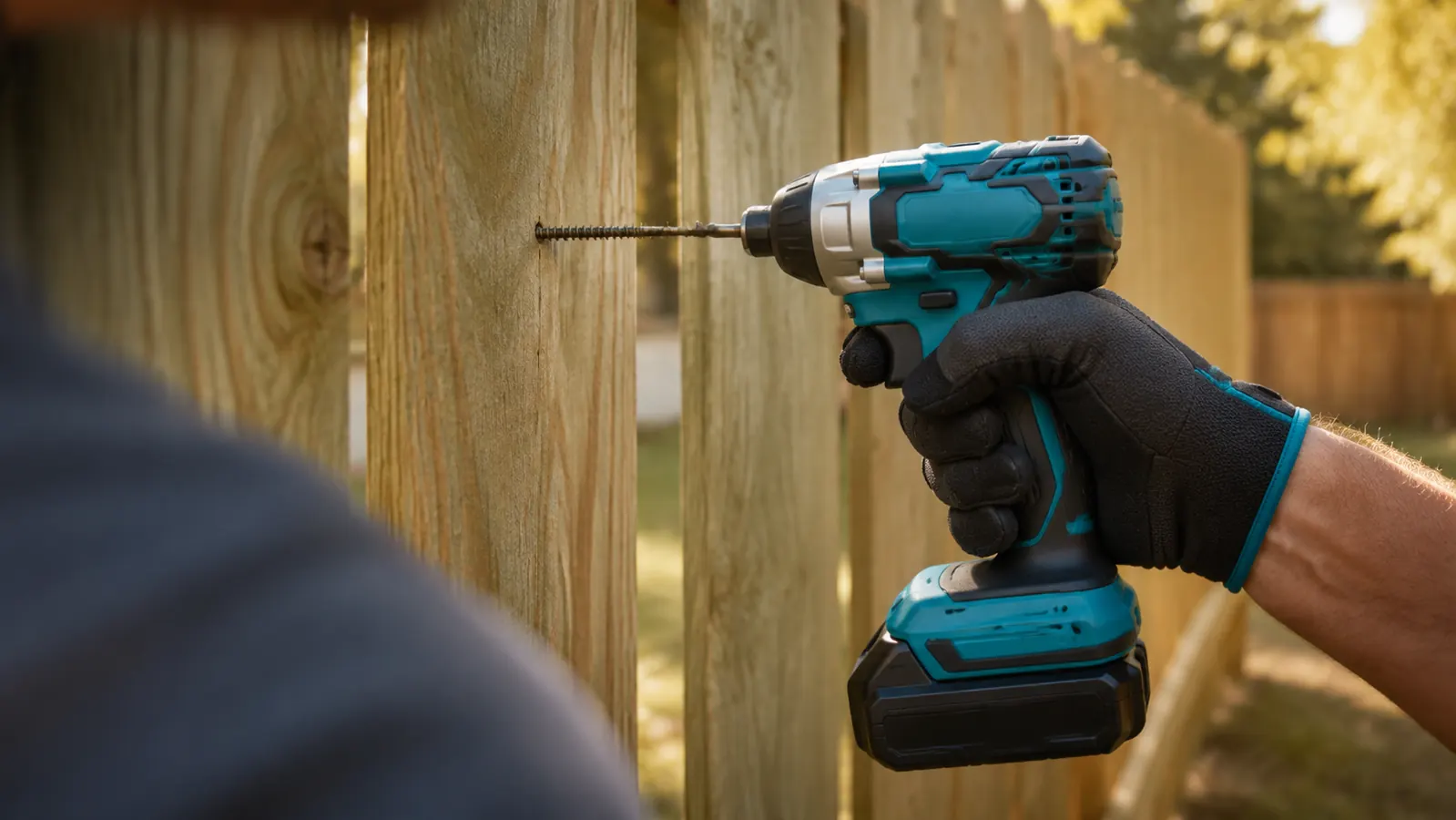
Here is the sentence that should be printed on the box in bold: this kit ships with two compact 2.0 amp-hour batteries, and two of them is about half of what a property owner actually needs. On a light day, hanging pictures, assembling furniture, small wiring jobs, two batteries will last all afternoon. On a real day, any day you are driving fasteners constantly or running a spade bit or a hole saw, the first cell gives up by mid-morning and the second by early afternoon. Then you sit and watch the standard charger do its slow work while your project waits for you, not the other way around.
The sag gets worse in the cold, and I want that said plainly because the reviews never say it. On a December morning doing freeze-protection work at the rental, batteries came off the charger at room temperature, went out into the cold, and lost steam inside about fifteen minutes of impact work. Warm them in a coat pocket and they behave markedly better. Lithium cells simply do this, and Milwaukee compact cells sag the same way, so read it as physics rather than a DEWALT defect. But cold weather is exactly when a homeowner has emergency work to do, so the cold behavior deserves a place in the decision, not a discovery the spring after you buy.
The runtime math in plain terms: the kit gives you two modest cells and one charger, which means on a heavy day most of the afternoon involves only one battery being topped up at a time. A third cell changes the whole rhythm of a project, because there is always a charged battery waiting on the bench. That one addition costs a fraction of the kit's price and does more for your Saturday than any number of extra features could.
Chuck Wobble: Real, and Rarely Mentioned
The drill's half-inch chuck has never dropped a bit, not even a 1/16-inch bit in a tight corner, and the ratchet locks hard and releases clean every time. What it does under load is wander. Bury a spade bit in a 4x4 and drive it hard and you can watch the tip wobble a hair off true. On the vast majority of holes it does not matter, which is why most owners never notice it. On the day you are drilling matched holes for shelf pins, or holding a hinge mortise square by hand, the wander shows up, and you learn to aim where the bit actually sits rather than where it looks like it sits.
To be fair about it, every chuck in this price class shows some runout, including chucks on kits that cost twice as much. I file this under acceptable-for-the-dollar, not under send-it-back. But it is exactly the detail that disappears from five-star reviews, and you have the right to know it is there before you buy. If your work is precision drilling week after week, price up a tier and expect the wander to shrink; if your work is ordinary drilling, forget you read this paragraph and move on.
The Bag Is Free, and It Acts Like It
The carrying case is a soft bag with a flap and a zipper, and it is the part of this purchase that most loudly reminds you of what you paid. After a year of being filled to its comfortable limit and set on garage floors, the zipper is already straining at the corners, and the cloth will not shrug off a hard drop onto concrete. The interior pouches are sized for the compact batteries, so the moment you buy a third cell, as I am telling you to do, the bag stops working as designed, because one battery no longer has a home in it.
I keep the tools in a wide-mouth toolbox, the batteries in a drawer, and the soft bag folded in a closet where it holds a spare set of bits. Treat it as temporary packaging rather than a case and you will never be disappointed by it. That is my summary of the honest-feedback items, and they are all this small: the kit's problems are packaging problems and battery-count problems, not tool problems, and that distinction matters.
The tools have never once left me standing with a stripped screw or an undrilled hole. What this kit does is run out of battery at the wrong moment, and that is the trade you are buying into with two compact cells.

Where the Five-Star Reviews Are Right
To give the crowd its due, the reviews are right about most of it. The brushless motors are genuinely efficient, which is how a single compact cell drives as many screws as it does before giving up. The balance is good enough that after a full afternoon driving fasteners with the drill overhead, installing ceiling fixtures and light track, my forearms did not feel like the day after arm day. And the impact driver has wanted for nothing I have ever asked a man-sized driver to do, including seating 5/16-inch lag bolts through four inches of framing while I held the stock with one hand.
The price is where the kit wins the argument outright. For what a comparable two-tool Milwaukee M18 brushless kit runs, you can buy this DEWALT kit, add the third battery I keep telling you about, and still have money left for a solid set of bits and a driver-bit case. If you want the deeper durability picture, I wrote a longer-term review at fourteen months, and if you want the platform math against Milwaukee laid out row by row, that comparison lives on this site too. Both drill deeper than this column, which is the honest-confessions version, and neither contradicts a single sentence here.
The Honest Math on Buying More Batteries
I weigh every tool purchase the way I weigh a rental repair, does it pay for itself in saved labor or does it not. By that measure, the tools in this kit paid for themselves inside one season of fence and pergola work, because the alternative was hiring out or borrowing. The batteries are the only part of the purchase that made me stop and do the arithmetic twice. Two cells and a slow charger mean one battery is always in the process of dying, and my time has a cost, so the third cell became the cheapest upgrade I made to the whole kit.
When I priced it out, buying the kit together with one more compact battery, without chasing the higher-capacity cells, changed the character of the purchase more than any tool upgrade could have. Two cells and the standard charger mean only one battery is ever full at once. A third cell means there is always a charged battery sitting on the bench, and your Saturday stops being a series of charging breaks. In terms of money against time saved, it is the best add-on in the entire 20V MAX catalog for a homeowner running this exact kit, and you should assume it into your budget from day one.
There is a longer argument hiding in that math, and it is the reason the kit makes sense at all. Buying into the 20V MAX battery family, not just these two tools, is the real purchase. Every bare tool I have added since, the circular saw, the reciprocating saw, even a used leaf blower, drops onto the same cells, and the DCK277D2 is the cheapest two-tool door into that system I have found. Fifteen months in, the two original batteries still accept a full charge, hold it through a week in a drawer, and drive the same number of screws they did on day one. That durability matters more to me than any spec on the box, and it is why the kit, rather than bare tools, was the right first buy.
What I Liked
- Impact driver has all the drive you need for 3-inch and longer deck screws, day after day
- Light, well balanced tools that do not wear you out on overhead work
- The 20V MAX platform means every future DEWALT bare tool drops onto this battery family
- Sensible entry price for a brushless pair; check today's price before you decide
Where It Falls Short
- Two compact 2.0 amp-hour batteries are half a day of real work on a bad day
- Cold weather cuts runtime and load capacity noticeably
- Chuck grips hard but wanders a little under heavy drilling
- The soft bag is basically disposable packaging
- Standard charger is slow when only one of your two batteries is ever topped up
Who This Is For
This kit is for the homeowner who wants one battery platform and intends to finish the job right, the person who will add a third cell before the first hard season and treat the bag as packaging, which I hope this review has talked you into. It is a defensible buy for building furniture, hanging doors, keeping a fence sound, light steel work, and the endless fixing that a rental property hands you on cue. It would also make a strong first kit for a young homeowner opening a toolbox, because the 20V MAX system is the easiest battery platform in America to grow into, and you will not outgrow this pair for years.
Who Should Skip It
Skip it if your work is genuinely heavy, the kind that has you reaching for a corded drill out of frustration: 1-inch hole saws hour after hour, lag bolts by the dozen, fasteners into engineered lumber every weekend. Skip it if you are starting with nothing and know you will want a circular saw and a reciprocating saw right away, because the compact battery platform will feel short on those tools and you will end up buying a larger kit anyway, making this one overhead. And skip it if your work happens mostly in real winter and you will not walk the batteries inside, because the cold will take what is already a modest runtime and make it embarrassing.
The version I would tell a neighbor over the fence
Buy the kit for the tools, add one more battery in the same order, keep the cells inside during winter, and stop reading about cordless drills for a decade. That is the entire review, and it is what the three-page write-ups will not hand you. Check today's price on Amazon and see whether the numbers still make this the obvious answer for your shop.
Amazon Check Today's Price on Amazon →