

Every tool on this site gets the same test: did it earn its keep, or did it sit in the drawer and remind me I wasted money? I bought the DEWALT DCS356C1 oscillating tool for one job back in April of 2024, a rental property where the flood cut out a six-foot stretch of baseboard and quarter-round. I needed to cut flush against a door jamb without marring it, and an oscillating multi-tool is the only thing that does that well. Two years and maybe sixty jobs later, I know exactly what the twelve thousand five-star reviews will not tell you.
I am not going to bury it: this is a very good tool, and I would buy it again. But the five-star crowd is reviewing the thing out of the box. The honest math comes from living with it, because this tool's real cost is not the purchase price. It is the blades, it is the vibration you feel in your fingers after an hour of grout, and it is the battery that seems to vanish when you need it most.
The Quick Verdict
A brilliant cutter that drains batteries and eats blades faster than any other cordless tool I own. Buy the tool, budget for the prices, and you will never regret it. Skip the blades the box gives you.
Amazon Check Today's Price →The multi-tool that earned its spot in my daily bag
After two years and sixty-odd jobs, the DEWALT DCS356C1 is the tool I reach for when nothing else will do a flush cut. Check today's price before you commit to another weekend of crowbars and spackle.
Amazon Check Today's Price on Amazon →How I've Used It
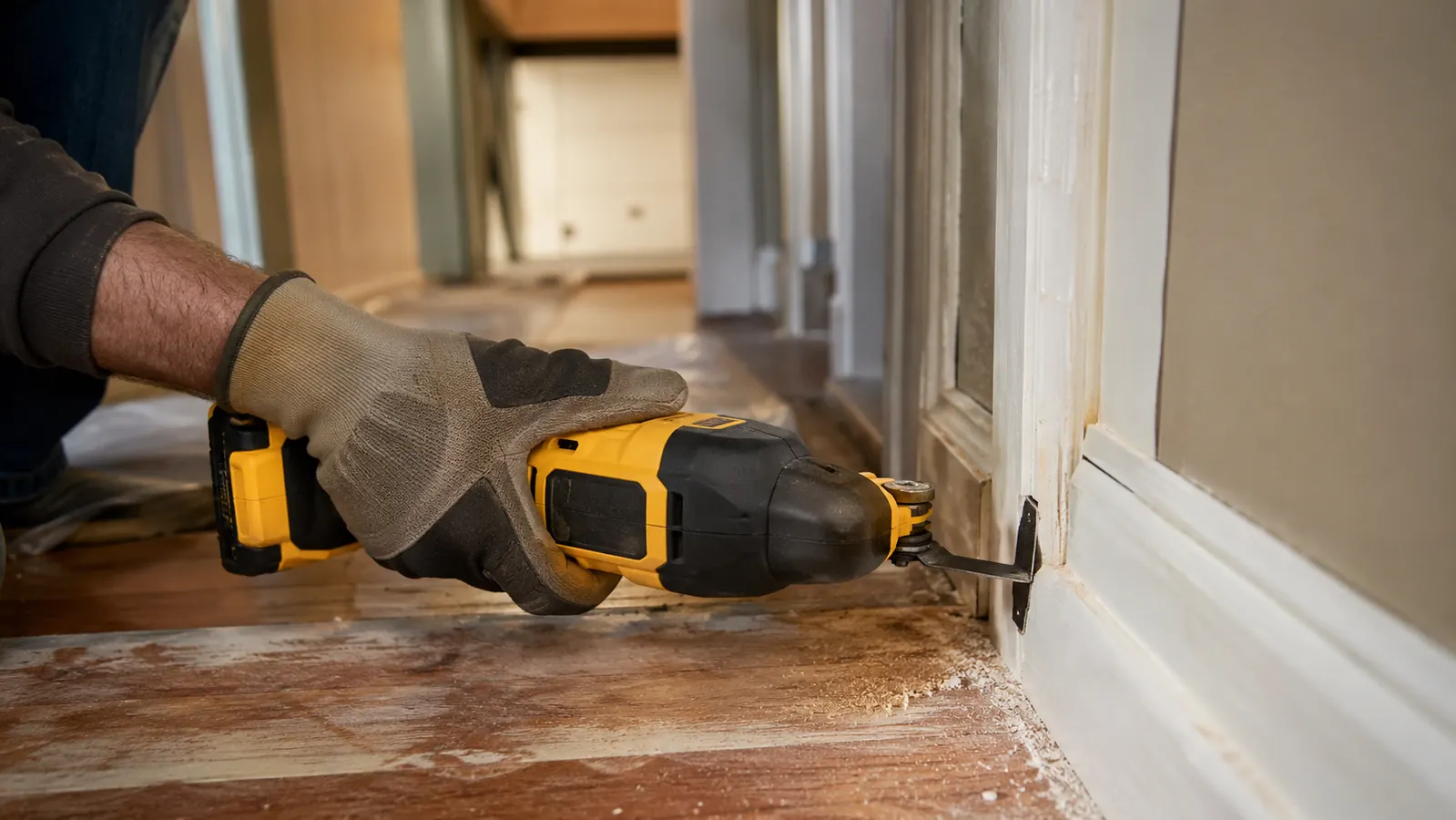
Context matters, so here is the baseline. I am 64, I do my own work on two rental properties plus my own house, and I keep a small shop that is only as good as the tools that actually get grabbed. The DCS356C1 came in for that 2024 flood repair and never went back in the box. Since then it has cut door jambs for new laminate, trimmed a door stop that was binding, cut a hole in drywall for a new outlet box, sliced through a PVC drain that had to come out in pieces, and ground out old caulk and grout that every other tool refused to touch.
The three speed settings are not a gimmick. I keep it on the low speed for plunge cuts into drywall so I do not punch through the other side and put a gash in the stud. Mid speed is my default for wood. High speed, up to 20,000 oscillations per minute, is for grout and for the jobs where patience is not an option. The LED light at the front is honestly one of the most useful features on it, because half the jobs an oscillating tool does happen in a tight, dark corner.
What surprised me is how often I grab it for a one-minute job. Trimming a hinge notch, cleaning a miter joint that closed crooked, shaving a hair off a door that drags. Tools live on a bench; this one lives in my truck, because it solves problems the second you see them. That alone shifted my whole feeling about the purchase.
That habit is also why I want to note the platform. I was already on DEWALT's 20V battery system for my drill and impact driver, and this tool slots right into that existing fleet of batteries. That is a real, quiet advantage that a review rarely mentions. If you already own DEWALT cordless tools, the oscillating tool is a fraction of a fresh purchase because it shares batteries and chargers. If you are starting from an empty bench, that battery investment is a bigger part of the real cost.
What the Reviews Don't Tell You About the Blades
Here is the honest confession. The box comes with a handful of blades, and most of them are throwaways. The included blades dull fast, especially the ones meant for wood, and the moment you push one hard against a nail you have just ruined it. My first month I treated blades like they were free, because the price of the tool felt like the whole cost. It is not.
A good carbide wood blade runs real money, and you will use several on a single trim job. I have gone through a surprising number in two years, and the blade bill has long since mounted past what I expected when I opened the box. This is not a flaw unique to DEWALT; every oscillating tool is a blade eater. But if you are weighing this against a cordless saw for the same money, know that the oscillating tool has a fuel cost the saw does not.
The quick-change mechanism is the part I would tell any owner to learn on day one. No Allen wrench, no fumbling with a locking nut. You twist a collar, the blade drops free, a new one snaps in. It sounds minor until you are up on a ladder with one hand and realize a blade swap that takes two seconds keeps you working, while a five-minute fight with a hex key ends the job for the day.
A word on buying blades, because this is where a lot of owners get burned. The several blades in the box are fine for a first weekend, but I stopped buying aftermarket knockoffs within a month. The cheap ones vibrate worse, wander off the cut line, and dull within a few minutes, which costs me more time than the few dollars I saved on the blade. I now buy the branded carbide blades in a small pack and treat them as the running cost of owning the tool, the same way I accept that a trimmer needs line and a chainsaw needs chain oil.
The box gives you blades that will not last a weekend, and the good ones cost real money. That blade bill is the real price of this tool, and nobody in the reviews says it out loud.
The Harsh Truth About the Battery and the Vibration
Now the two confessions that stop this from being a perfect five. First, the battery. An oscillating tool runs a blade back and forth at twenty thousand cycles a minute, and that motion is harder on a battery than a drill spinning a bit. On a 5 amp-hour DEWALT battery, I get maybe forty-five minutes of real cutting before the tool taps out. On the 2 amp-hour batteries that come in some kits, plan on a short session and then a recharge.
This is not a tool you leave on all day the way you would a circular saw. It is a finisher. You bring it out for the cut that nothing else can make, get the job done in five or ten minutes, and put it back. If you approach it that way, the battery draw is a nonissue. If you expect it to shred a whole sheet of plywood, you have bought the wrong tool for the wrong reason, and the battery will confirm it.
Second, the vibration. Any oscillating tool vibrates; that is the mechanism working. But after an hour of continuous grout removal in a shower, my hand is buzzing and my fingers feel a little numb for a while afterward. DEWALT did not build the DCS356C1 with the sort of heavy anti-vibration handle tech you find on the pricier Milwaukee models, and you notice it on the long, monotonous jobs. For short bursts it is fine. For an afternoon of scraping, take regular breaks, wear a glove, and switch hands.
The glare of the truth is that most owners never spend an hour straight on this tool, and for them the vibration complaint reads as nitpicking. I get it. Eighty percent of my use is two minutes here and five minutes there, and in that mode the DCS356C1 is comfortable. The hand fatigue only shows up on the grout and scraping jobs where there is no way around an hour on the trigger. If you mostly do trim, baseboard, and doorway work, you will barely notice it. If you plan to strip a whole shower's worth of old caulk, build in breaks.
The Dust, and Why You Need a Shop Vac Handy
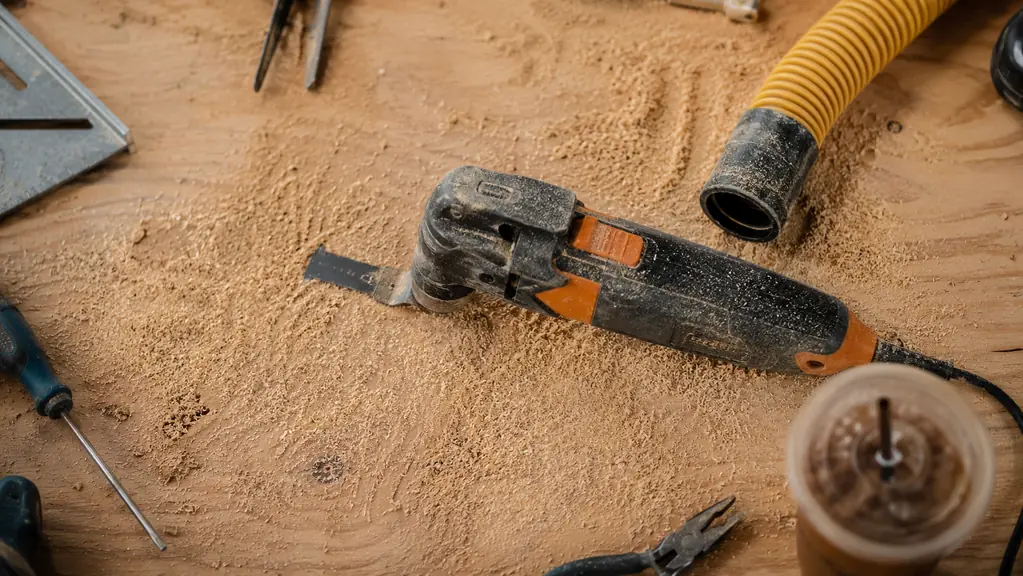
The last thing nobody posts about is the dust. An oscillating tool is a chaos machine that throws fine particles everywhere, and none of it ends up in a convenient place. Cutting drywall with this tool coats the whole room in a fine white film. Cutting grout makes a mess that settles into every seam around you.
DEWALT sells a dust port for this tool, and I would strongly suggest budgeting for it. I run a shop vac hose right alongside the blade on the messy jobs, and even then I am wiping things down afterward. If you are renovating a room you plan to live in, set up drop cloths and a fan before you start. The tool does the cutting beautifully; it will do nothing at all to spare you the cleanup.
I also want to be fair here. The dust is not a DEWALT-specific failing, and it is not a reason to avoid the tool. Every oscillating multi-tool on the market slings grit the same way, because the constant rapid oscillation has nowhere to send the material but sideways. The remedy is simple and cheap: a dust port, a shop vac, and ten seconds of setup before you start. Plan for that and the dust stops being a complaint and becomes just another part of the job.
Who This Is For
Buy the DEWALT DCS356C1 if you do your own trim, flooring, and finish work, and you are tired of marring door jambs and baseboards because nothing else will cut flush. It is the right tool if you own rental property and want a single versatile tool that handles door repairs, outlet cutouts, caulk removal, and a dozen one-off fixes without dragging out a whole saw bag. It pays for itself the first time you avoid chiseling into a door jamb.
Who Should Skip It
Skip it if your projects are almost all framing and sheet goods, because a cordless circular saw or a jigsaw will cut faster and cheaper per job, without the blade bill. Skip it if you only need it once a year, because the battery platform is a bigger commitment than the occasional flush cut justifies. And if you expect it to be a full-day workhorse, buy the higher-end option with the anti-vibration tech and the bigger batteries instead, because this one is a specialist finisher, not a heavy production tool.
And be honest about which camp you fall in before you spend the money. An oscillating tool is the right tool for a narrow but essential set of jobs, and it is a poor general-purpose saw. If you picture yourself reaching for it constantly, you probably will, and it will earn its place. If you picture it gathering dust on a shelf because a jigsaw or a multitool already covers your needs, save the money and put it toward blades for a tool you actually use.
What I Liked
- Flush cuts against jambs and trim that no other tool handles
- Tool-free blade changes, quick and easy even one-handed
- Three speeds plus a genuinely useful built-in LED light
- Comes with a battery and charger, ready to run out of the box
- Brushless motor, solid DEWALT build that holds up to abuse
Where It Falls Short
- Eats blades, and quality blades cost real money over time
- Drains batteries faster than any other cordless tool I own
- Noticeable vibration in the hand on long grout and scrape jobs
- Throws fine dust everywhere; you will want a shop vac and dust port
- Included blades are throwaways and dull fast against nails
So Would I Buy It Again?
Yes, without hesitation. I spent two years finding this tool's faults so you would not have to, and the honest truth is that none of them talk me out of it. The blade cost is real, the battery is thirsty, the vibration is there on the long jobs, and the dust is a mess. Every one of those is true of every oscillating tool on the market. What is not true of every tool is that it makes a flush cut look easy, saves a door jamb every time it is used, and still runs like the day I bought it after sixty jobs.
For a guy who weighs every tool against the question of whether it pays for itself, the DEWALT DCS356C1 is one of the rare purchases where the answer is comfortable. It earns its keep every time I reach for it, and I reach for it more often than I expected. That is the honest bottom line, and it is the whole review.
The specialist finisher that earns its keep
Two years in, the DEWALT DCS356C1 is the tool that saves door jambs and trims the jobs nothing else will touch. If you do your own finish work, check today's price and you will probably not be sorry.
Amazon Check Today's Price on Amazon →If the honest version has not talked you out of it, that is the point. I set out to find the case against the DCS356C1 and the case is real, the blade cost, the battery thirst, the vibration on long jobs, the dust. But every one of those is a cost I knew going in and every one is worth paying for the tool that cuts a flush line no other tool in my bag can. The waste is not the price of the tool, it is buying a cheap one twice or giving up on the job and calling a contractor. Two years in, I reach for it more than I reach for most things in the shop, and it has saved me more door jambs and more repair calls than I can count. That is the honest bottom line, and it is why, faults and all, I would buy it again tomorrow.