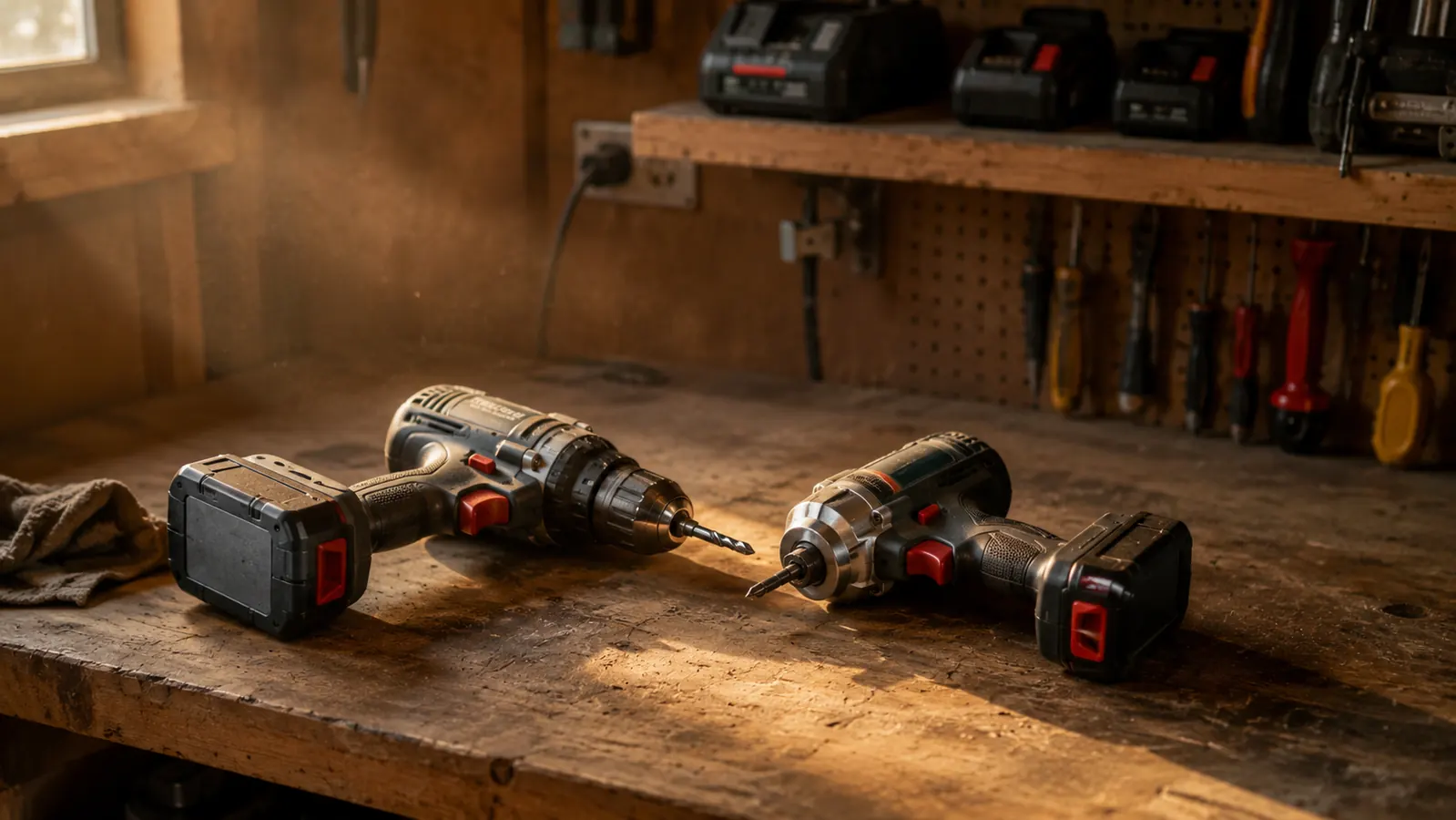
Last spring my nephew closed on his first house and called me from the tool aisle of a big box store with the question I hear every year: a discounted drill-and-driver special sat in his basket and a five-tool rolling stack was on sale at the end of the row, and he wanted to know what a guy actually needs. I told him both were wrong, and that the wrong answer to this question is expensive twice. Once for the tool you throw out, and again for the tool you buy to replace it.
Here's the thing nobody tells a first-timer about cordless kits: the drill in the box is the least important part of the purchase. The batteries and the charger are the real product, because every cordless tool you add over the next ten years runs off that same battery platform. That's why I start people with a platform like DEWALT's 20V MAX and work backwards from there. Choose the platform first, and the drill part takes care of itself. Choose the drill because of a coupon, and you'll be living with a dead ecosystem.
The kit I'd hand the guy who just closed on his first house
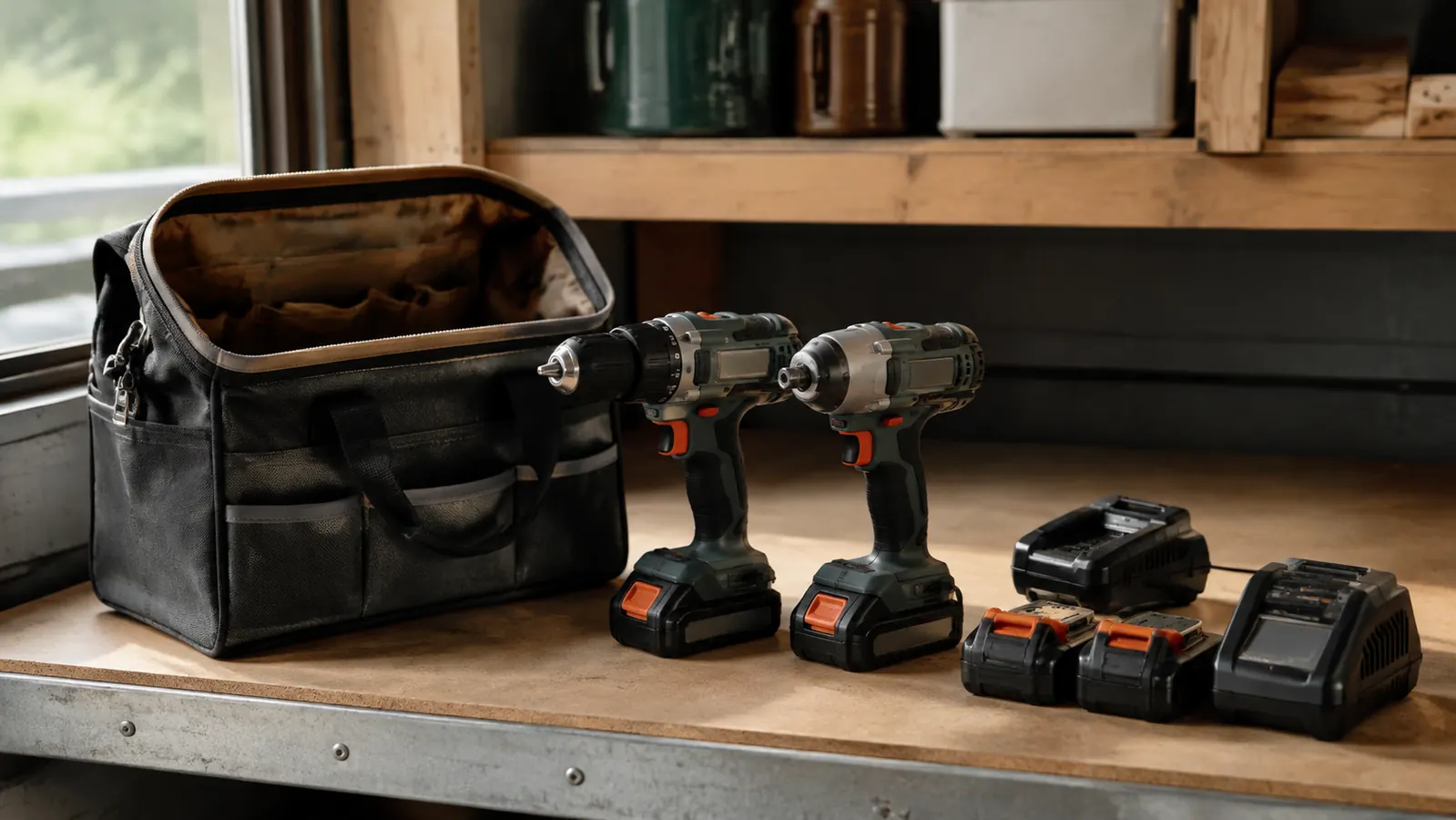
The DEWALT 20V MAX two-tool combo has the drill, the impact driver, two batteries, a fast charger, and a carrying bag, all on a platform with more add-on tools than you'll ever run out of projects for. It's the kit I'd buy again tomorrow.
Amazon Check Today's Price on Amazon →Step 1: Choose the battery platform before you choose the drill
The moment you buy any cordless tool, you're buying a promise that the batteries in your hand will keep working with every tool you add later. DEWALT's 20V MAX is one of the deepest lineups you can buy into: drills, impact drivers, circular saws, reciprocating saws, sanders, angle grinders, even string trimmers and blowers. If you own the house and the rental that goes with it, that's not idle math. The same two batteries that hang a shelf in the kitchen on a Sunday run a trimmer around a rental's yard on a Saturday.
So when you compare kits, don't compare the drills first. Compare the wall of tools that carries the brand name. Ask what you'll need in the next two years. A new sink means a pipe wrench and maybe a reciprocating saw. New shelving means a driver and a level. A deck project means a circular saw. If the brand you picked can't add any of those without a different store and a different battery, you chose wrong.
There's a cost angle here that never makes it onto the box. Every tool you add later that shares the batteries costs you the bare tool only. The moment your first kit commits you to a battery format, every future purchase in that format avoids the bundled battery, charger, and bag that came along for the ride. Over five years and four or five tools, that's real money, and it's the quiet argument for choosing an established platform even when a smaller brand's starter kit is cheaper today.
Step 2: Know what the voltage number actually buys you
Every tool aisle shouts volts, and most of it is theater. The big-brand 20V MAX pack runs at about 18 volts at the cells, and the extra digit is peak marketing math. Between the major 18V-class brands, there's no real difference in that number. Don't pay more because one box says 20V and another says 18V. That's not a specification, it's a sticker.
The real question is whether you want 20V-class at all, or whether a 12V driver is the honest answer for the work you actually do. A 12V driver is small, light, and perfect for cabinet hinges, face-frame screws, and furniture that arrives in a flat box. If that's genuinely all your week holds, a 12V platform gets into tighter places than a 20V drill ever will. But it's a second tool, not a first one. When you bore a one-inch spade bit through a stud, or drive three-inch deck screws all afternoon, 20V-class is the tool that doesn't stall and sing at you. Start at 20V.
For a first kit, 20V-class covers the property work, and the 12V can wait until you're doing so much cabinet work that the big tool feels like a brick. That's the honest order of purchase, and buying in that order is how you buy once. When I put DEWALT up against its closest rival in a side-by-side test, the differences worth caring about were ergonomics and battery deals, not the number on the box.
Step 3: Learn the difference between brushless and brushed
Two kinds of motor go into these tools. A brushed motor pushes current through carbon brushes that wear down over time, and it throws off heat that you pay for in battery life. A brushless motor does the same job electronically, with nothing to wear out, and it delivers more torque for the same battery, runs longer on a charge, and usually lasts longer. The catch is the price. Brushless costs more up front.
Here's the honest version, because it matters for your wallet. If your real workload is hanging two shelves a year, a brushed drill will do that for the rest of your life, and the brushless premium is money you didn't need to spend. But here's the tell that gets most people: they overestimate how little they'll use it. The first kit is for building the shed, fixing the fence, hanging the new door, putting up storm windows. Inside a year that's real work, and the brushless difference shows up as a battery that's still half full when the job is done.
The kit I recommend here is brushless on both tools, and it's what I'd buy again. I'm not telling you brushless is the only honest choice. I'm telling you to buy it if your projects are more than occasional picture frames, and to be honest with yourself about which bucket you're in. That self-honesty is the difference between buying once and buying twice.
Step 4: Buy the two-tool kit, the drill and the impact driver
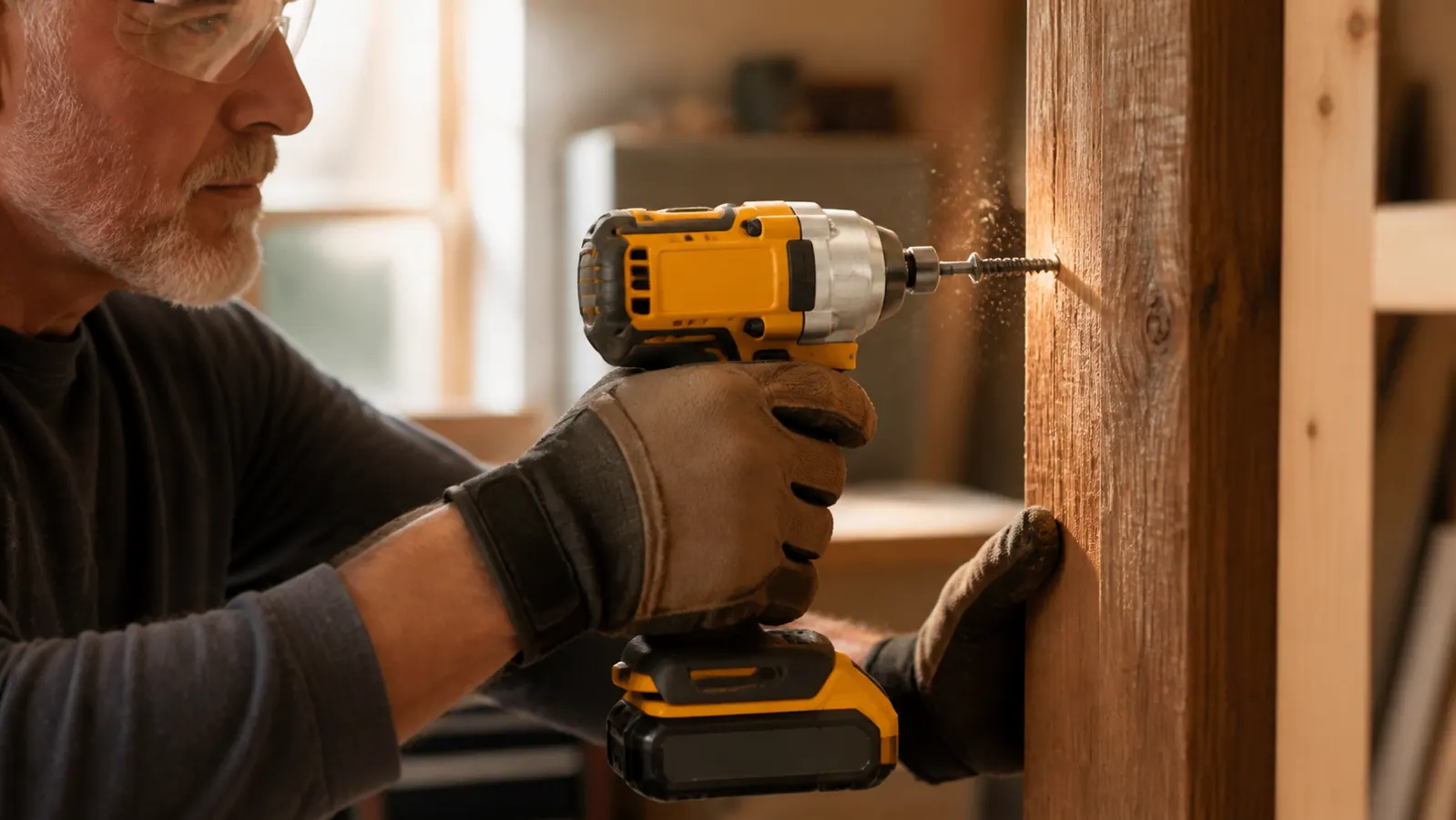
The biggest mistake I see in the drill aisle is buying one tool and stopping there. A drill bores holes. An impact driver drives screws. They are two different tools, and each does the other's job badly. The impact driver hammers a three-inch deck screw through a stud without stripping the head and without you leaning your whole weight into it. The drill spins a paddle bit through framing without shaking your wrist apart. Both of them in one box covers nine out of ten jobs a homeowner touches.
Buy them as a two-tool kit and you get one set of batteries, one charger, and one bag doing double duty, at a sticker price lower than buying the pair separately. That's a genuine deal, not a gimmick. The DEWALT DCK277D2 bundles exactly that: the drill, the impact driver, two batteries, a fast charger, and a carrying bag. I'd skip the so-called kits that are really one drill plus a box of bits dressed up as a two-tool deal.
I know the temptation to save a few dollars and buy just the drill, because the impact driver looks like a shorter, fatter version of the same thing. It isn't. Put the drill in drive mode and you'll strip heads all afternoon, because it doesn't have the hammering action that seats a screw without fighting you. The driver's hex chuck takes quarter-inch driver bits, which is half the reason it's the tool you'll reach for on every assembly job. The drill earns its keep boring holes; the driver earns its keep fastening. You want both in the bag.
Step 5: Read the fine print on battery, charger, and warranty
Check the amp-hour rating on the batteries before you check almost anything else. A 2.0 amp-hour pack is the starter battery: fine for the drill's lighter work, short on a long Saturday. A 4.0 or 5.0 pack lasts noticeably longer and weighs more. For a first kit, two 2.0 packs and a fast charger beat one 4.0 pack with a slow charger, because one pack can top up while the other one works.
Then read what the box actually contains, the way you'd read a prospectus: which tools, how many batteries, which charger, what accessories, what bag or case. Most manufacturers put a three-year warranty on the tool, and it's only as good as the registration you file, so file it. And give the charger a permanent home. A wall spot with a drill-bit set and a spare battery within arm's reach is the difference between a tool you use and a tool you find under a bench years later.
Give the drill itself a quick once-over before you commit. A keyless chuck that tightens by hand, a two-speed gearbox, and a clutch ring with a real range of settings turn a frustrating job into a screw that sinks exactly to the depth you want. Fifteen clutch settings isn't a luxury when you're installing cabinet pulls on a rental's doors.
What Else Helps a First Kit Earn Its Keep
The kit is the start, not the finish. A good set of drill bits and a generous package of driver bits matter as much as the tool itself. A number two Phillips bit that strips after two screws will make the best driver in the world feel cheap. Buy quality bits, keep spares in the bag, and put a magnetic bit holder on the workshop wall while you're at it.
And size the outfit for five years, not for next weekend. The two batteries that come in the kit are the baseline for every project after this one. If a deck is on the list, a bigger pack or a second set will be your first add-on, and it's a purchase made on purpose, not in a panic on project morning.
One thing I'd add to the plan is a second battery even though I know the part about budget. Batteries are the consumable in cordless ownership; they wear out years before the motor does, and the price on a replacement pack keeps falling while the platform stays current. That's also why buying into a battery system that will still be sold four years from now is worth a little extra money today. A tool with a live battery platform keeps its value. A tool on a dead one is scrap with a charger.
I stripped more screw heads in one Saturday with an old brushed drill than I have in two years of weekend projects with the impact driver. That's the difference the right first kit makes.
Buy the platform once, and the saw, the sander, and the trimmer all plug into it
I've run this same DEWALT 20V MAX drill and impact driver combo at my own place for well over a year, and the longer review goes into what held up and what didn't. Today's price on Amazon moves around, so use the box below to check the current one.
Amazon Check Today's Price on Amazon →