My rule for a tool is the same as for a stock: if it does not earn its keep, it does not get shelf space. So for years I talked myself out of owning a rotary tool, because the version I remembered was the cheap off-brand thing some guy used to engrave a beer mug, a gadget that sits in a drawer after the novelty wears off. I was wrong, the way you are wrong about a lot of tools until a specific job starts costing you real money. When I started counting the trips to the hardware store for a sharpened blade, a box cutout, a tube of polish I only needed once, that little motor started looking less like a toy and more like an investment.
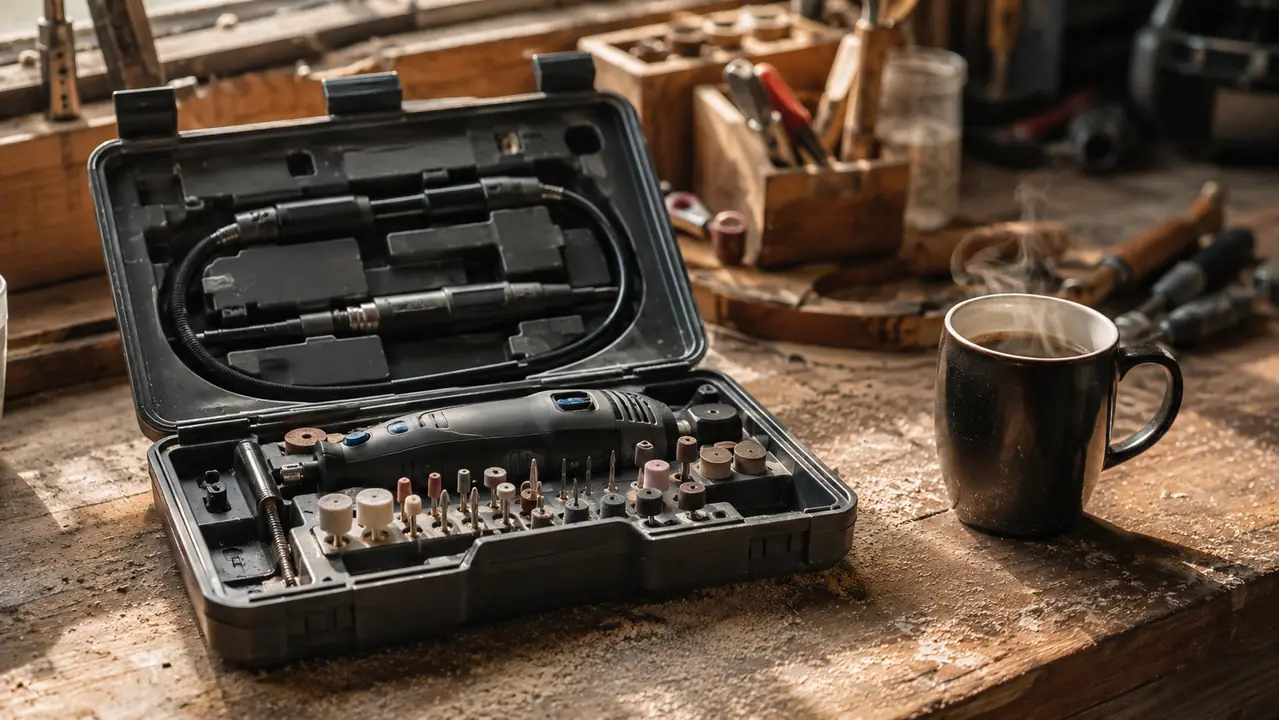
The tool that changed my mind is the Dremel 4300-5/40, the corded kit that ships with five attachments and forty accessories, from grinding stones to sanding bands to a felt polishing wheel. It carries a 4.7 average over more than nine thousand ratings on Amazon, but what actually sold me was the first Saturday I put it to work: three mower blades sharpened, an outlet box cut into drywall, and the front-door brass bright again before lunch. My full year with it is in my long-term review. The ten reasons below are the ones that matter if you are weighing the purchase the way I do, in saved labor and skipped trips.
Stop Buying the Sharpening and the Polish One Job at a Time
One corded rotary tool, five attachments, forty accessories, and the ability to turn into whatever a job needs instead of turning into a trip to the store. I recommend the Dremel 4300-5/40 to anyone who does their own property work. Check today's price before you file it under gadget.
Amazon Check Today's Price on Amazon →It Sharpens a Mower Blade Without a Trip to the Shop
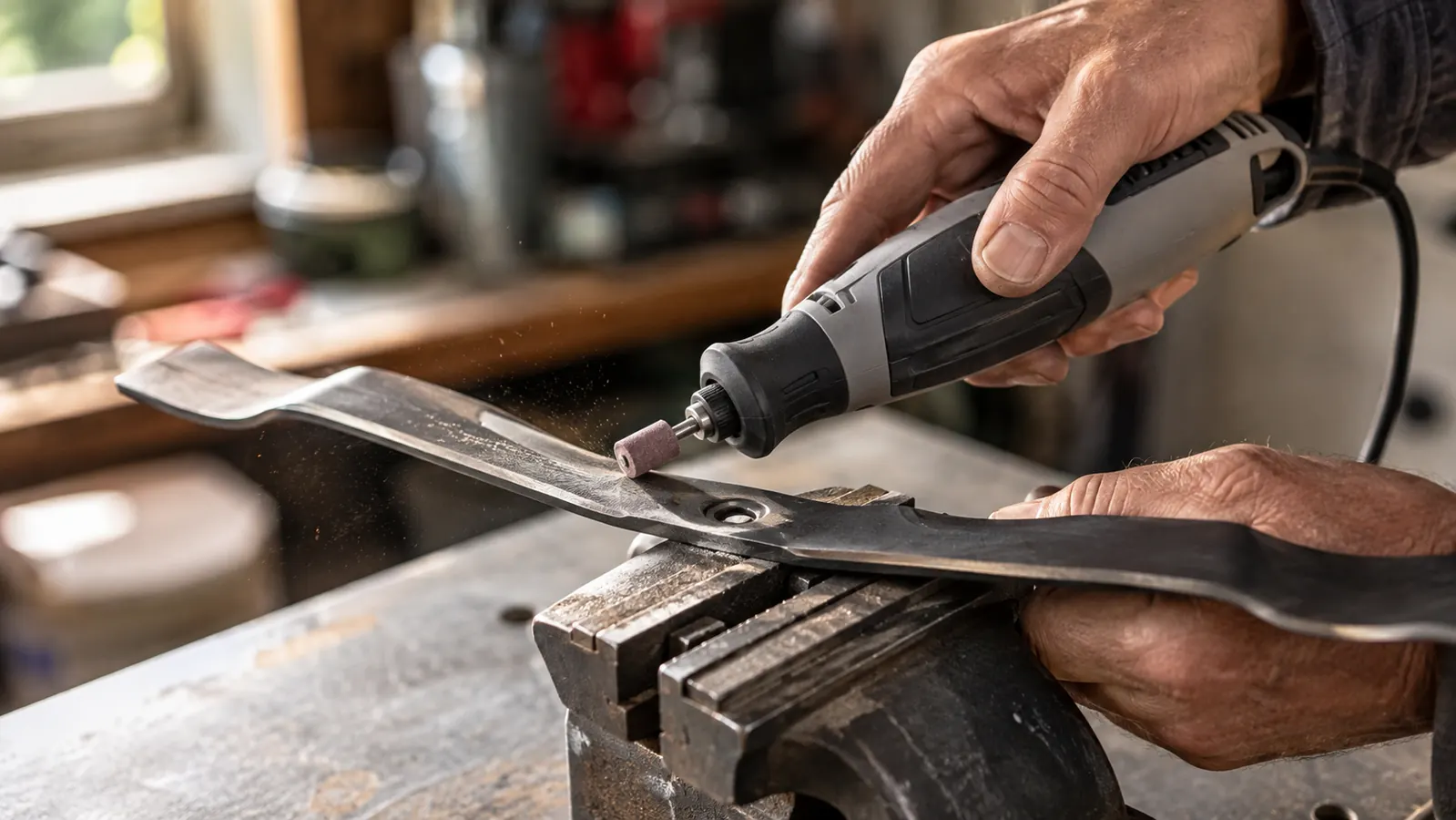
Every spring the local shop wants a week and a fee to run your mower blade across its grinder, and the rental's mowers each need it twice a season. A grinding stone on the Dremel brings a dull edge back in about ten minutes per blade, and you skip the trip, the wait, and the second trip to pick it up. I do all three rental mowers before the first cut every spring and I have not paid for a sharpening since.
It Cuts an Outlet Box Hole Without Gouging the Drywall
Cutting in a new outlet or switch box used to mean a drywall saw, a scored perimeter, and at least one torn corner of paper that you patch, sand, and repaint. A rotary tool with a spiral cutting bit sinks straight in and routes a clean opening right up to the box. In one afternoon I added two outlets to the workshop wall, and the holes looked like the drywall had been manufactured around the boxes.
It Polishes Brass and Chrome Back to Their Original Shine
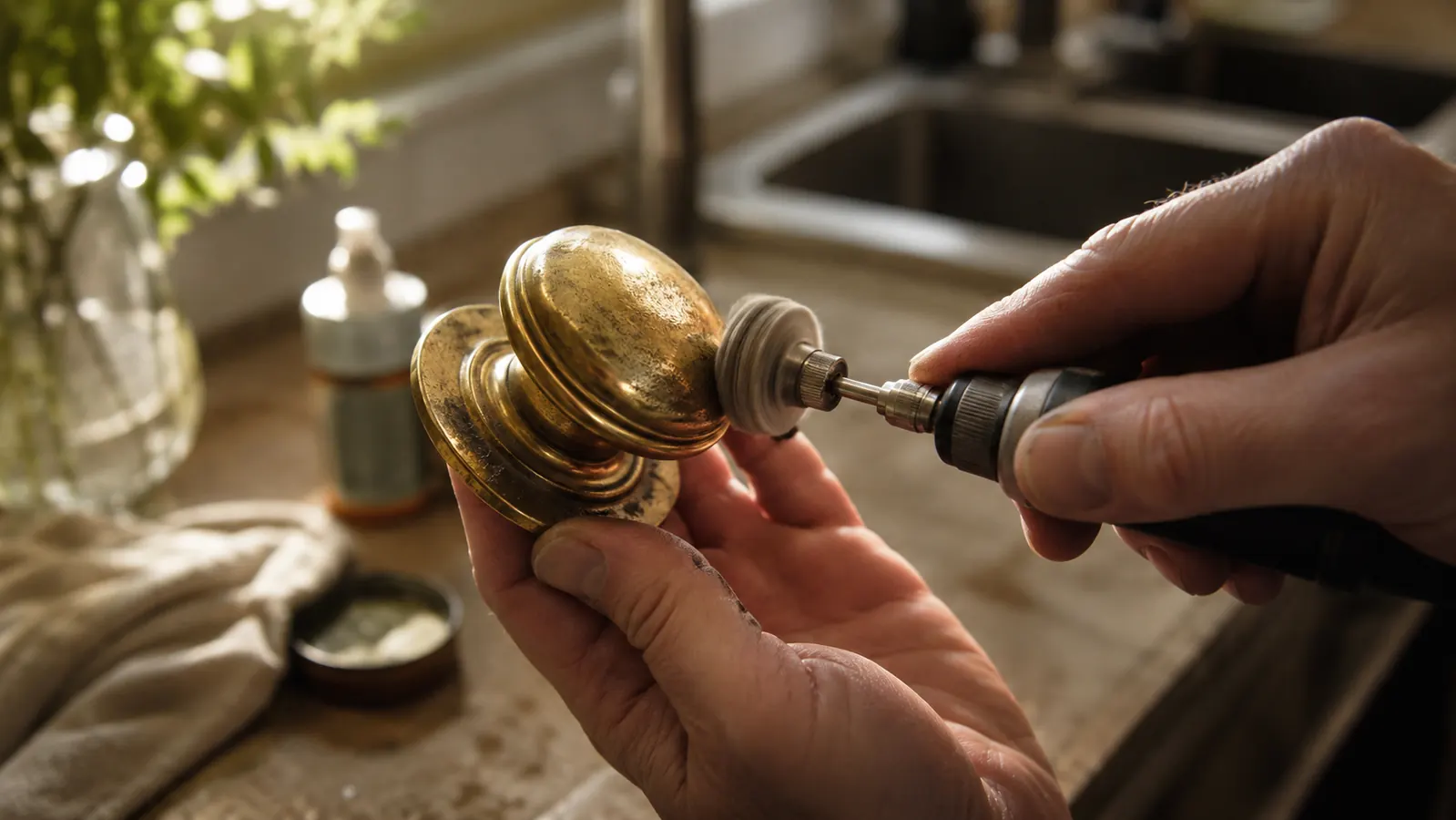
Older houses are full of tarnished brass: doorknobs, hinges, the little plate behind the deadbolt. A felt wheel and a stick of compound on the Dremel brings a doorknob back to bright in a couple of minutes, and chrome faucet trim comes up the same way. You can pay a restorer to do one door's hardware, or you can own the tool that does every door in the house for the next twenty years.
It Brings a Rusted Tool or Pan Back From the Brink
A wire brush wheel on the Dremel lifts loose rust off a cast-iron skillet or an old hand plane in minutes, right down to sound metal, and a sanding band smooths what is left. I bought a rusted bench vise at an estate sale for next to nothing and the rotary tool made it useable again. One rescue like that and the cost of the whole purchase stops being a question.
It Cuts a New Slot Into a Stripped Screw Head
Every project has the screw that strips and then stops the job, a cabinet hinge screw or a stripped head in a piece of trim. A thin cutoff wheel on the Dremel carefully cuts a fresh slot into the head, a flathead screwdriver seats into it, and the screw comes out, usually in one piece you can reuse or pitch. Ten minutes and a blade, instead of a drill-out and a re-tap.
It Touches Up a Chisel Edge Between Real Sharpenings
A chisel dulls halfway through a job, and hauling out the full stone setup for one edge is a lot of ritual. A rotary tool with a fine stone head knocks the burr off in about a minute, enough to finish the run. To be clear, it is not a replacement for proper sharpening, and any old-timer will tell you so. It is the thing that keeps you working when the edge gives out at four o'clock on a Saturday.
It Carves and Details Wood Where a Chisel Is Too Heavy
A chisel wants a straight run and a solid push; a rotary tool with a carving bit follows whatever curve you need, easing out a notch, a detail, or a patch. When I re-glued a drawer face on an old cabinet, the rotary bit cleaned the old glue line and reshaped the broken corner so the repair barely showed. That is detail work a bigger tool cannot do without risking the piece.
It Engraves a Mark on Tools That Like to Wander
Tools walk off job sites and out of shop corners, and a marker name rubs off in a week. A rotary tool with an engraving bit cuts a visible mark into a metal tool body that no one sands off by accident. I mark the rental property tools that seem to migrate, and the marks have outlived three markers. My beginner's guide walks through the exact bit and speed if you have not tried engraving yet.
It Travels in a Drawer and Follows You to the Property
The whole kit packs into a case about the size of a lunchbox, which means it lives in the truck or a kitchen drawer and goes where the job is, not where the extension cord reaches. I keep one in the house and carry the case to the rental when I go. For anyone who maintains more than one address, portability stops being a convenience and becomes the whole point.
The 40-Accessory Kit Means You Never Buy a One-Off Tool Again
The reason to buy a kit instead of a bare tool is the box of accessories that turns one motor into a grinder, a cutter, a sander, an engraver, and a polisher. The 4300-5/40 ships with five attachments and forty pieces that cover nearly every job on this list. One purchase replaces a shelf of single-purpose gadgets you would buy, use once, and lose track of.
What I'd Skip
Now the honest part, because every tool has a line it does not cross. A rotary tool is not a substitute for a real angle grinder on heavy metal, and it will never sharpen a chisel the way a proper stone will, no matter what the package promises. If your projects never get smaller than framing lumber, you can probably skip this purchase and not miss it. And the single biggest reason people write off rotary tools is buying a cheap one first: a wobbly collet and a motor without torque make precise work impossible, and the accessories wear out fast enough to be discouraging. That is why I steer people to the Dremel 4300 over the budget clones when they actually plan to use it. If you only need one niche job once a year, borrow a friend's tool first, and know that the flexible shaft accessory is exactly where the cheap units show themselves.
Three mower blades, one outlet box, and the front-door brass, all before lunch on a Saturday. That one morning paid for the Dremel in skipped trips I will never make again.
Weigh It the Way I Did, in Trips and Saved Labor
A rotary tool earns its place beside every hammer, but only if you buy one you will actually enjoy using. The Dremel 4300-5/40 is the one that changed my mind, and the full year of honest use sits in my long-term review. Check today's price and run your own math.
Amazon Check Today's Price on Amazon →