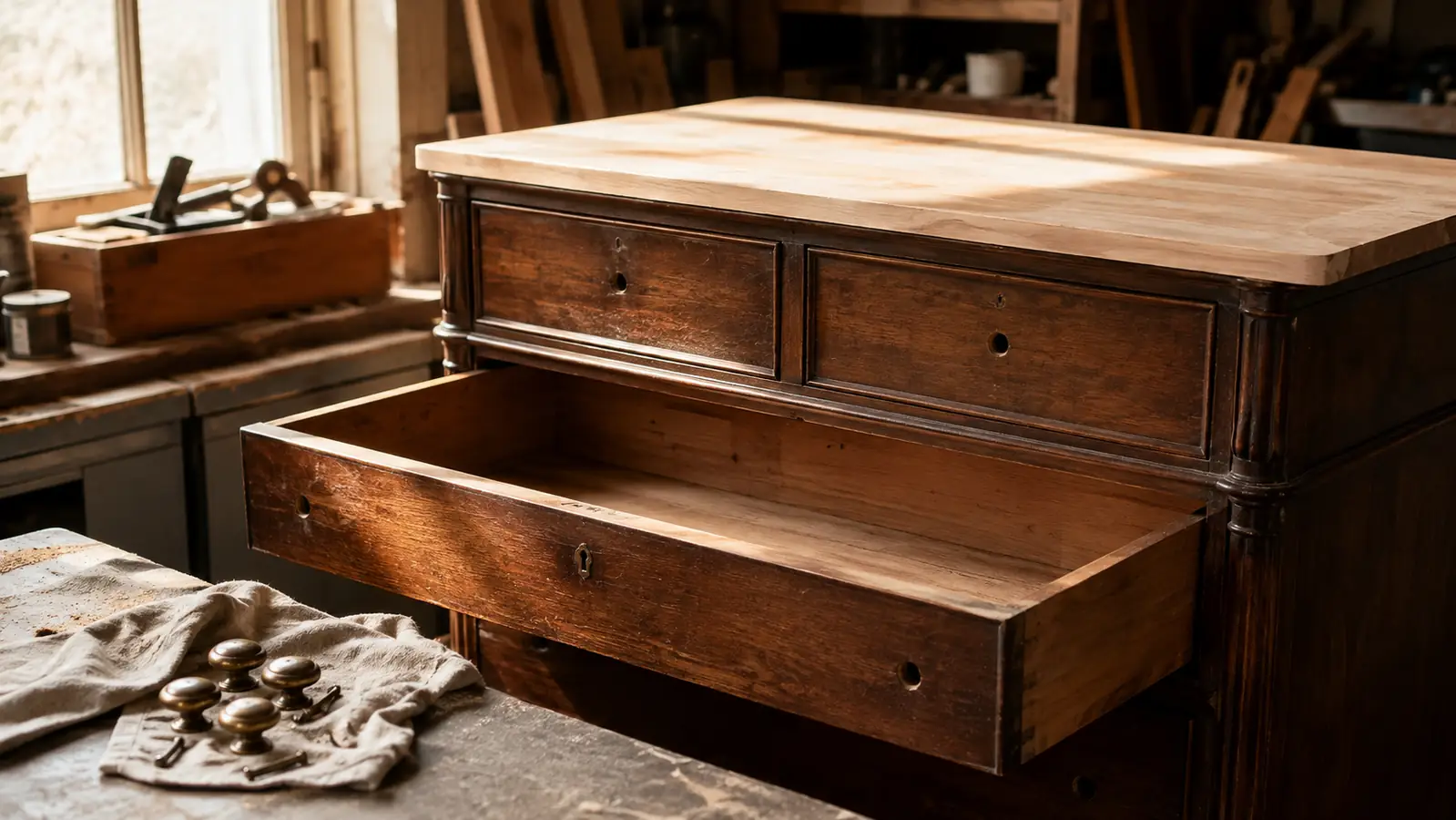
If you have never priced out what a furniture restorer charges to bring an old dresser back, I will save you the call. It is not the price of a nice tool, it is the price of a small car repair. So when my sister dragged a 70-year-old oak dresser out of a flea market in 2024 and asked if I could do anything with it, the honest answer was this: I had a Dremel 4300 in the shop, and I had no idea yet whether it was up to the job, but I was not about to hand a restorer that kind of money for something the previous owner had painted over twice.
Here is what I was looking at. Someone in the 1980s had slapped two coats of dark green paint over what was probably a decent oak finish, and the paint was failing in that peculiar way where it flakes off in thin brittle sheets but will not come off in one clean pull. Stripping chemicals did a fine job on the flat panels but left the paint sitting stubbornly in every groove, bead, and corner of the turned legs. That is the part of refinishing nobody talks about. The flat wood is easy. The details, the carvings, the little crevices, are where a job either comes out looking professional or looks like you gave up halfway.
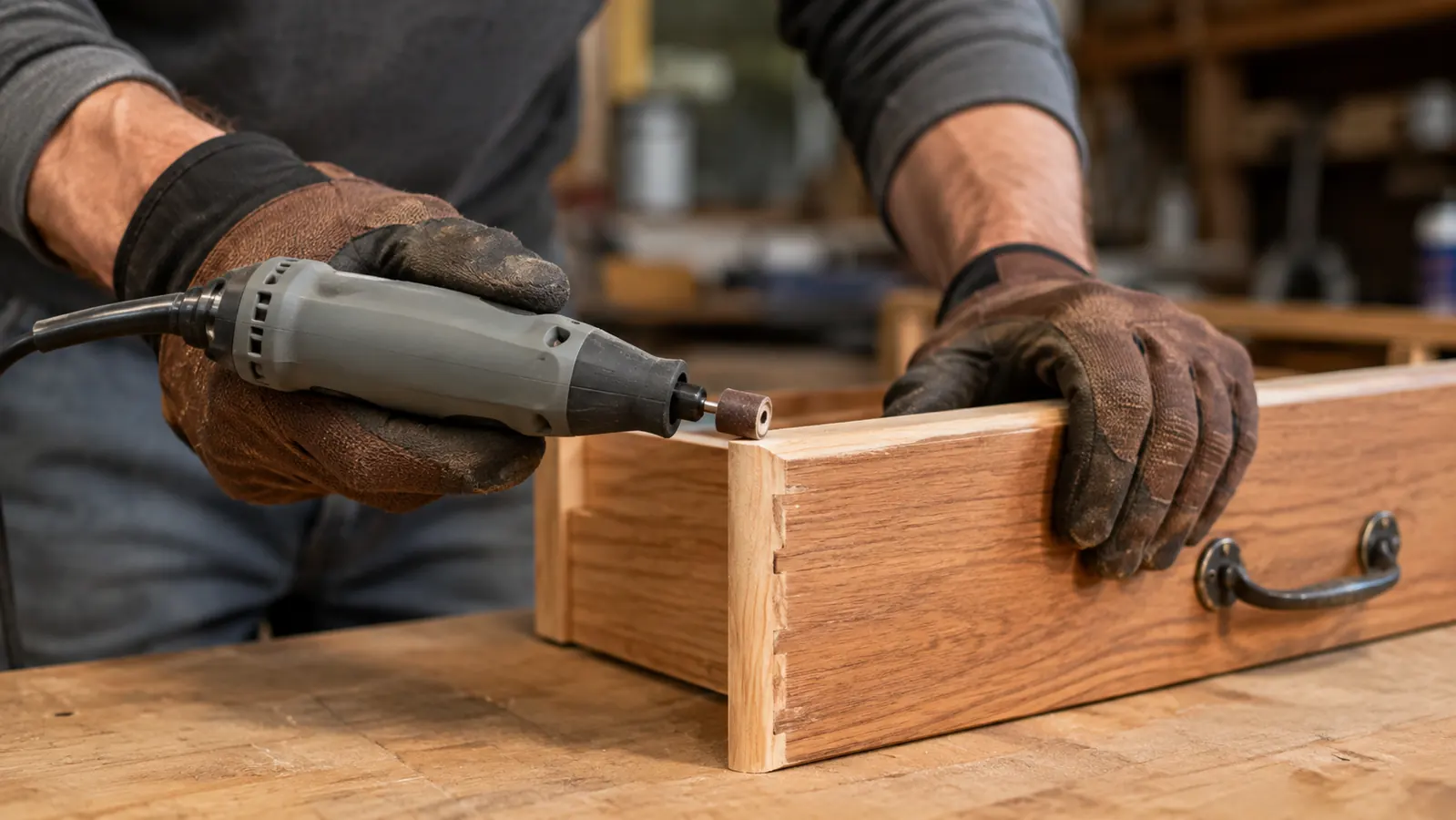
That is where the Dremel 4300 rotary tool earned its keep. I have owned one for years, the 4300-5/40 kit with the five attachments and forty accessories, and I mostly used it for sharpening mower blades and dressing small metal edges. I did not think of it as a furniture tool. But when I fitted it with a small sanding drum and ran it at a modest speed, it walked into every one of those paint-filled grooves and took the old finish out without touching the surrounding wood. It is the difference between a detail you can see close up and a detail that disappears.
I worked the dresser in stages over three weekends, not because the tool is slow but because refinishing is a patience game and I am old enough now to know that rushing is what turns a hundred-dollar flea-market find back into a hundred-dollar flea-market find. The Dremel never got hot in my hand, never bogged down, and the variable speed, actually a 5,000 to 35,000 RPM range with a dial you can set and forget, meant I could tick it down for the delicate carving work and push it up when I needed to grind through a heavy patch of old paint.
The thing I want to be straight with you about is that the Dremel did not do this job alone. It did the parts nothing else could reach, and that is the honest division of labor. The drill, the sandpaper, and a lot of elbow grease handled the flats and the top. But every single decorative bead and turned detail on that dresser, which is what makes an old piece look like it costs money instead of like it came from a thrift store, came out looking right because the rotary tool fit where a sheet of sandpaper never could.
Three weekends and one rotary tool turned a hundred-dollar painted-over dresser into a piece that now anchors my guest room, and it did not cost me a restorer's bill to get there. That is the kind of tool that pays for itself in saved labor, which is the only math I trust.
A Rotary Tool Reaches What Sandpaper Never Will
The Dremel 4300 kit with five attachments and forty accessories handles the crevices, carvings, and details that stop every other tool cold. Check today's price and see what it unsticks in your shop.
Amazon Check Today's Price on Amazon →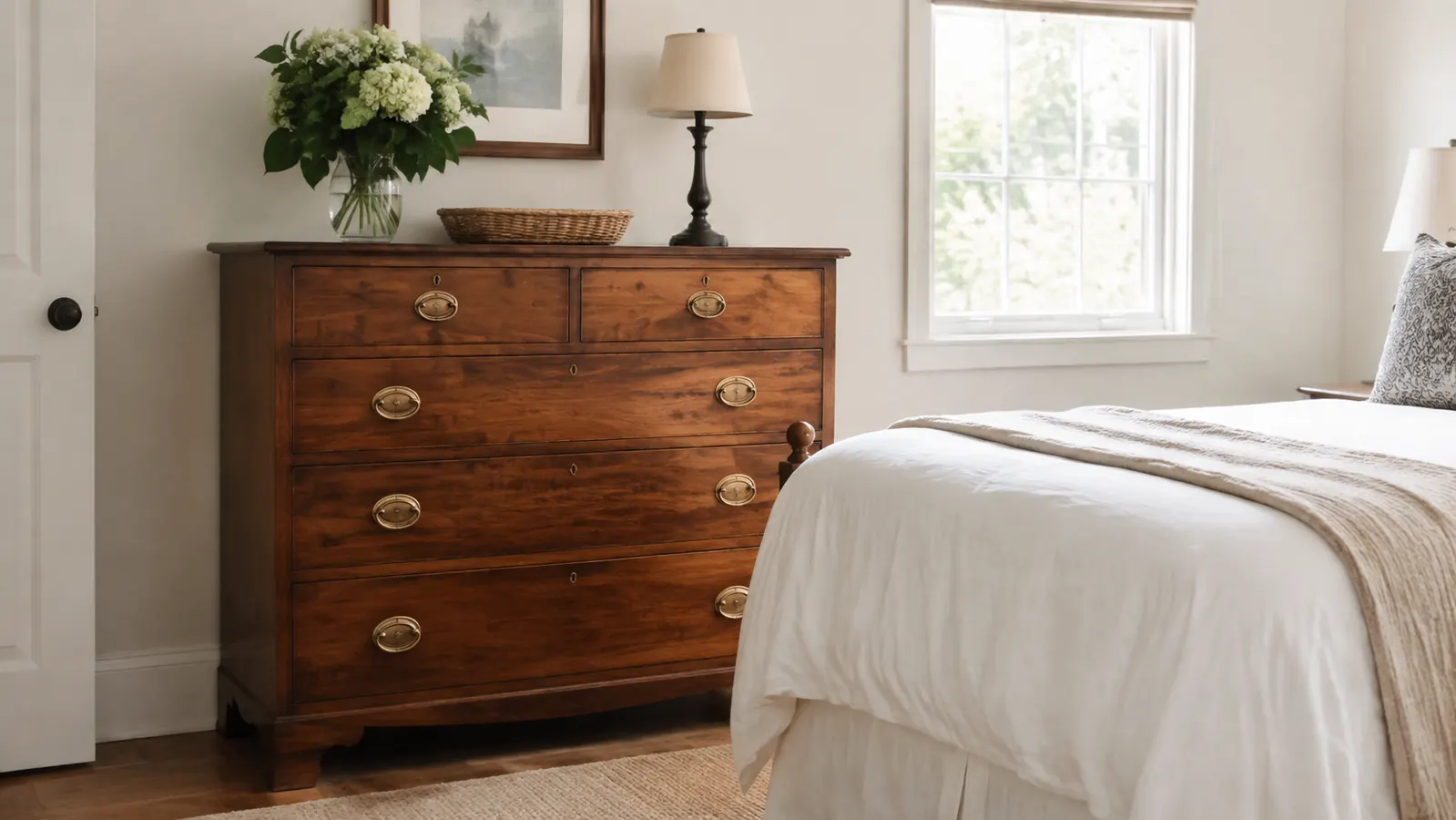
I will be honest about the parts of this that tried my patience, because every review you will ever read has flaws if it is any good. The little sanding drums wear out and you will go through a stack of them on a full dresser, and each one is a small cost you did not expect. The collet wrench you need when you switch shank sizes is small and easy to lose, so I keep mine in the tool's plastic case and put it back in the same spot every single time. And for the first hour the vibration in your fingers takes some getting used to, the same as with any rotary tool, before your grip loosens up the way it is supposed to.
None of that changed my verdict. The dresser got two coats of a hand-rubbed oil finish, I cleaned the old brass hardware with a soft buffing wheel on the Dremel until it gleamed, and it now sits against the wall of the guest room looking like it walked out of a showroom instead of a flea market. My sister's hundred dollars, my three weekends, and a tool I already owned, and I came out ahead by more than the price of a restorer's visit. That is the arithmetic I run on every tool in the shop.
I should add that the Dremel has stayed busy since. The same bits that cleaned up a dresser sharpened a chisel, dressed the burr off a gate hinge, and polished a tarnished brass lamp base down to a mirror shine. Fifty years from now I might not be the one holding it, but a rotary tool is the kind of straightforward machine that does not go quiet, and the 4300 is the one I would buy again without a second thought.
What I'd Tell You If We Were Sitting at My Kitchen Table
If there is a piece of good furniture in the house or a cheap one at a flea market with good bones, do not reach for the stripper and the sandpaper alone. Get a rotary tool with a sanding drum and let it do what nothing else can reach, and give yourself three weekends instead of one Saturday. Buy the right bits, put the little wrench back where it belongs, and let the job take as long as it takes. The money you save on a restorer's bill will more than cover the tool, and the piece you end up with will be the one you remember, not the one you settled for.
The Tool That Unlocks the Details
A Dremel 4300 kit is what turns an old painted-over dresser into a showroom piece. See today's price on Amazon and start your own restoration.
Amazon Check Today's Price on Amazon →