I have a Dremel 4300 and a budget WEN rotary tool sitting in the same drawer, and after close to a year of grinding, polishing, and carving, the short answer is that the Dremel earns its premium for anyone who uses one regularly, and the WEN is plenty for the occasional job. The long answer is about your own time and whether the difference shows up where you actually work. Most of the online argument frames this as a one-sided blowout for Dremel, and it is not quite that. I am not here to sell you the expensive tool. I priced both before I bought, ran identical jobs through each, and there are honest places where the extra money does not buy you anything.
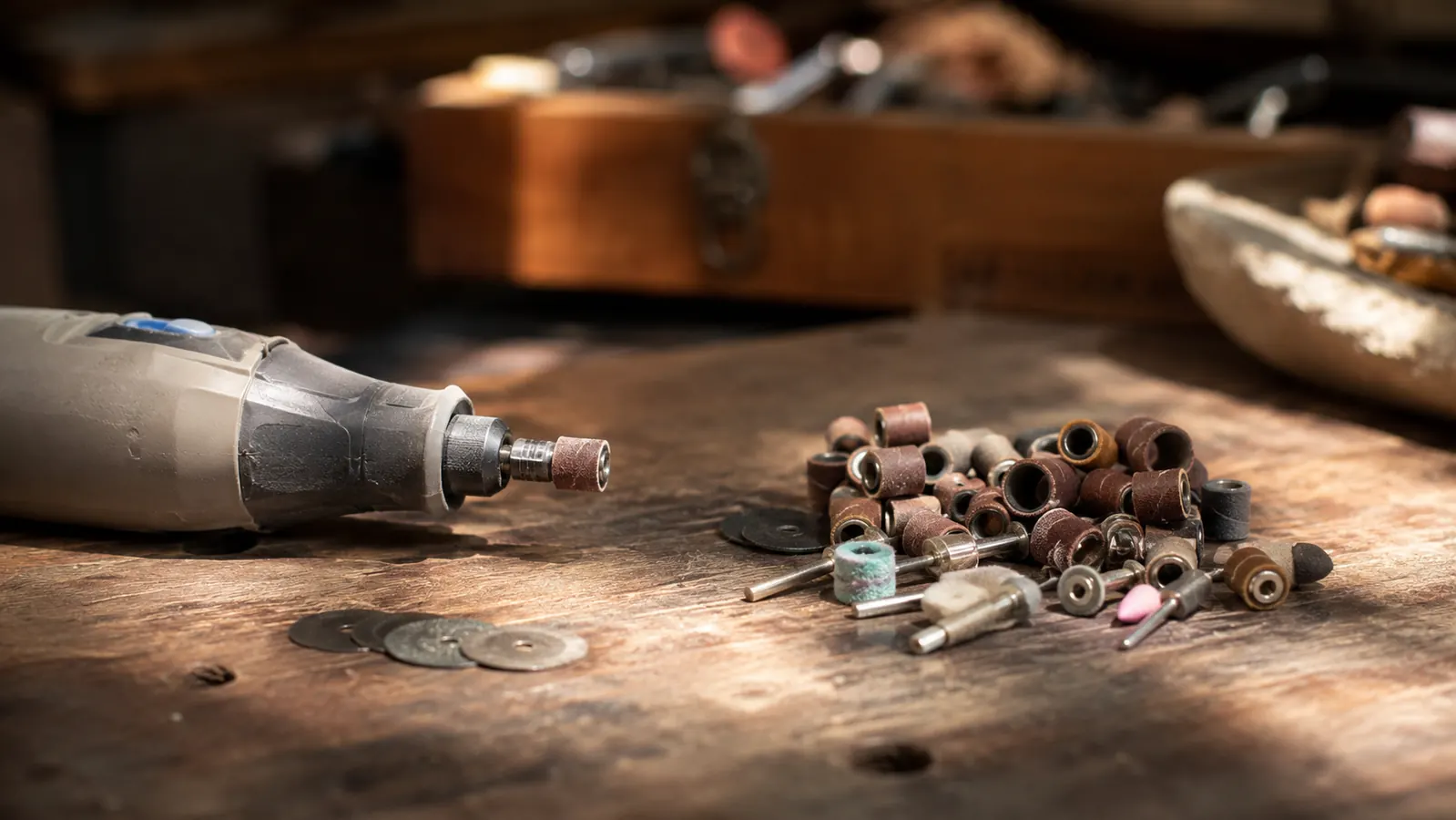
Here is what I am putting side by side. On the left is the Dremel 4300-5/40, the variable-speed kit with five attachments and forty accessories, rated 4.7 stars across close to ten thousand reviews. On the right is the WEN rotary tool, a variable-speed budget model that sells for a small fraction of today's price on the Dremel kit. That price gap is the whole question of this article. A budget rotary tool at a fraction of the cost, or a top-of-line kit, and I am going to tell you where I would spend and where I would not.
One honest note before the knock-down. I bought the Dremel first, used it through a season of projects, then added the WEN specifically to answer the question everyone in the review comments keeps asking about whether the cheap one is good enough. So this is not a quick bench test. Both tools have seen real weeks of work, and I have a fairly clear-eyed view of what each is and is not. Let me lay out the scorecard first, then talk through it.
| Dremel 4300 | WEN Rotary Tool | |
|---|---|---|
| Price | Today's price runs several times the WEN | Entry price is a small fraction of the Dremel |
| Speed range | About 5,000 to 35,000 RPM, holds speed under load | Variable speed, fine for light work, sags under a real load |
| Kit contents | Five attachments and forty accessories in a case | Slim kit, far fewer included bits |
| Bit changes | Twist-cap collet, quick swaps mid-job | A wrench each swap, a little fiddly |
| Comfort over time | Stays cooler and smoother, low hand fatigue at an hour | More vibration and heat on long stretches |
| Durability and parts | Built to last, bits and rings sold everywhere | Budget build, fine for light use |
| Best for | Grinding, carving, polishing, restoration, daily use | Engraving and sharpening a few times a year |
| Storage | Handheld, packed case, stows in a drawer | Handheld and small, stows anywhere |
Where the Dremel 4300 Wins
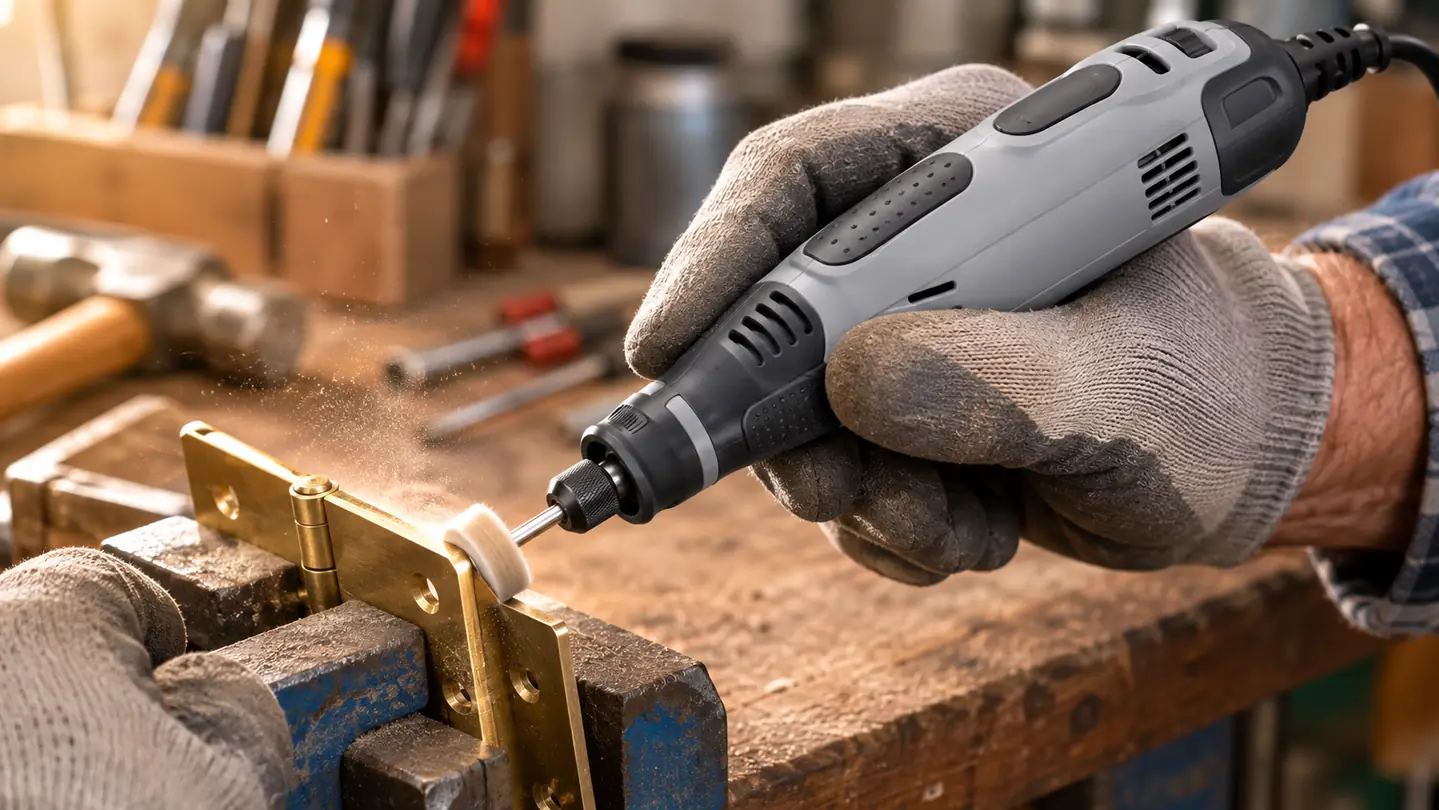
The first thing you notice with the 4300 is the speed control. It runs from about 5,000 to 35,000 revolutions per minute, and it holds that speed under load. A rotary tool's biggest flaw is bogging down the moment you lean into the work, and the 4300 keeps the rpm where you set them. When I am grinding a fence latch or polishing a brass hinge, that steady speed is the difference between a clean result and a gouged one. The WEN is variable speed too, and it is fine for light work, but under a real load it sags where the Dremel does not. For me that single trait settles a lot of the argument on its own.
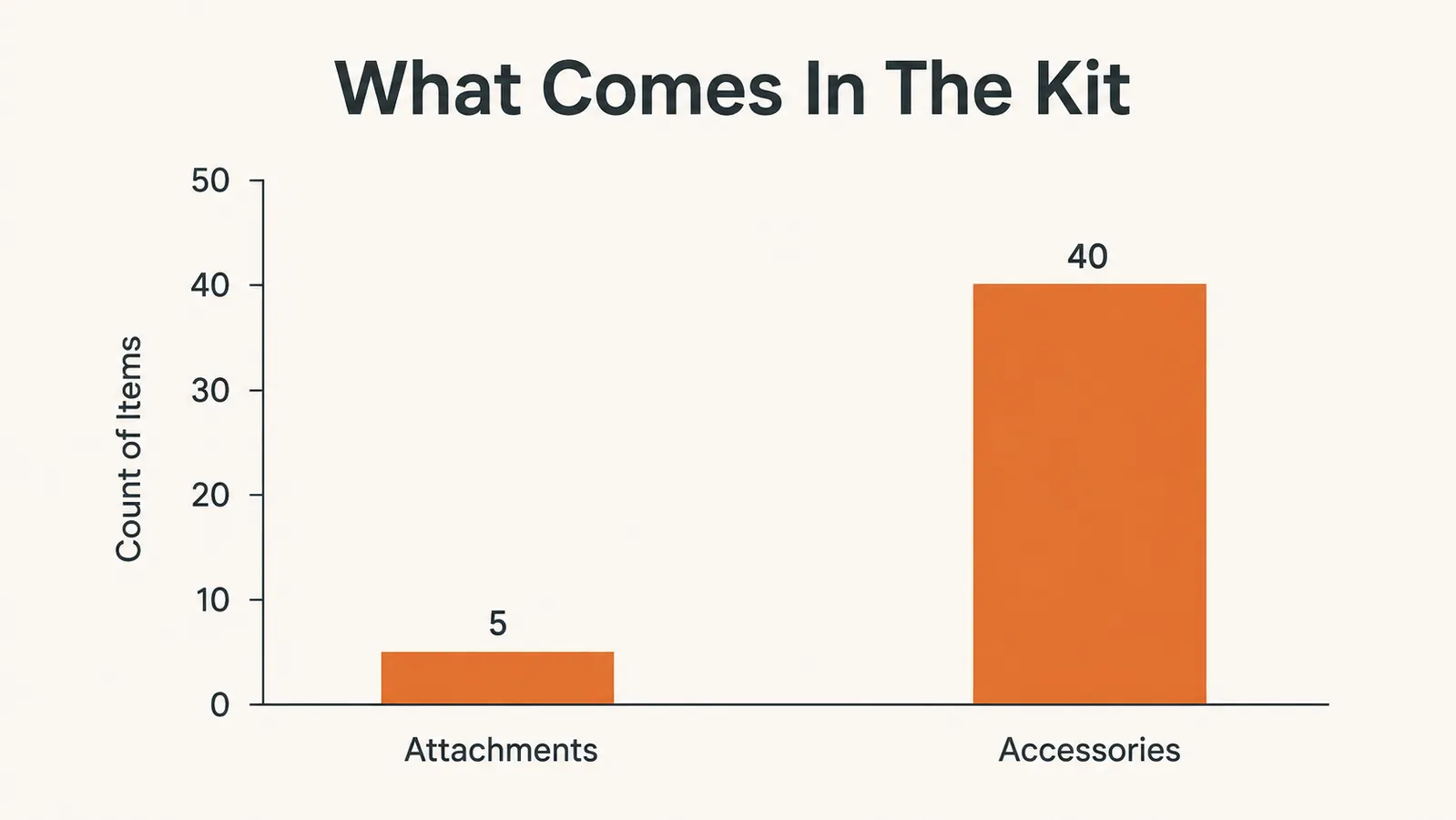
The 4300 kit also comes with five attachments and forty accessories, all packed in a carrying case. I count the collet system as the quiet reason I reach for it. The 4300 uses a twist-cap collet, so I can swap from a grinding stone to a sanding drum in seconds without hunting for a tool in the middle of a job. Over an hour at the bench, that adds up. And it stays cooler and runs smoother in my hand than the cheaper tool, which matters when I am doing a furniture restoration that runs two hours at a stretch. My hands are not what they were thirty years ago, and the difference in vibration and heat is not imaginary.
Then there is the durability and the parts supply. The Dremel is the brand every hardware store stocks bits and accessories for, and that is worth something a few years in. When a sanding band wears out or I want a specialized carving bit for a dead spot in a railing, I grab it locally or wait a day for it online. The little WEN has not failed me, but the budget tool is built to a price, and I do not expect it to carry the same life span when I lean on it week after week. For the work I do around my own house, the shop, and a property I manage, the Dremel has been a buy-once tool that still runs at the same speed it did on day one.
To give you one concrete picture, this winter I ground the rust off a set of iron gate hinges that had spent ten years outside. On the Dremel I held full speed and worked the worst crust off in one patient pass after another. On the WEN the same stone would stall the instant I pushed, so I had to lighten up and take many more, lighter passes. The result came out the same in the end, it just cost me more time and a stiffer hand. If your jobs are small and quick, that time difference is nothing. If you have a serious project straight ahead of you, it is the whole ballgame.
Where the WEN Rotary Tool Wins
The WEN wins where you would expect a budget tool to win, and that is on the price tag. Today's price for the Dremel kit is several times the entry price of the WEN, and if rotary-tool work is a twice-a-year thing for you, that gap is real money you simply do not need to spend. I know a fair number of guys who grabbed a budget rotary tool to sharpen a mower blade or engrave a dog tag and never once felt the lack. If that is your use, the WEN is the honest answer, and I will not pretend the Dremel makes you four times the tool for four times the money in that scenario. It does not, and saying otherwise is just marketing.
There is also a simplicity argument worth making. The WEN is a smaller, lighter, more disposable unit, and that is not always a bad thing. It stows in a drawer, you do not wince when it takes a tumble off the bench, and if it dies after a few years of light use, replacing it costs one modest amount. For someone who just wants a cheap rotary tool for a handful of small jobs a year, the WEN is the sensible purchase, and honestly the premium Dremel is overkill. Calling that a flaw in the WEN would be dishonest; for that buyer it is a feature.
For a twice-a-year sharpening job, the WEN is the honest answer, and I will not pretend the Dremel makes you four times the tool for four times the money there.
What the Price Difference Actually Buys
If you are trying to decide with your head instead of your gut, it helps to put the gap in terms of what the premium buys. On the Dremel, the money goes into three things you can feel: a motor that does not quit under load, a build that stays true over years, and a kit that includes the bits and attachments you would otherwise buy one by one anyway. If you add up what five attachments and forty accessories cost separately, a good slice of the Dremel price is recovered right there. The WEN drops all of that to a barebones price by leaving much of it out.
The other thing the premium buys is convenience that is hard to price. The twist-cap collet, the steady speed, the low vibration, they shave minutes off every job and a lot of irritation off a long one. That is not a metric you will find on a spec sheet, but it is real. On the other side, the WEN's advantage is pure and simple arithmetic: you keep several times the price in your pocket, and for light duty it does the job. Neither answer is wrong, which is why so many people argue about it. They are buying for different amounts of use.
If you grind, polish, or carve with any regularity, the Dremel 4300 earns its keep
The 40-accessory kit with the twist-cap collet and steady speed under load is the buy-once choice for the jobs that actually hit your bench. Check today's price before you decide.
Amazon Check Today's Price on Amazon →Who Should Buy Which
Buy the Dremel 4300 if you grind, carve, polish, or restore with any regularity, if you chafe at a tool that bogs down mid-job, or if you want a kit that includes the attachments and bits you will actually use for years. It is the buy-once tool, and for the projects I do around the house and property it has paid for itself in saved labor and avoided trips to the hardware store. If you are the kind of person who keeps a tool for a decade and expects it to still work, the Dremel is where I would put the money.
Buy the WEN if rotary work is occasional, if you are on a strict budget and only need to sharpen or engrave now and then, or if you want a cheap backup you do not mind abusing on a rental property. There is no shame in the budget pick, it is the right call for a lot of people. The honest split is simple: pay for the premium where you work every week, and keep your money where you work a few times a year. That sentence is the whole article, and it is the answer I give anyone who asks.
One more thing worth saying plainly. The WEN will absolutely do the jobs it is bought for. It engraves a name on a dog tag, it takes the burr off a knife edge, it polishes a small tarnished spot, all of it competently. Nobody who buys one for that kind of work is making a mistake. The only buyer I would steer toward the Dremel is the one who knows the tool will come off the bench most weekends, and that is a smaller group than the marketing wants you to believe.
My own rule, and it has served me through a long run of buying tools: match the price to the frequency, never to the aspiration. If a tool does real work every week, buy the good one once and stop thinking about it. If it is a twice-a-year convenience, buy the cheap one and pocket the difference for something you will actually use. On that measure, a regular grinder and polisher should buy the Dremel 4300, and everyone else should take the WEN and be happy. That is the honest bottom line, and it is where I landed after a year with both on the bench.
Decide by how often the tool actually comes off the bench
For regular work, the Dremel 4300-5/40 kit is the one that keeps running at speed and still works in five years. See what the current price is before you buy either.
Amazon Check Today's Price on Amazon →If you are a homeowner who does a little of everything, the answer is the Dremel, and the price gap is the only real argument for the WEN. The WEN is honest value for the money and it will put a clean edge on a blade or open a hole in drywall as well as the more expensive tool. But the Dremel's tighter collet, steadier hand, and the accessory ecosystem that outlives any single kit are what you are paying for, and for most buyers that is money well spent the first time you swap a bit without hunting for a wrench. Buy the WEN if you are certain this is a twice-a-year tool and the price matters more than the feel. Buy the Dremel if, like me, you will reach for it every week and want the one that runs truer and stays with you. That is the honest line between them, and it is the line I would draw again.