
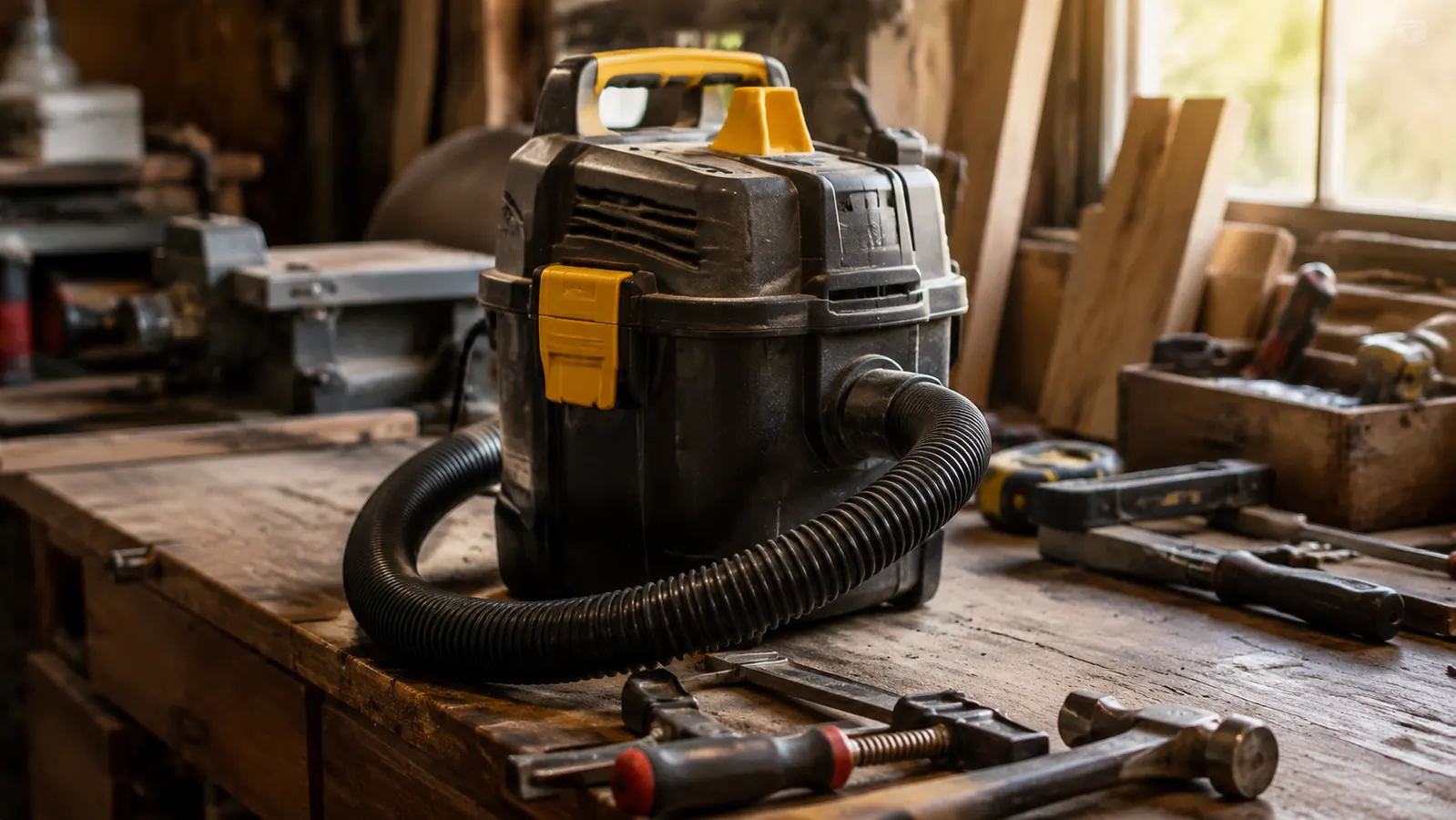
Here is the thing nobody tells you when they sell you a cordless stick vac with a fancy docking station: it cannot drink a puddle. When my water heater let go at nine o'clock on a Friday night, the tool that saved the floor was not the one that hangs on the wall in the kitchen. It was the plain Stanley wet/dry vac that lives in the garage corner, the one I paid about the price of a dinner out and think about once a year until something breaks.
I am not here to talk you out of a nice vacuum. I own a good upright for the rugs. But a wet/dry shop vac is a different animal, a workhorse that earns its keep in emergencies and dirty jobs no indoor vacuum should touch. These are the ten reasons I would not run a house or a piece of property without one.
The 6-gallon workhorse that has bailed me out more than any three tools I own
The Stanley 6-gallon wet/dry vac handles drywall dust one day and a flooded floor the next. This is the exact model that lives in my garage corner.
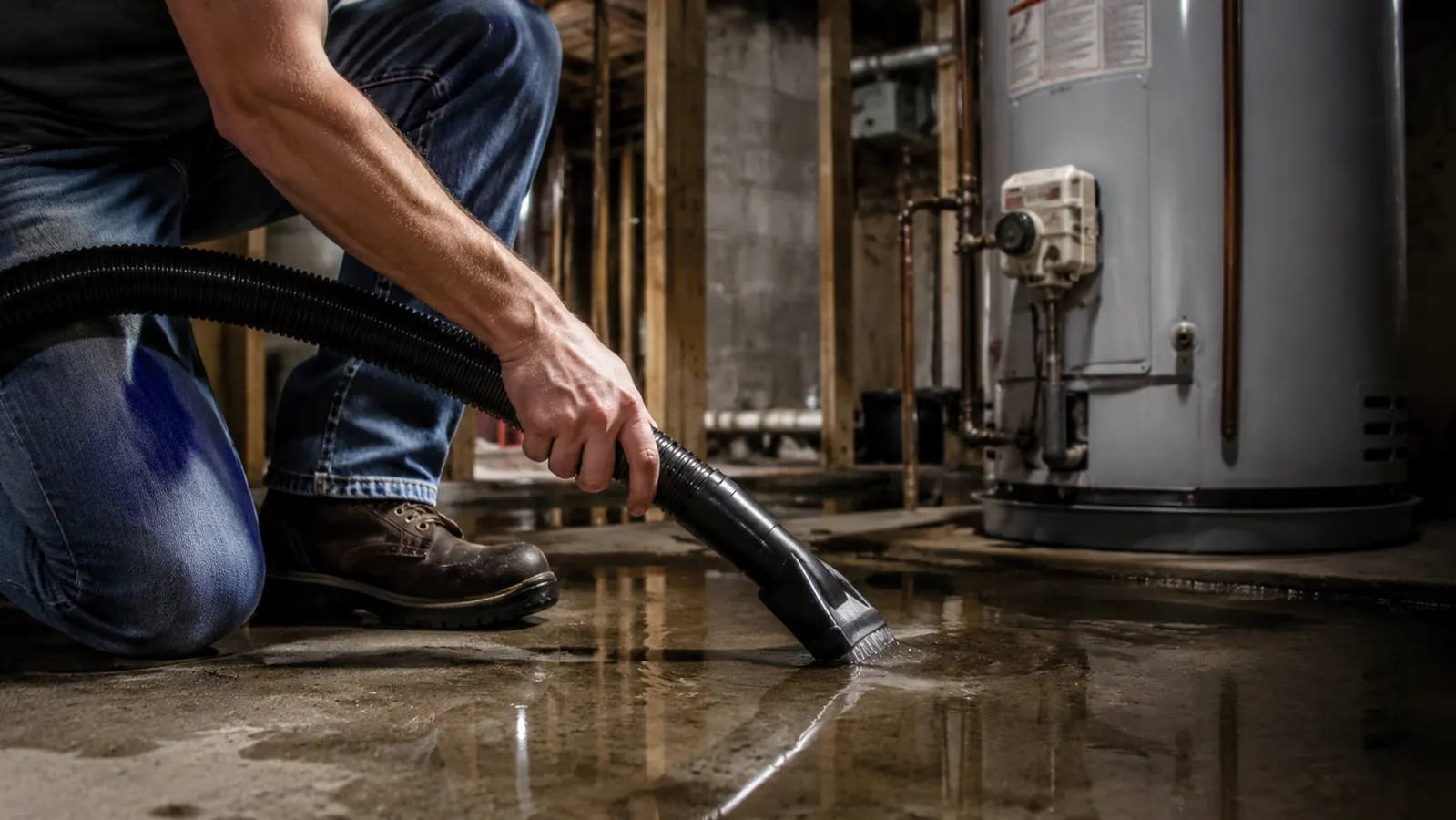
Amazon Check Today's Price on Amazon →It drinks water, and that is the one job a house vacuum cannot do
A backed-up sink, a dishwasher that overflowed, a water heater that rusted through. Take the filter and wet kit out, and a shop vac pulls standing water off a floor in minutes. The water that would soak through a carpet and warp a subfloor gets sucked up before it does its damage. No indoor vacuum is built for this, and running one to it is how you burn out a motor and make a bad night worse.
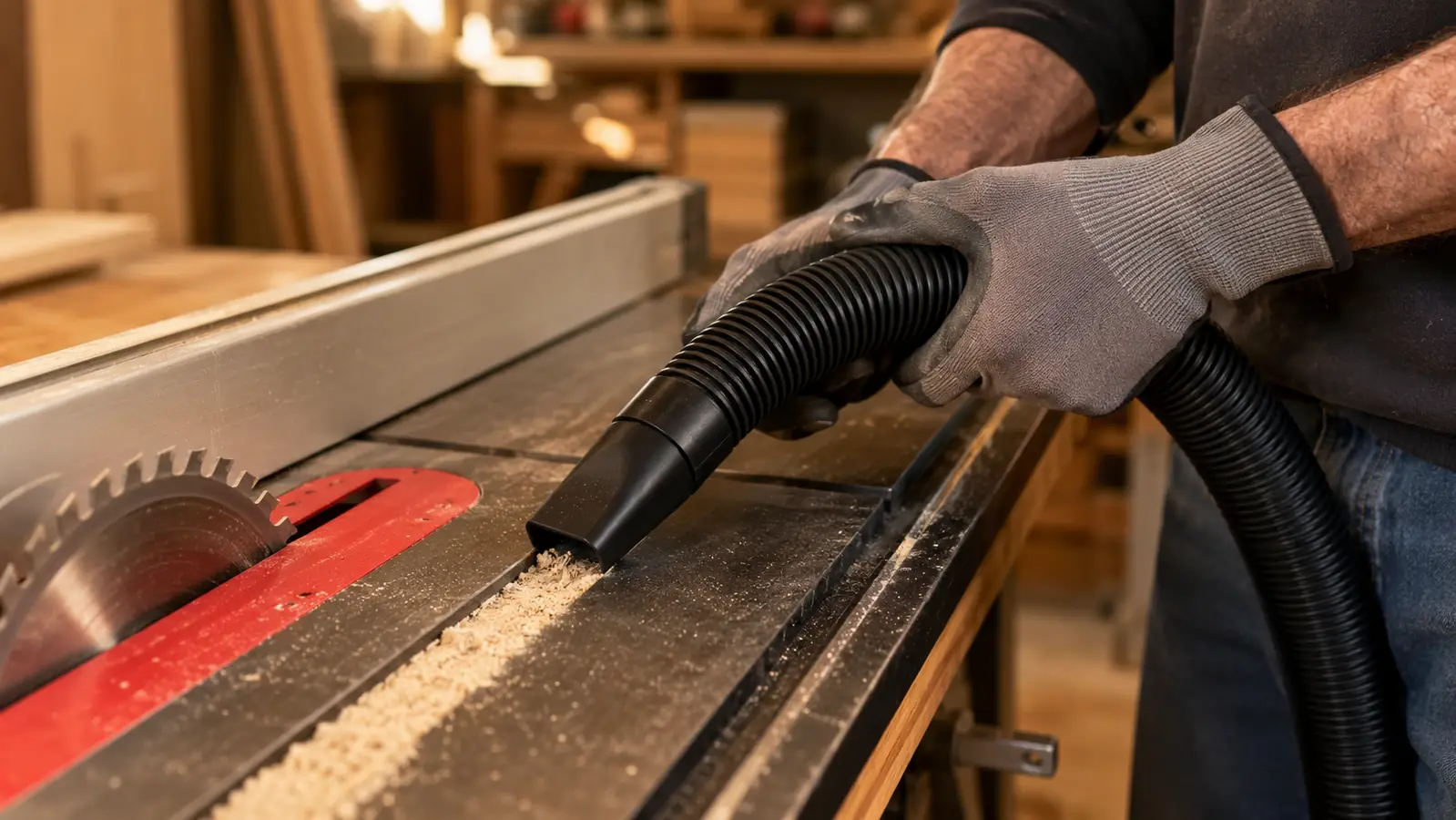
Drywall dust disappears instead of drifting onto every surface in the house
Any project that involves cutting drywall, sanding joint compound, or planing a door creates a dust storm that settles an inch deep everywhere. A shop vac with the filter in place collects it at the source. I hang a bag in the canister during a drywall job and empty it once, instead of dusting the whole house afterward for a week.
Nails, screws, and hardware get picked up by the handful instead of by hand
After you pull out old trim or tear down a wall, the floor is littered with screws, staples, and nails waiting to find a tire or a bare foot. A metal pickup attachment snaps on the end of the hose, and the vac grabs them faster than you can bend down for one. It is a small thing that saves an aching back and a punctured truck tire.
The blower port turns it into a leaf blower and a dust weapon
Flip the hose to the blower port and the same motor pushes air out. You can herd sawdust off a garage floor toward the door in one pass, blow leaves out of a corner, or dry off a wet workbench. I did not think much of this feature until I started the truck in a garage full of dust and needed it gone without a broom.
It cleans the car and truck without dragging the good vacuum outside
Winter salt, dog hair, gravel, kids dropping crackers, sand from the beach. The indoor vacuum has no business in a truck bed, and the shop vac does not care. The long hose reaches the floor mats and under the seats, and a wet spill in the back seat is no longer a crisis because the vac handles liquid. I keep the Stanley on this duty and the house vacuum never leaves the closet, which is exactly how both of them last.
It does the jobs that would ruin a brand-new indoor vacuum
Ash from a wood stove, concrete dust, drywall dust, plaster, glass shards, fine sawdust. These are materials that clog filters and chew up a carpet vacuum, and they are daily fare for a shop vac. A tool is not precious. I would rather wear one out on a dirty job than protect it like an heirloom while the mess piles up.
Amazon The tool that takes the abuse so the house vacuum lasts →
The long hose reaches where nothing else will
Behind the washer, under the water heater, into the far corner of a crawl space, up into a ceiling joist before you drywall. The hose and the attachments give you reach a canister for a house cannot match. I have cleaned out dryer vents, behind the fridge, and under a range with the same hose, none of which involves moving heavy appliances first.
It turns a wet ceiling and a little drywall into a patch you never call a contractor for
A wet spot in a ceiling or around a valve usually means cutting out the damaged drywall, drying the framing, and patching. The vac pulls the water so you can repair the spot dry instead of waiting for rot and mold to move in. I have used mine this way twice now, each time on a spot that would have meant a service call if the plaster had stayed wet.
It is the one shop tool that pays for itself in a single emergency
Think about the cost of a flooded carpet, a stained subfloor, or a water-damaged garage wall. One hour of vacuuming up a backup can save you a repair that dwarfs the price of the vac. I do the math on every tool I buy, and no purchase in my shop has returned itself faster. A single saved disaster covers it, and the rest is gravy.
It does not hurt when it gets beat up, which means you actually use it
This is the quiet reason I reach for it. A shop vac is meant to be dropped, kicked under the bench, loaded into the truck, and left in the rain. Because it costs a fraction of the indoor vacuum, you use it freely on the worst jobs, and that is exactly where a tool is worth its weight. A tool you are afraid to scratch is a tool you never use.
What I'd Skip
Be honest about what a cheap shop vac is not, and you will buy the right one and not feel cheated. Skip it if you need fine dust control for hours of cabinet sanding indoors, where a proper dust extractor with a HEPA setup is a different tool for a different job. Skip it if you want it quiet enough to use while somebody sleeps in the next room, because a budget wet/dry vac is loud. And if you are expecting the strong suction of a full-size 12-gallon pro unit, a 6-gallon model is not that, either. For a homeowner whose main jobs are floods, dust, hardware pickup, and the car, it is plenty. Know the limit and you will be happy with the tool for what it is.
When my water heater let go on a Friday night, the tool that saved the floor was not the one hanging in the kitchen. It was the shop vac that lives in the garage corner.
Buy it before the next emergency, not during it
Every one of these jobs came up when I did not plan for it. A wet/dry vac is the kind of tool you want on hand the day something breaks, not the one you wait to order at nine on a Friday night.
Amazon Check Today's Price on Amazon →