
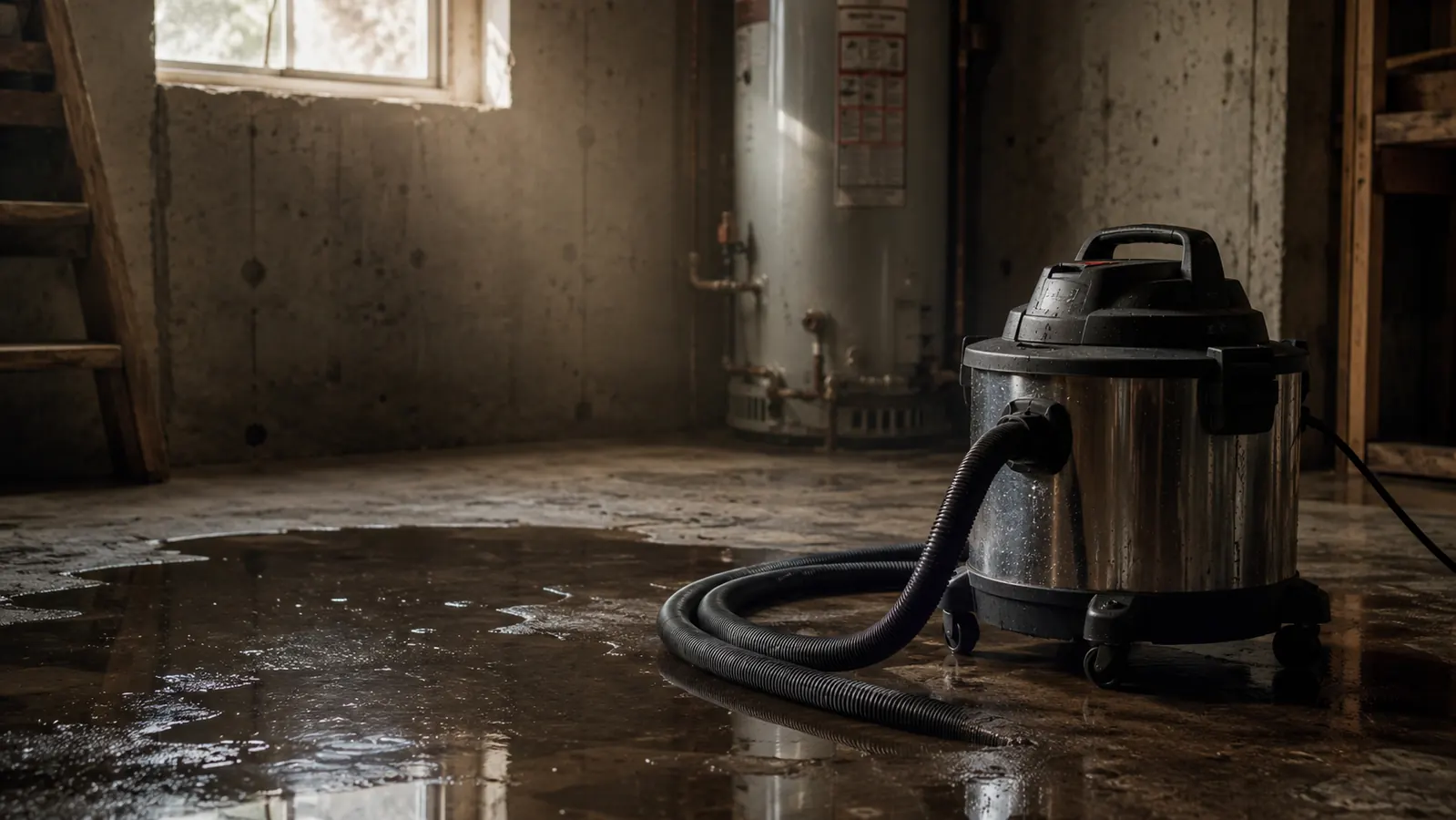
It was a Friday night in February, and I was pulling on my coat to run an errand when I heard it. A soft hiss, then a running-water sound that had no business being anywhere inside the house. I walked to the basement stairs and saw it before I reached the bottom: a steady sheet of water coming off the water heater, spreading across the concrete toward the finished wall and the one area of that basement with actual flooring. My Stanley wet/dry vac was about to earn its keep for the first time.
That water heater was original to the house, twenty-two years old, and I knew its day was coming. I just expected to be home for it. The tank had split at the seam, which is the cheap, quiet way they die, and it dumps the whole volume onto the floor in a matter of minutes. My first thought, standing there in socks, was the laminate by the workshop wall. It runs a room to replace, minimum, and I had just told myself the month before that I was not going to spend that money.
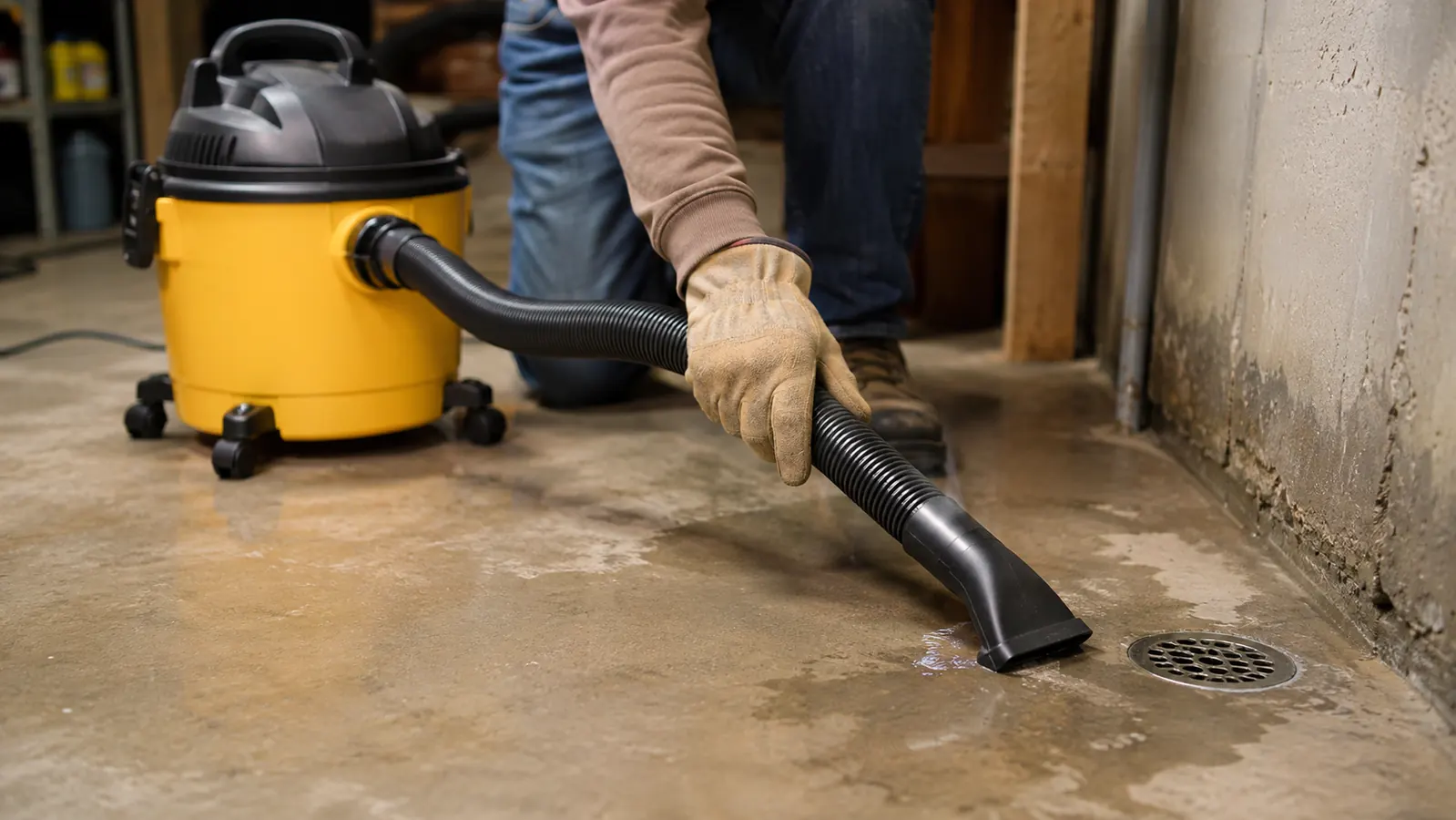
I shut the cold water inlet, drained what the tank let me drain, and stood in six inches of water wondering how many towels I owned. That is when I remembered the Stanley 6-gallon wet/dry vac sitting under the workbench. The SL18116P, four horsepower, the one I bought years ago mostly to suck up drywall dust and stray nails. I did not buy it for floods. I bought it because it was cheap and lasted. It has never seen a cordless battery, has no filters to chase every week, and it was the last thing in the shop I expected to save me money on a winter night.
It pulled that whole basement dry in about forty minutes, and the floor it saved was laminate I was already planning to not replace. That is the exact kind of math I mean when I say a tool either earns its keep or it does not.
A Wet/Dry Vac Is the Cheapest Insurance Against a Flooded Floor
The Stanley six-gallon vac pays for itself the first time something in your house lets go. Check today's price and keep one under your workbench.
Amazon Check Today's Price on Amazon →So I did what I do with every tool I own, which is run the numbers like an investment. A water heater failure is not an if, it is a when. The laminate cost three hundred to replace. A claims adjuster and a deductible made the insurance route a rounding error after several phone calls. But a wet/dry vac that pulls liquid out of the tank and out to the drain costs about what a decent dinner out costs, and it earns its way the first time you need it. On that Friday night it did just that in roughly forty minutes, lift by lift, filling the six-gallon tank and dumping it down the floor drain until the concrete was dry enough to walk on in socks.
Part of the reason it worked is that a wet/dry vac is a stupid-simple machine. It has a motor, a tank, a hose, and a float that shuts the suction off before the water reaches the motor. No battery to be dead, no delicate filter that clogs the moment it touches moisture. For wet jobs you pull the paper filter off entirely and let it run as a straight pump. of plain engineering, and it does the one job a dry-only vacuum can never do, which is pull standing water out of your basement.
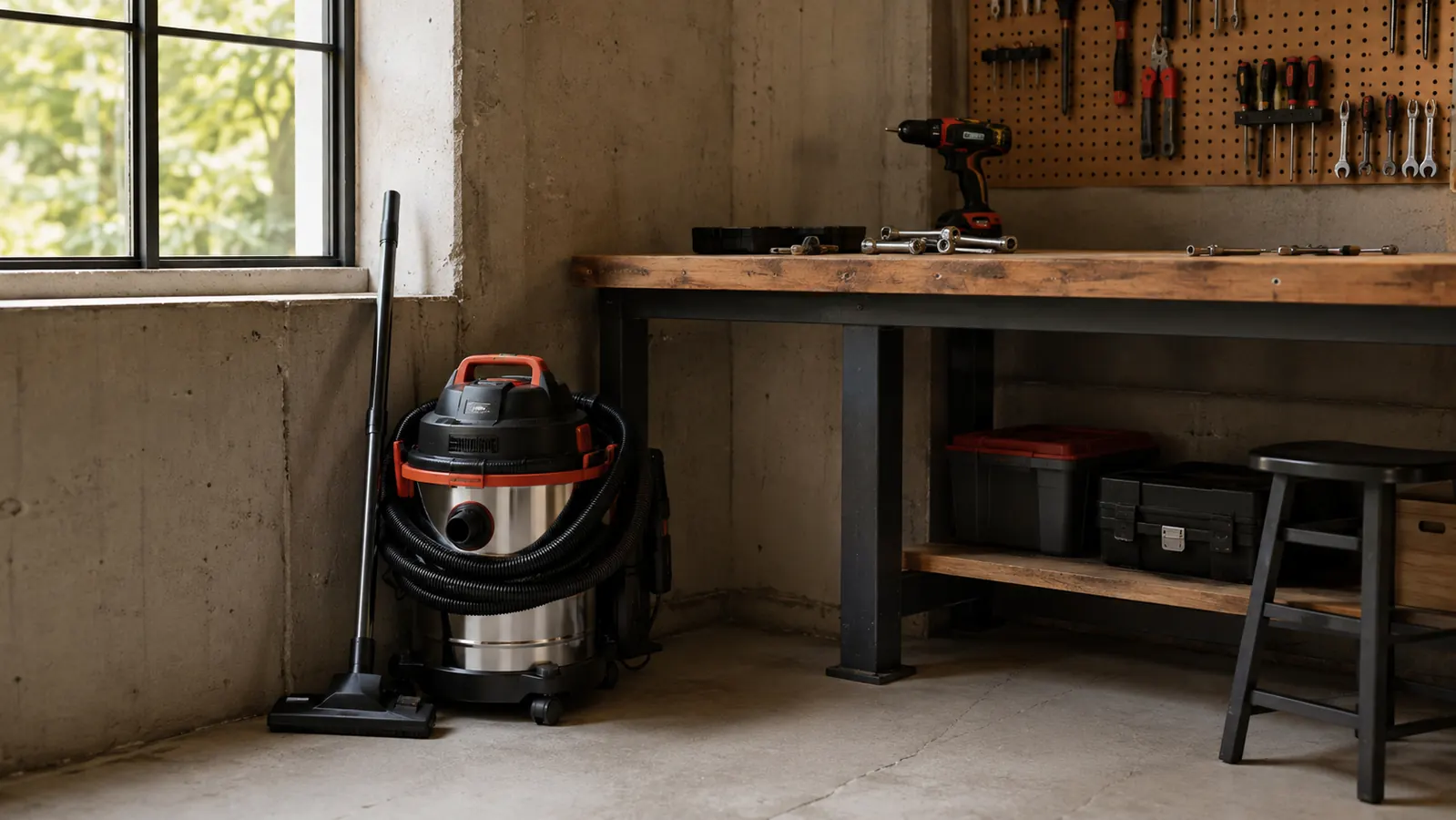
The water heater was replaced the following Tuesday by a plumber, and that was an honest bill I signed without complaint. But the floor was still there. The laminate never buckled, never lifted at a seam, because it never sat under water long enough to soak. The Stanley took the water off it in the first hour, which is the whole difference between a cleanup and a tear-out. I have had this vac for going on five years now, and between drywall dust, paint chips, the aftermath of a clogged drain at a rental, and one flooded basement, it has paid for itself more times than I can count.
I will not oversell it. It is noisy. The hose is stiff in the cold, and on wet jobs you have to leave the top off the tank so it does not cavitate and stall. There are pricier wet/dry vacs with bigger tanks and quieter motors, and if you are planning to vacuum a flooded carpet in a finished basement every month, one of those is worth the extra money. But for the homeowner who wants to turn an emergency into a mess rather than a disaster, this is the tool that gets it done, and it does not care that you forgot to charge it.
What I'd Tell You If We Were Sitting at My Kitchen Table
Put a wet/dry vac in the house before you think you need one, and check the water heater the same week you change the clock. Those two things cost about the same as a couple of dinners out, and together they turn the worst plumbing failure you will probably ever have into a long evening instead of a five-figure claim. Do not wait until you are standing in six inches of water in your socks to wish you owned one. That is the honest advice, and I have the dry floor to prove it.
Buy It Before the Next Thing Lets Go
A Stanley wet/dry vac is the cheapest tool in the shop that earns its keep on the night you need it most. See today's price on Amazon and park one under your workbench.
Amazon Check Today's Price on Amazon →