
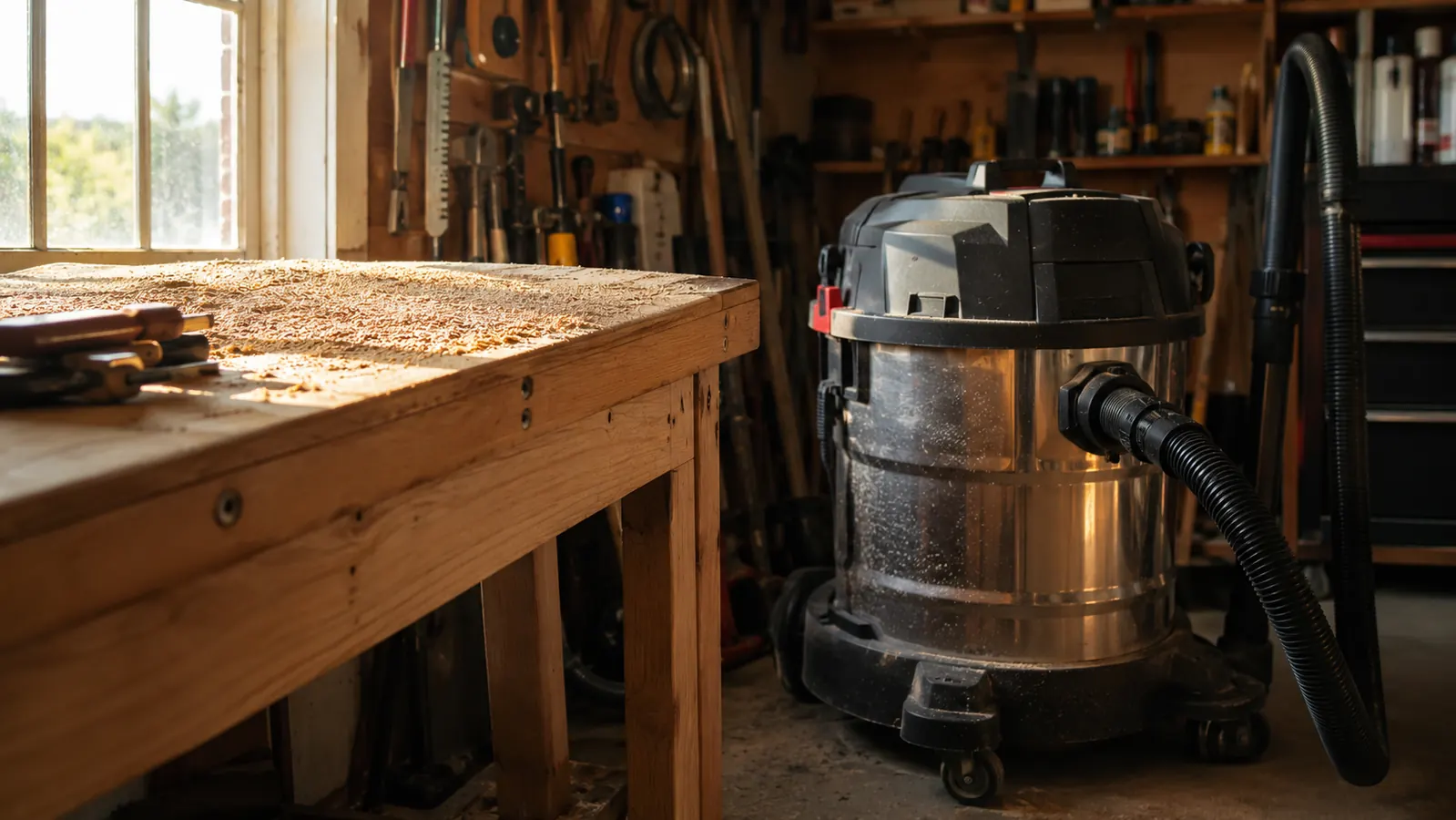
It was a Friday night in February when my water heater let go. Thirty gallons of hot water moved across the utility room floor and started toward the hallway before I got the supply valve shut off. I stood there in my socks, cursing the mess and the soggy carpet edge it was reaching, and then I remembered the shop vac sitting in the garage. A wet/dry vac is the least glamorous tool I own. It does not get the respect of a good drill or a smooth-running miter saw. But if you own property, it is the one machine that turns an expensive surprise into an hour of cleanup. That February it paid for itself a dozen times over before the plumber even answered.
That is the Stanley SL18116P, a 6-gallon, 4-horsepower wet/dry vac that sits at the budget end of the shelf. I have had mine two years now, and I want to give you the honest long-term picture, the way I wish somebody had done for me before I bought my first one. Because the reviews are almost all glowing, and glowing reviews rarely tell you where the unit gets cheap. I will tell you that part too. But the short version, after two years of real abuse: this thing earns its spot, and for the money there is not much that touches it.
The Quick Verdict
The single best-return impulse purchase in my shop. Two years of floods, sawdust, drywall dust, and nail pickup, and it still pulls like the day I unboxed it. Buy it, even if you think you will only use it twice a year.
Amazon Check Today's Price →Cheap Flood Insurance That Fits in a Corner
If you own a basement, a water heater, or a saw, a wet/dry vac is not a luxury. It is the cheapest way to turn a disaster into a chore. Check today's price on the Stanley 6-gallon before the next surprise finds you.
Amazon Check Today's Price on Amazon →How I've Used It Over Two Years
I should be clear about what my two years have actually looked like, so you can weigh it against your own situation. This Stanley has not lived a soft life. It is my shop's cleanup unit, which means every weekend it inhales sawdust from the table saw, shavings from the jointer, and the odd screw that bounced off the bench. It runs planer chips by the bag. It has also done the wet work: the water heater flood, a backed-up laundry drain, and a rental unit's basement that took on groundwater after a hard spring thaw.
I use it as a blower too, which a lot of people forget these things can do. Point the hose at a leaf pile or a dusty garage floor and it moves stuff far faster than sweeping. That blower port is a free feature I lean on every fall. Between the dry pickup, the wet pickup, and the blowing, I would guess the Stanley runs once a week, sometimes more. That is not light duty. It is a working tool, not a garage ornament.
And here is the part I care about most as a guy who weighs every purchase in saved labor: in two years it has never once let me down mid-job. No motor that cut out, no hose that split, no switch that got finicky. The one thing I have replaced is the filter, and that is normal maintenance, not a repair.
Why a Wet/Dry Vac Is the Cheapest Insurance You Own
Let me make the investor case, because that is how I think about every tool that earns a spot in my shop. You will not use this thing every day. Maybe not even every week. But the jobs it does are exactly the ones you cannot easily hire out, and the ones that cost real money if you do not handle them fast.
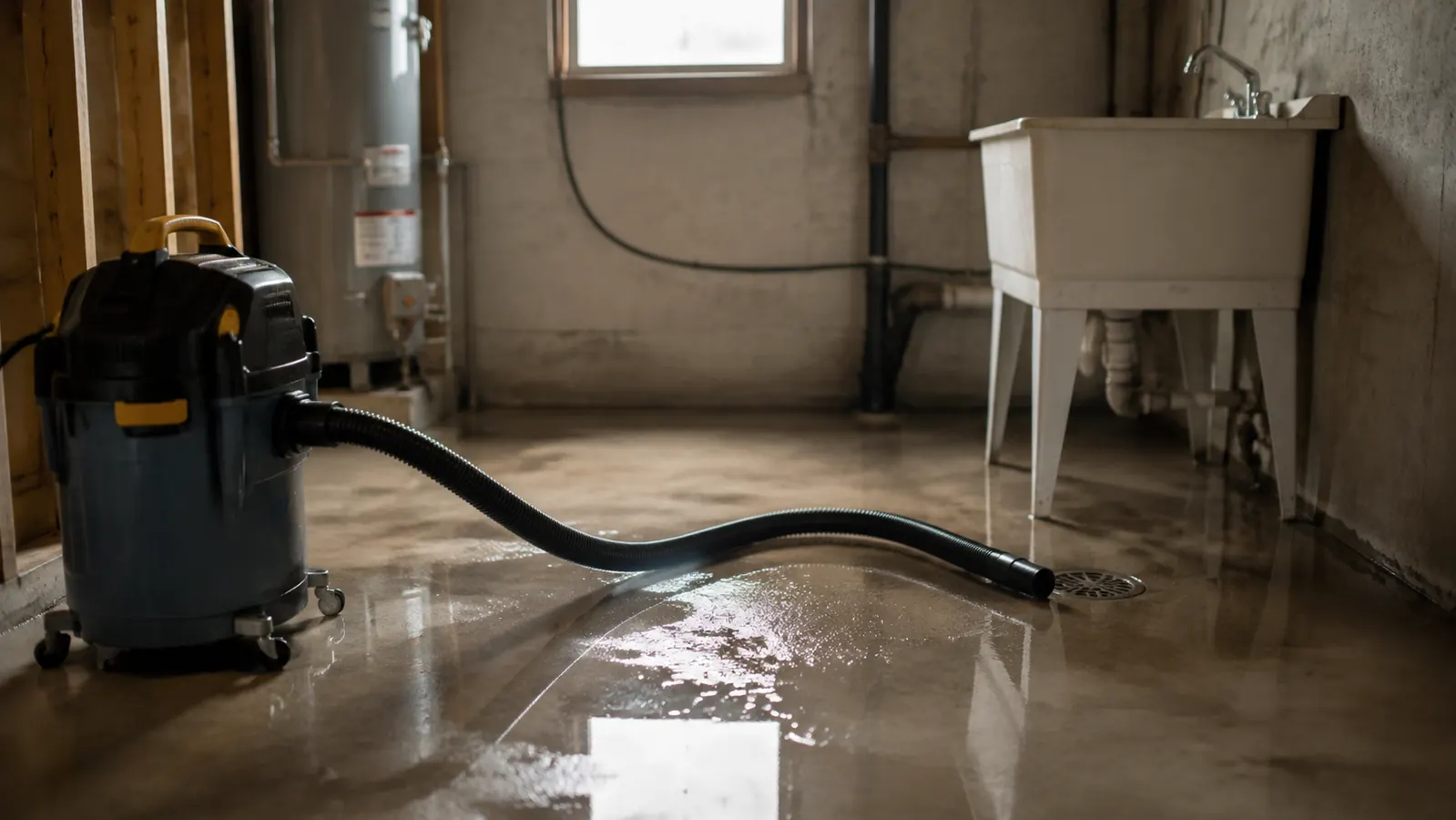
Standing water is the big one. A wet/dry vac is the difference between pulling thirty gallons off your floor in an hour and watching it soak through subfloor and drywall until you are tearing out flooring and baseboard. Shop vacs of this class pull dry, wet, or a mix, and the Stanley does the water part well enough that I stopped worrying about the carpet edge the night of the flood. The floor drain became the whole conversation: how fast could I get the water to it, not how much would I have to tear out.
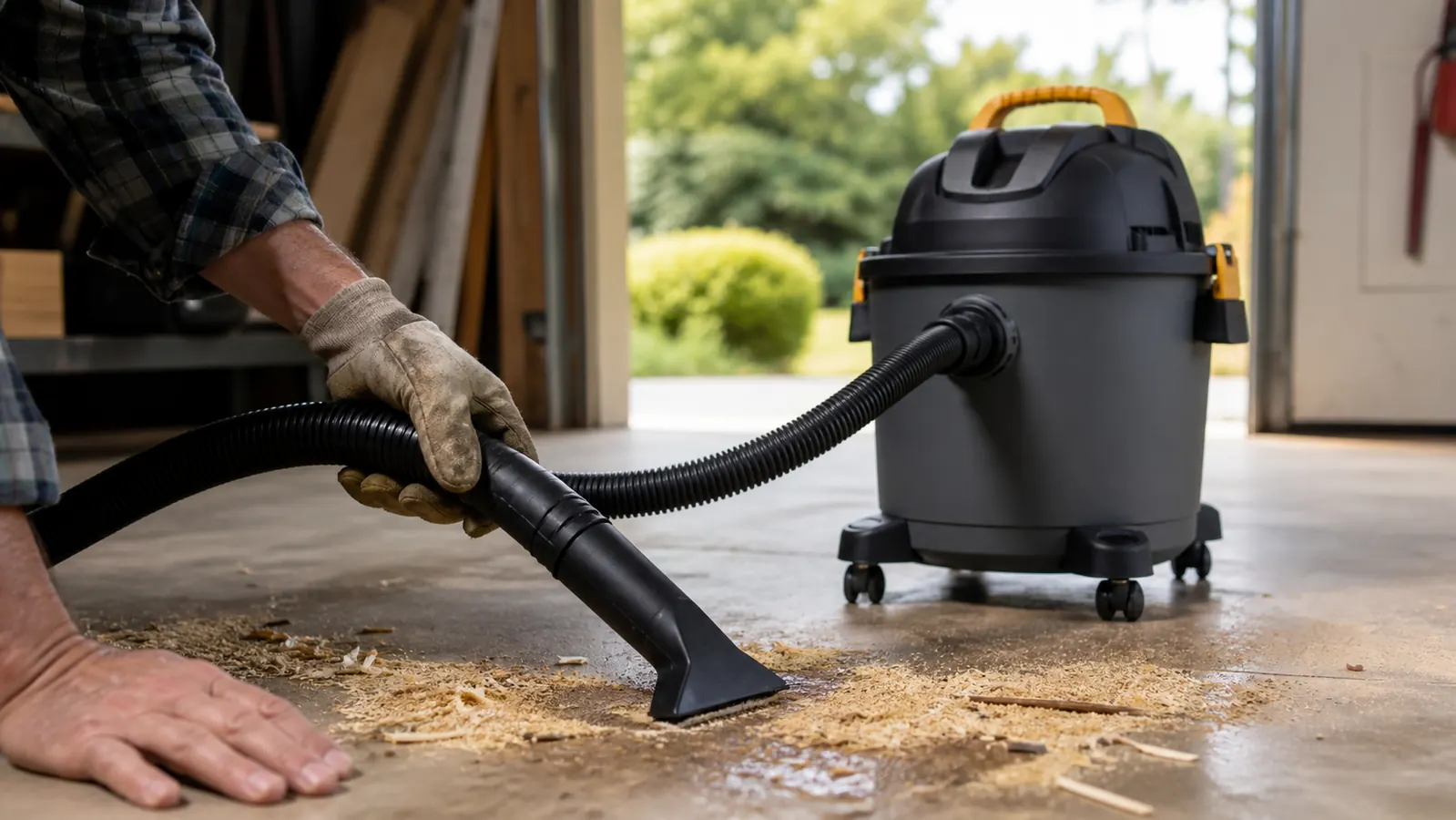
Then there is the daily stuff. Drywall sanding dust that coats everything, a pile of planer shavings in the corner, the nails and screws that would otherwise find a tire. A broom handles the surface layer. It does not handle the fine dust that settles everywhere, and it does not handle water at all. When you price out what a single service call runs these days, the math on this thing is not even close. One avoided emergency pays for it, sometimes twice over.
The Suction, and the 4 Horsepower Motor
The spec sheet says 4 horsepower, and at this price point you should take that as marketing language rather than precision. What I can tell you is what it actually does. It pulls drywall dust wet or dry without complaint. It lifts standing water fast enough that I quit checking on it during the flood cleanup. And on the blower side, it will move a big leaf pile about as fast as you can aim the hose. The suction is steady, and steady matters more in a vacuum than a burst of it.
It is not a cordless unit and I would not want it to be. A vacuum that needs real sustained suction is a tool that should stay plugged in. The power cord and hose are long enough that I have never felt tethered, even working from the middle of a shop to the far corner. On the jobs it is built for, I have never wished for more pull, and I have never had to stop and give the motor a rest in the middle of a job.
The one honest knock here is noise. It is loud. Not absurdly so, but you will want ear protection if you are running it for more than a few minutes, and nobody should be in the same room trying to hold a conversation. That is true of basically every shop vac in this class, so it is not a reason to walk away. It is just something you should know going in so the first time you flip it on you are not startled by it.
What Two Years of Real Abuse Did to It
The body has held up better than I expected. It gets shoved around the shop, hauled up and down basement stairs, and once survived a trip in the back of my truck to the rental. The plastic is thick enough that it has not cracked or gone brittle, and the casters still roll freely. The drum does not dent, which matters more than it sounds, because a dented drum is a leak waiting to happen and a crack in the wrong place ruins a wet vac for good.
The two things that have worn are exactly the two things every owner should expect. The hose stiffens up in cold weather, so in the dead of winter it does not coil as nicely as it does in July, and you have to let it warm up a little before it wants to bend the way you want. And the filter needs regular attention, because fine drywall dust will clog it and cut suction in a hurry. I keep a spare on the shelf and rinse the reusable one after dusty jobs. That is maintenance, not a defect, and it applies to every unit this size on the market.
I have not burned out the motor, and this is the part that has genuinely surprised me across two years. For what it cost me, I assumed I was buying a two-year tool and would be replacing it, which I had mentally budgeted for. Instead it is still running like the day I unboxed it, which means it has been a better purchase than I expected, and I bought it expecting a lot. The money I set aside for its replacement has gone back into the project budget.
For I assumed I was buying a two-year tool. Instead, after two years of floods and sawdust, it still pulls like the day I unboxed it. That is a purchase that beat my own expectations.
Attachments, Options, and What Actually Matters
The kit ships with a bare-bones set of attachments: a floor nozzle, a round brush, and a crevice tool. That is enough to cover the basics, and honestly it is more than many units in this range include. You will almost certainly add a couple of extras over time, and the good news is that shop vac accessories are cheap and standard-sized, so you can pick up a wider floor tool or a longer hose without hunting for a proprietary part or paying a brand markup.
There is a drainage port on the drum, which I would have told you was a gimmick until I used it. Draining thirty gallons out the base through a hose beats lifting the whole drum to tip it out, and that has been a real convenience on the wet jobs, especially for a guy in my age bracket who does not need to be hoisting a waterlogged tank. The 6-gallon size is the right middle ground for a property owner: small enough to tuck in a corner or carry upstairs, big enough that you are not emptying it every ten minutes on a normal shop cleanup.
The Long-Term Math: Buy Once or Buy Twice
I want to close the practicality gap with a straight answer on value, because this is where I think most people hesitate. You can absolutely buy a wet/dry vac that costs several times this Stanley, and for a full-time shop it might be the right call. But for a homeowner doing their own work, the premium mostly buys you the same physical task with a smaller tank to drag around and a heftier price tag to stare at.
The downside of buying this cheap is that you are not getting pro-grade fit and finish. The attachments are functional, not fancy. It is not the quietest unit in the world. And the filter is a consumable you will replace. But none of that has prevented it from doing every job I have put in front of it for two years, and nothing has broken. When tool is still going strong after the period you expected it to die, that is the definition of buying right.
My rule on tools has always been to resist the false economy of the cheapest option that fails, but also to resist the reflex to overspend when a sensible tool does the job. This Stanley sits in the middle of that line. It is the case where the budget option is genuinely good enough, and that is a rare and welcome thing to be able to say honestly. For my money, that is where it earns the workhorse label.
The Pros and Cons
What I Liked
- Pulls dry and wet pickup both really well for the price
- Blower port doubles as a free leaf and dust mover
- Thick drum that has survived two years of being shoved around
- Drains through a port instead of requiring a full drum lift
- Long enough cord and hose that I have never felt tethered
- Priced low enough to be an easy yes for any homeowner
Where It Falls Short
- It is genuinely loud, so ear protection is not optional
- Hose stiffens up in cold weather
- Filter needs regular cleaning or fine dust kills the suction
- Attachments are bare-bones; you will likely add a couple
Who This Is For
Buy this Stanley if you own a basement, a water heater, a saw, or any property you are responsible for. If you do any amount of DIY, even just a weekend project now and then, the sawdust and shavings alone will keep it busy. And if you have ever stood in ankle-deep water wondering what to do, you already know whether you need it. It is the kind of tool that does nothing all month and then saves the day once, and that one day is worth the price.
It also suits a specific kind of buyer: the person who wants one reliable, no-fuss machine that does not need coddling and does not need a special drawer full of proprietary parts. If your shop is one bench and a corner of the garage, this is sized right and priced right. It is the tool I reach for without thinking, and there is a lot to be said for that after two years.
Who Should Skip It
If you live in a small apartment with no workshop, no basement, and no property to maintain, a corded 6-gallon tank may be more machine than you need, and a compact cordless vac might suit you better. And if you do heavy continuous industrial dust collection, like running a full-time woodworking operation, you will want something bigger and more specialized, with better filtration than any unit in this class is going to offer.
But if you are a homeowner who does your own work, this is the sweet spot, and there is very little reason to spend more. The cases where it is the wrong tool are specific and fairly narrow. For the rest of us, it is the shirt that never needs ironing: unglamorous, dependable, and exactly right for the job it is asked to do every single time.
The Tool You'll Thank Yourself for Buying Before a Flood
You will not use it every week. That is fine. When the water heater lets go or the drywall dust settles, it will be the one tool that saves you the expensive day. Check today's price on the Stanley 6-gallon and take it home.
Amazon Check Today's Price on Amazon →