
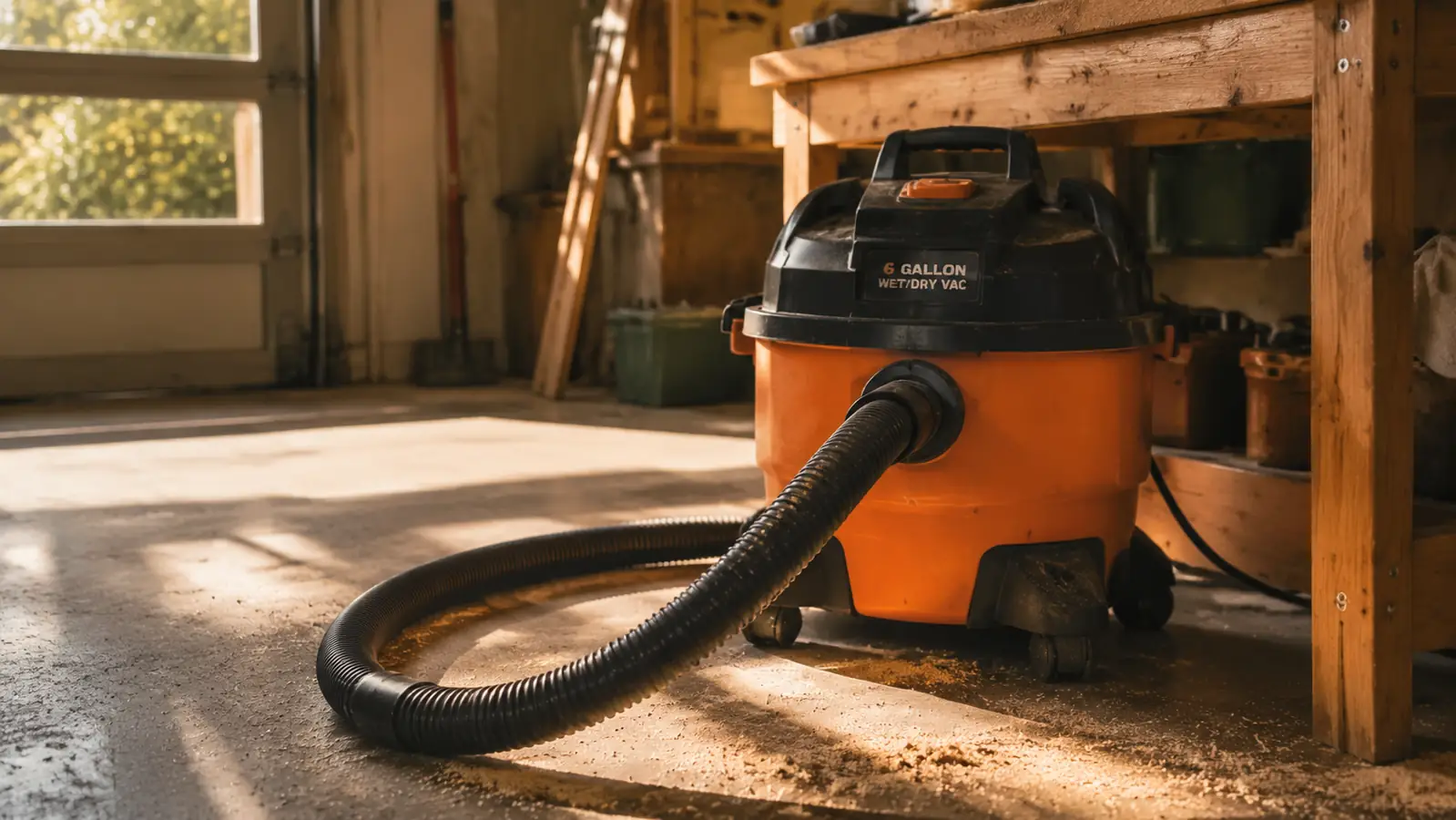
A wet/dry vac is one of those tools nobody thinks about until the water heater lets go at 9 o'clock on a Friday night, and then it is the only tool in the house that matters. I have owned both of the two budget shop vacs people keep asking me to settle, the Stanley 6-gallon and the Craftsman 8-gallon, and I have run them side by side for long enough that I can give you a straight answer instead of marketing talk.
The short version is this. For the working homeowner who wants one vacuum that handles sawdust, drywall dust, stray screws and the occasional flood without spending real money, the Stanley is the better buy. It is cheaper, it is easier to move around the house and between properties, and it is genuinely good enough at every job a house actually throws at it. The Craftsman is the stronger vacuum, no question, with a bigger tank and more pull, but that extra strength costs you money, weight and floor space, and for most of us it never gets used. Let me show you where the two genuinely part ways instead of pretending one is simply better.
| Stanley 6-Gallon | Craftsman 8-Gallon | |
|---|---|---|
| Price out the door | Runs the low end of the aisle and is usually the cheaper of the two on any given day | A step up in price for the bigger tank and the higher motor rating |
| Peak suction | Four peak horsepower, plenty for sawdust, drywall dust, screws and wet pickup around the house | Rated higher, around five and a half to six peak horsepower, and you can feel it on a heavy load |
| Tank size | Six gallons, the right size for daily shop dust and a normal spill | Eight gallons, noticeably more room for a real flood or a full day of construction debris |
| Portability and storage | Lighter and smaller, easy to carry from garage to basement to a rental, tucks on a shelf | Bigger and heavier, more awkward to move around the house and needs real floor space |
| Build and hose durability | Serviceable, but the hose gets stiff in cold weather and is the known weak spot | Heavier duty hose and fittings that hold up a bit better to being dragged and kinked |
| Noise level | Loud; a universal motor is a universal motor, plan on ear protection | Also loud for exactly the same reason, no meaningful win either way |
| Fit for daily homeowner duty | Genuinely enough for every job a house and a couple of rentals produce, without the premium | Extra capacity and suction that mostly sit idle unless you do major renovations |
How I've Used Both Vacs
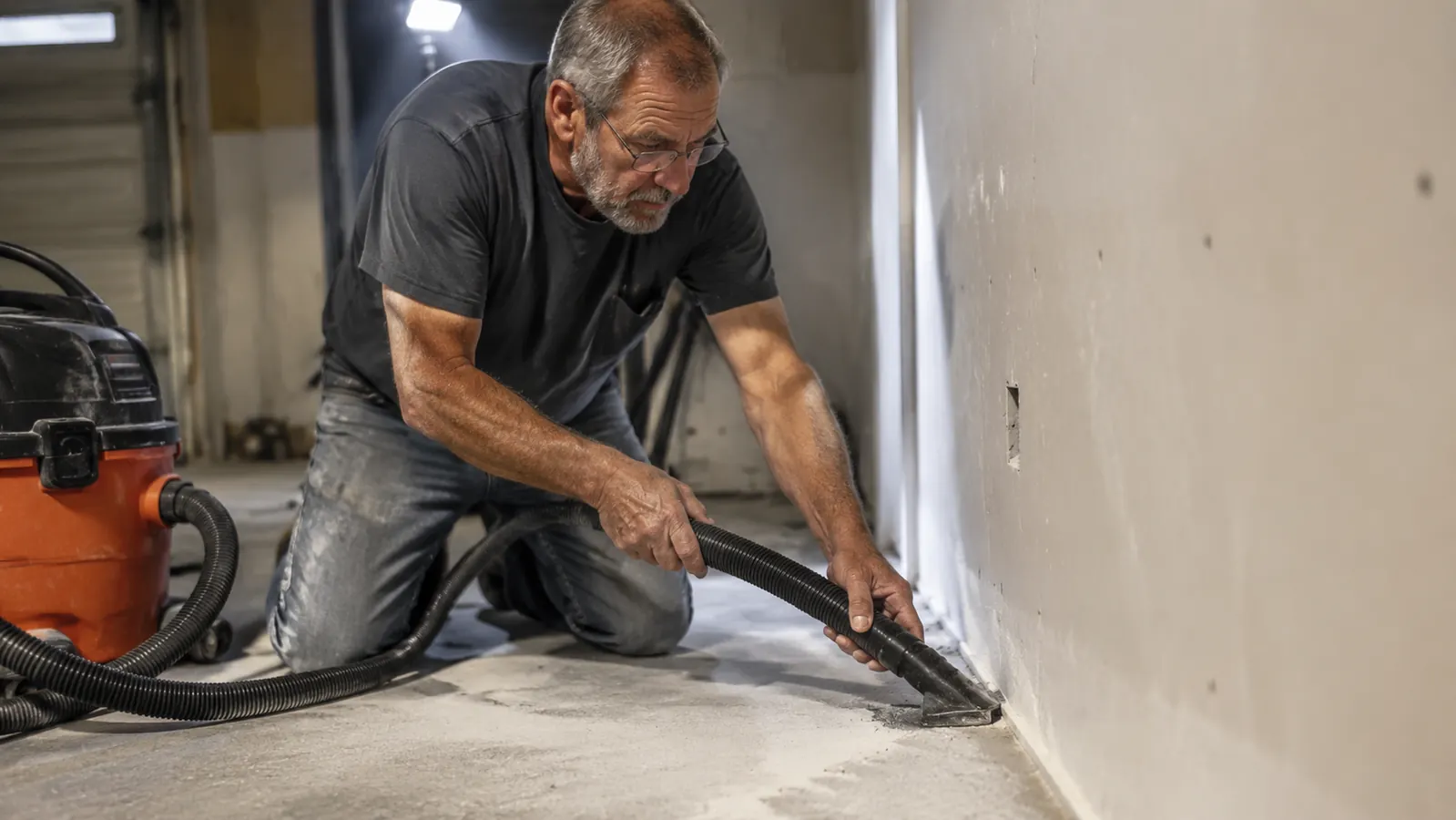
I don't do laboratory suction tests with calibrated instruments, and I don't pretend to. What I do is use a tool until it either earns its keep or annoys me. Over the last couple of years the Stanley has been my daily driver in my own garage, and I keep the Craftsman at a rental I maintain, so the two of them have seen the same kinds of work. Sawdust from the miter saw, drywall dust after a patch job, a hopper full of loose screws and nails off the floor, and on two occasions real standing water, once from a leaking water heater and once from a backed-up utility sink.
Comparing these two budget vacs is a fair fight in a way the big-brand arguments usually are not. Neither of them costs the kind of money that wraps a tool in mystery, so the honest question is very plain. Does the extra strength of the Craftsman buy you anything in the jobs you actually do, and is the compact Stanley good enough that the savings are just money you keep? After running both through the same messes, I have a clear answer, and it is not the answer a spec sheet alone would give you.
Where Stanley Wins
The thing that decides this for me, and I suspect for you, is the number at the register and the space the tool takes up in the garage. This Stanley 6-gallon is the cheaper of the two, and it is genuinely good enough at every wet/dry job a house produces. When I weigh a purchase as one that either pays for itself in saved labor or does not, the Stanley clears the bar comfortably on the strength of a single rainy night. The math is simple. The cleanup it does is worth more than the vacuum costs, and it does that cleanup without asking me to haul around a bigger machine than I need.
The other place the Stanley earns its keep is how easy it is to live with. It is small and light enough that I carry it from the garage to the basement to a rental without groaning, and when it is not in use it sits tucked in a corner or up on a shelf instead of squatting in the middle of the floor. Portability is not a feature you will see on a spec sheet, but for a guy who travels and owns property, it is the difference between the vacuum actually getting used and staying buried under a workbench. A tool you will drag out is worth more than a tool you won't, and the Stanley has never been the thing standing between me and a cleanup.
Where Craftsman Wins
I will give the Craftsman its due, because the honest version of this comparison is not a one-sided argument. It is the stronger vacuum, full stop. The motor is rated higher and you can feel it when you are pulling a heavy load, and the eight-gallon tank means you do not empty it as often on a big job. If you are doing serious renovations, tearing out drywall, framing, drywalling a whole room, the extra capacity and the extra pull genuinely save you trips and time. Nobody should pretend those are imaginary. They are real, and they are aimed squarely at someone who spends long weekends gutting a space.
The build also feels a little more substantial. The hose and the fittings on the Craftsman hold up a bit better when you are dragging them across concrete and stepping on them, and that matters if you treat a shop vac the way most of us actually do. The Stanley hose is fine, but it stiffens up in cold weather and it is the first thing I would expect to wear out. For the person who is hard on equipment and prefers one less thing to replace down the road, the Craftsman's heavier duty hose is a legitimate reason to pay the difference. That is the whole honest case for it, and it is a real one.
The Craftsman is the stronger vacuum, and I'll say so plainly. The question was never which one pulls harder. The question was whether that extra pull gets used, and in my house it mostly didn't.
The One Thing That Settles It: What You'll Actually Pick Up
Here is the point nobody on the spec-sheet comparison ever gets to. For the daily life of a house and a couple of rental properties, the difference in suction and tank size almost never shows up. Sawdust, drywall dust, loose screws, wet pickup after a leak, the Stanley handles all of it in one pass and I have never once felt like the machine was the bottleneck. The extra pulling power of the Craftsman only becomes the deciding factor if you are doing demolition-scale work week after week, and if you are, you should probably be renting something bigger anyway.
So the real question is not which vacuum is stronger. It is whether you are buying for the flood that happens twice a decade or for the daily sawdust. For the flood, both of them work fine, because either one will move water out of a basement faster than a mop ever could. For the daily sawdust, the cheaper, lighter, easier-to-store Stanley is the one you will actually reach for and actually have near the work. That is the deciding fact, and it points the same direction every time I think about it. Buy the strength you will use, not the strength you will brag about.
Wet Pickup and the Filter That Follows
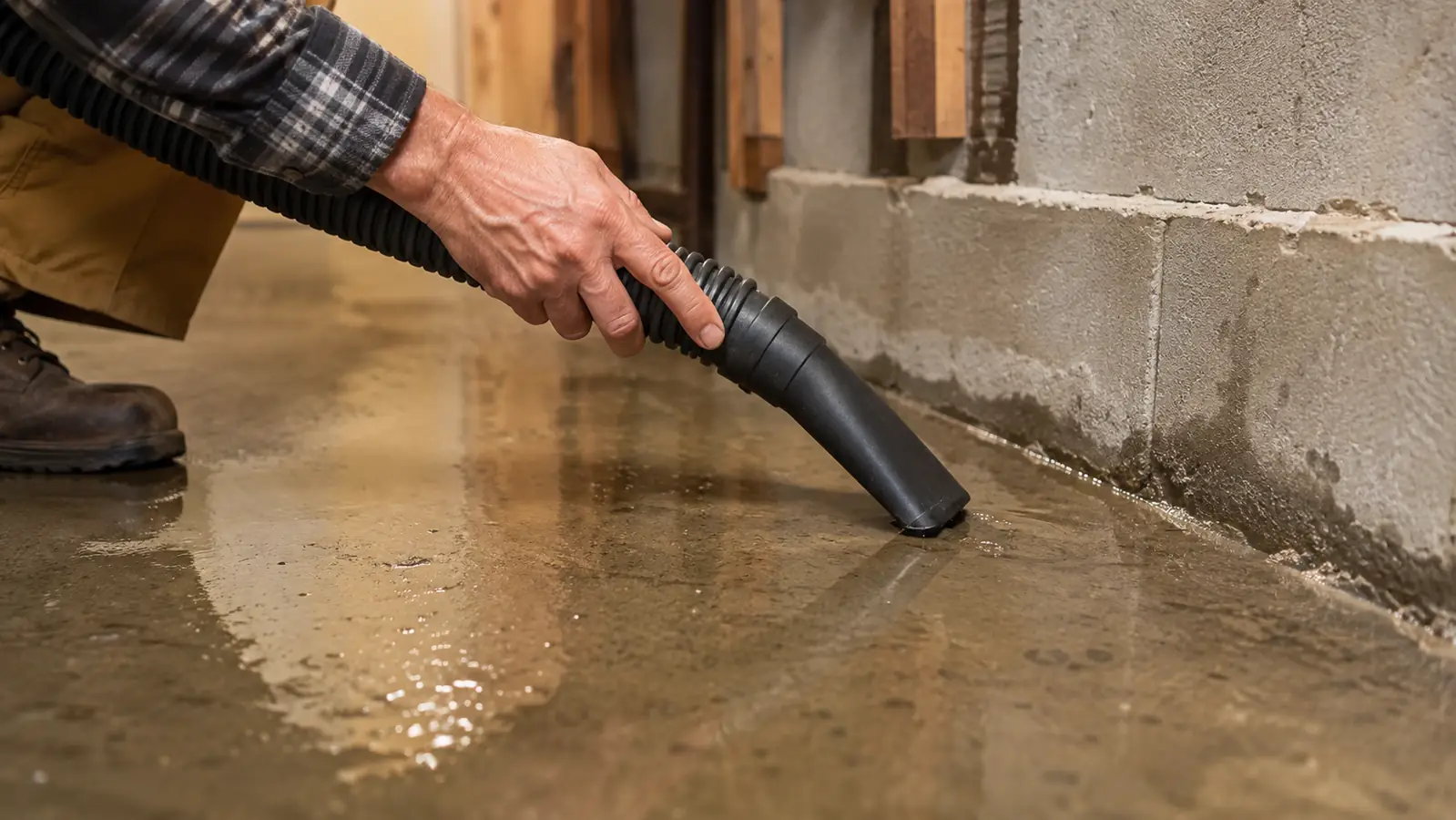
The one job that separates a shop vac from a regular vacuum is wet pickup, and both of these do it decently. The float that cuts the motor before the tank fills works as advertised on the Stanley. I have filled the tank past where I should have and the motor shut itself off before it sprayed water out the exhaust, which is exactly what you want when you are distracted by the mess you are cleaning. The Craftsman has the same protection and it works too. Where they differ is the filter. A wet/dry vac is really two machines in one, and the cartridge filter that handles dry dust is exactly what you have to take off before you suck up water.
Here is something the reviews do not make obvious. On the Stanley the filter comes off and the wet pickup goes smoothly enough that I do the switch without thinking, and afterward the tank is easy to rinse out. On the bigger Craftsman, you are reaching into a larger tank to tend the same job, and that larger tank is that much more water you carry to the drain when you are done. It is not a dealbreaker, just a reminder that more capacity cuts against you on a wet pickup you actually finish. For a homeowner who sucks up a spill twice a year, the smaller, easier-to-service Stanley tank is the friendlier of the two.
Attachments and the Bits in the Box
Both of these come with the usual wet/dry accessories, the crevice tool, the floor nozzle, and the round brush that shows up in every box and rarely gets used. Both also have the blower port that every shop vac shares, which lets you reverse the airflow to blow dust out of a corner or inflate a cheap air mattress. Neither machine sets the world on fire with its accessory kit, and that is fine. The important thing is that the two pieces you use the most, the hose and the floor nozzle, are ones both machines handle well enough not to be a frustration.
I will note one honest thing about accessories in this budget class. The attachments are plastic, they take a beating, and the Stanley's are about what you would expect at the price. If you treat the vacuum hard, you will eventually replace a nozzle or a hose on either one, and cheap replacement parts for both are easy to find. That is part of why I do not lose sleep over the Stanley's slightly lighter build. The whole tool is inexpensive enough that wearing out a plastic nozzle does not feel like a tragedy, and the parts that actually matter, the motor and the tank, have held up fine through everything I have thrown at them.
The budget wet/dry vac that turns a Friday-night flood back into a clean floor
If you are buying one wet/dry vac for a house, a shop and the odd rental, this is the one I reach for. Stanley 6-gallon, four peak horsepower, compact enough to store between jobs, and it handles wet and dry without a second thought.
Amazon Check Today's Price on Amazon →Who Should Buy Which
If you are doing real renovations, gutting rooms, drywalling whole spaces, or you are a contractor who leaves the vacuum in the truck and expects it to take a beating, buy the Craftsman and do not let a homeowner talk you out of it. The bigger tank, the extra pull and the heavier duty hose all pay you back on that kind of work, and the extra money is money well spent for the person who will actually use it. Nobody should pretend the stronger machine is the wrong choice for the person who needs a stronger machine.
But if you are the guy I write for, the self-reliant homeowner who wants one honest wet/dry vac for sawdust, drywall dust, stray screws and the occasional flood, buy the Stanley. You get a machine that handles every one of those jobs without complaint, at a lower price, in a package that is easy to move and easy to store. The money you save is yours to keep, and the space you save in the garage is worth something too. That is where the honest comparison lands. Buy the strength you will use.
Start simple, start honest, and save the floor space for the next project
One compact wet/dry vac that earns its keep on sawdust today and a flood tomorrow, without the weight, the price or the footprint of the machine you don't need. This is the honest place to start for the working homeowner.
Amazon Check Today's Price on Amazon →